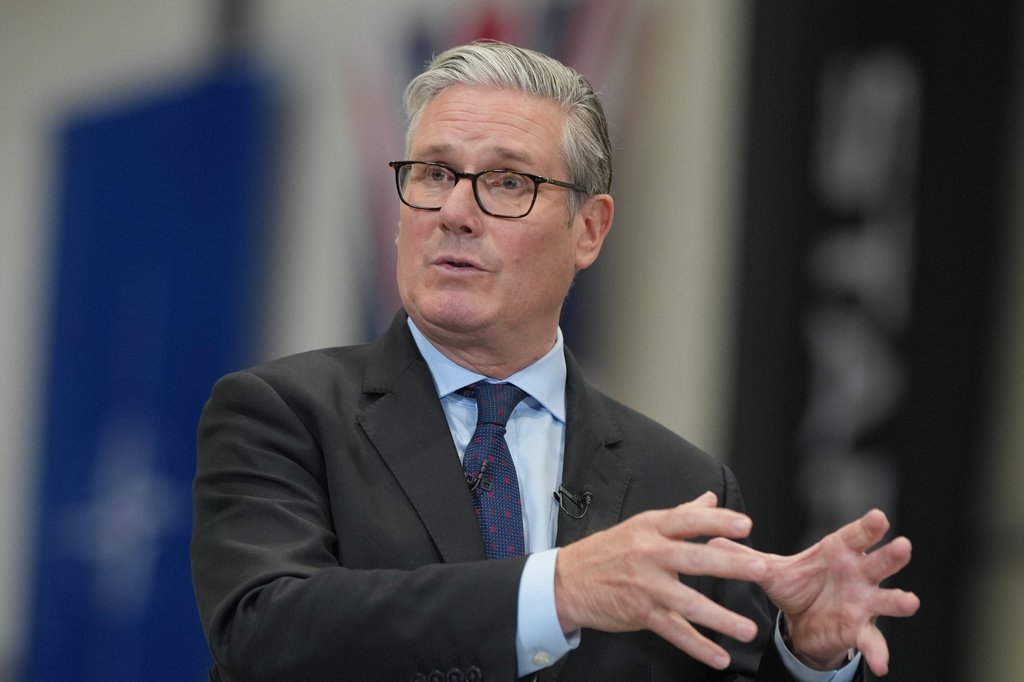
Keir Starmer's tenure as British prime minister is unraveling at a pace that has stunned Westminster. With his personal approval rating sinking to minus 51 and the Labour Party polling at just 19 to 20 percent—level with the Conservatives and far behind Reform UK—speculation is mounting that a leadership change could come within weeks.
Unlike the fixed electoral calendar in the United States, where presidents serve four-year terms limited by the 22nd Amendment, Britain's prime minister holds office only as long as they command a majority in the House of Commons. That majority can vanish overnight. Starmer won 411 of 650 seats in the July 2024 general election, but the political ground has shifted dramatically since then.
Labour's vote share on election day was 33.7 percent, a figure that held in polls for about four months before beginning a steady decline. By early 2025, the party was stuck in the low 20s, and recent averages show it has slipped further, matching the Conservatives and trailing Nigel Farage's Reform UK, which has surged on a wave of anti-establishment sentiment.
The prime minister's own standing has collapsed even faster. He entered Downing Street with a modest +9 approval rating, but within seven weeks it had turned negative. By early this year, it stood at minus 51—a level from which few leaders recover. Labour MPs, alarmed by the trajectory, are quietly discussing a change at the top.
There is no constitutional barrier to a party in government replacing its leader. It happened twice in 2022, and previously in 2019, 2016, and 2007. But Starmer would be the first Labour prime minister to be forced out against his will since the party first took power in 1924. The question is who could succeed him and offer a credible path back to competitiveness.
Burnham Emerges as the Leading Contender
For months, no obvious alternative existed. Deputy Prime Minister Angela Rayner resigned in September 2025 after a property tax controversy. Chancellor Rachel Reeves saw her fiscal credibility shattered by market turmoil. Other senior cabinet ministers were seen as uninspiring.
Then Andy Burnham, the mayor of Greater Manchester, began to surface as a viable challenger. A former cabinet minister under Gordon Brown, Burnham left the House of Commons in 2017 to run for the newly created mayoralty of an urban region of 3 million people—larger than any U.S. city except New York and Los Angeles. He has been open about his ambition to become prime minister, and polling suggests he is more popular with Labour members and the broader electorate than Starmer.
But a critical obstacle remains: Labour Party rules require leadership candidates to be MPs, and constitutional convention dictates that prime ministers sit in the Commons. Burnham has been outside Parliament for eight years. A by-election in a Manchester suburb on June 18 offers him a path back. He is expected to win narrowly against Reform UK.
If Burnham returns to the Commons, he will need the public backing of 80 Labour MPs to trigger a leadership contest. Health Secretary Wes Streeting, a Blairite ally, has already resigned from the cabinet, signaling his own ambitions. Starmer has vowed to fight any challenge, but his authority was further eroded by heavy losses in local and regional elections last month.
Burnham presents himself as a unifying figure who can deliver economic growth, robust public services, social justice, and high wages—a politician who squares every circle. Critics describe his platform as a collection of eye-catching but unworkable ideas, wrapped in a relentless "regular guy" persona that can wear thin. Still, the momentum is with him.
The coming weeks will determine whether Starmer can cling to power or whether Britain will see its third prime minister in under three years. The by-election on June 18 is the first milestone; the real drama will follow if Burnham enters Parliament and the race for the Labour leadership begins in earnest.