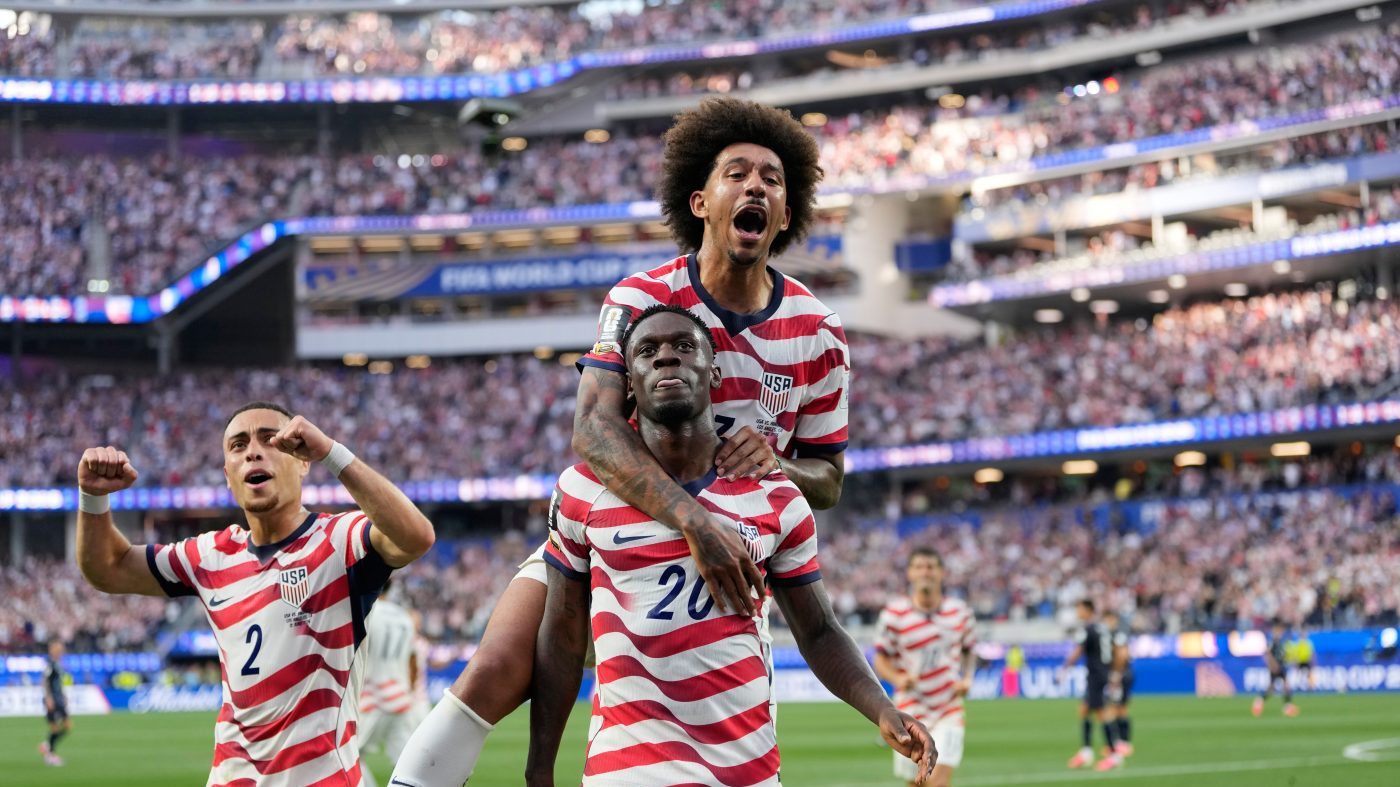
U.S. men's national team striker Folarin Balogun scored twice in Friday's 4-1 World Cup opening win against Paraguay, a performance that owes its very existence to a quirk of travel policy that forced his mother to give birth on American soil. The goals have thrust President Trump's executive order ending birthright citizenship back into the national conversation as the Supreme Court prepares to rule on the policy.
Balogun's mother, Florence, traveled from London to New York while seven months pregnant in 2001, planning to return to England. But airline staff refused to let her board the flight home, deeming her too far along. She stayed with her sister-in-law in Brooklyn and gave birth to Folarin on July 3, 2001, according to a 2023 ESPN profile.
The striker, who came up through Arsenal's academy and played for England's youth teams, chose to represent the U.S. senior side in 2022. His World Cup debut validated that decision: he scored the second and third goals in the Americans' record-setting victory, the most goals the U.S. has ever scored in a single World Cup match.
“When I committed ... the most important thing has been being able to repay that [support],” Balogun told CBS Sports after the match. “I feel like today's a great opportunity ... I want to continue to show the fans I made the right decision.”
But if the Supreme Court upholds Trump's executive order, Balogun's eligibility to play for the U.S. could be called into question. The order, signed on Trump's first day back in office, argues that the 14th Amendment “has never been interpreted to extend citizenship universally to everyone born within the United States.” The ACLU and other left-leaning groups sued, and the Court heard oral arguments in April. A decision is expected by late June or early July, coinciding with the World Cup's final stages.
Legal experts say the ruling likely won't affect the current tournament, which runs through July 19. But it could determine whether Balogun can wear the U.S. jersey at the 2030 World Cup in Morocco, Portugal, and Spain.
In a related development, Senator Thune has pushed back against Trump on a standalone FISA renewal, a move that highlights ongoing tensions within the GOP over surveillance and civil liberties. Meanwhile, Governor Newsom has accused Trump of targeting him and his wife with a DOJ probe, adding another layer of political friction as the administration pursues its agenda.
Balogun's story underscores the human stakes of the birthright citizenship battle. His mother's decision to remain in the U.S. due to a travel restriction—not a planned immigration move—produced a player now central to America's World Cup hopes. The Supreme Court's ruling could reshape who gets to call themselves American, on and off the field.