As the nation approaches its 250th anniversary, a trip to the Smithsonian’s National Museum of American History might surprise visitors expecting a traditional recounting of the American Revolution. Instead of a coherent narrative featuring George Washington, Thomas Jefferson, and the Declaration of Independence, the museum now offers a fragmented, ideologically driven presentation that critics say abandons the country’s foundational story.
This shift is the subject of a new White House report, “Saving America’s Story,” which was recently presented in testimony before a House subcommittee. The 160-page document, backed by 522 footnotes, alleges that the museum has systematically reframed, deconstructed, and “problematized” American history until it is no longer recognizable. The report’s authors argue this constitutes a fundamental betrayal of the museum’s original congressional mandate.
When Congress authorized the museum in the 1950s, Smithsonian leaders promised “a stimulating permanent exposition that commemorates our heritage of freedom.” At its 1964 opening, the director said it was meant to “awaken in citizen and foreigner alike a clear understanding of the inspiring story of the U.S., its origins, struggles, development, traditions, strength.” President Lyndon B. Johnson hoped the museum’s artifacts would “foster patriotism.”
Today, museum leadership openly embraces a different philosophy. Director Anthea Hartig has stated that the museum works “to reframe the traditional celebratory narrative of U.S. history,” describing history as “a prime tool of social justice” and calling for the institution to connect “research and scholarship to activism and advocacy.” The museum’s Center for Restorative History says its approach draws “on the principles of restorative justice” and examines the past to understand “the root causes of historical harms,” which it attributes to “systemic oppression.”
The museum’s official mission has been rewritten accordingly. The previous mission emphasized exploring “the infinite richness and complexity of American history” to understand the past. The new mission is: “Empowering people to create a more just and compassionate future by exploring, preserving, and sharing the complexity of our past.” Gone is “infinite richness,” replaced by a focus on “complexity” and “empowerment,” with “American history” swapped for “our past.”
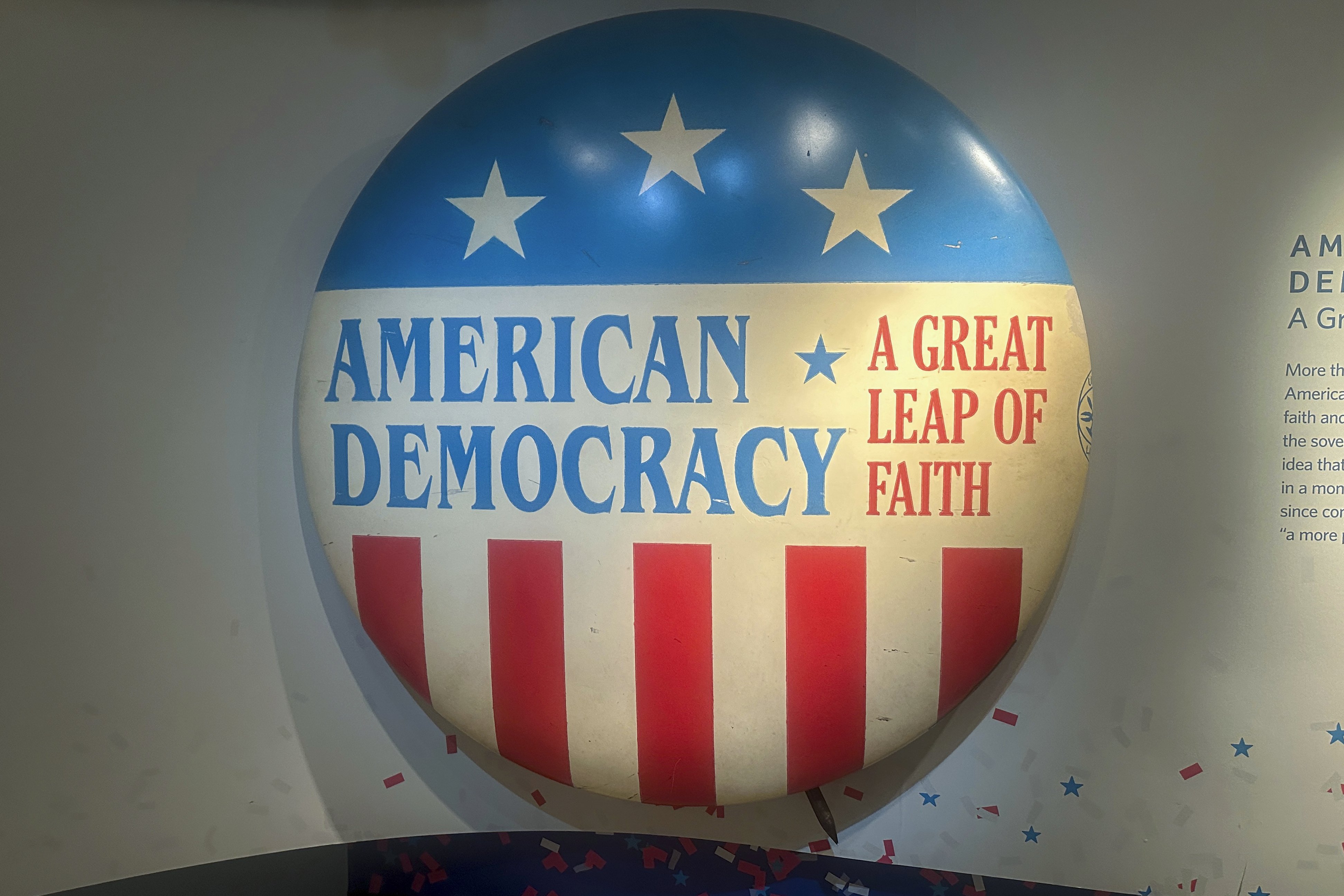
The practical consequences are visible in the museum’s major exhibits. “American Democracy: A Great Leap of Faith” reinterprets the American idea as a story of resistance to racial hierarchies and systemic flaws through petition and protest. “Many Voices, One Nation” describes the settlement of America as a “profound unsettling of the continent” and frames the nation’s past as cross-cultural encounters among ethnic, sexual, and racial identity groups seeking restorative justice from an oppressive system.
Critics argue these exhibits are not simply adding neglected facts to a familiar history; they are dismantling the history itself. Key figures are sidelined, events are decontextualized, and chronology disappears. The result, they say, is not history based on established facts but a systematic framework for reinterpreting society and instigating social transformation.
This controversy comes amid broader debates over how the nation’s story is told, including concerns about Christian nationalism's influence in Washington and the push for a more inclusive historical record. The White House report and the congressional hearing signal a growing political battle over the role of federal institutions in shaping public memory.
Supporters of the museum’s new direction argue that a more critical approach is necessary to address historical injustices and give voice to marginalized communities. But the report’s authors insist that the National Museum of American History should tell the American story “warts and all,” including its imperfections and triumphs, so that visitors understand how the nation arrived at its present state. They argue that nothing integral to that history should be erased or whitewashed, and that the museum must return to its original mission of commemorating the nation’s heritage of freedom.