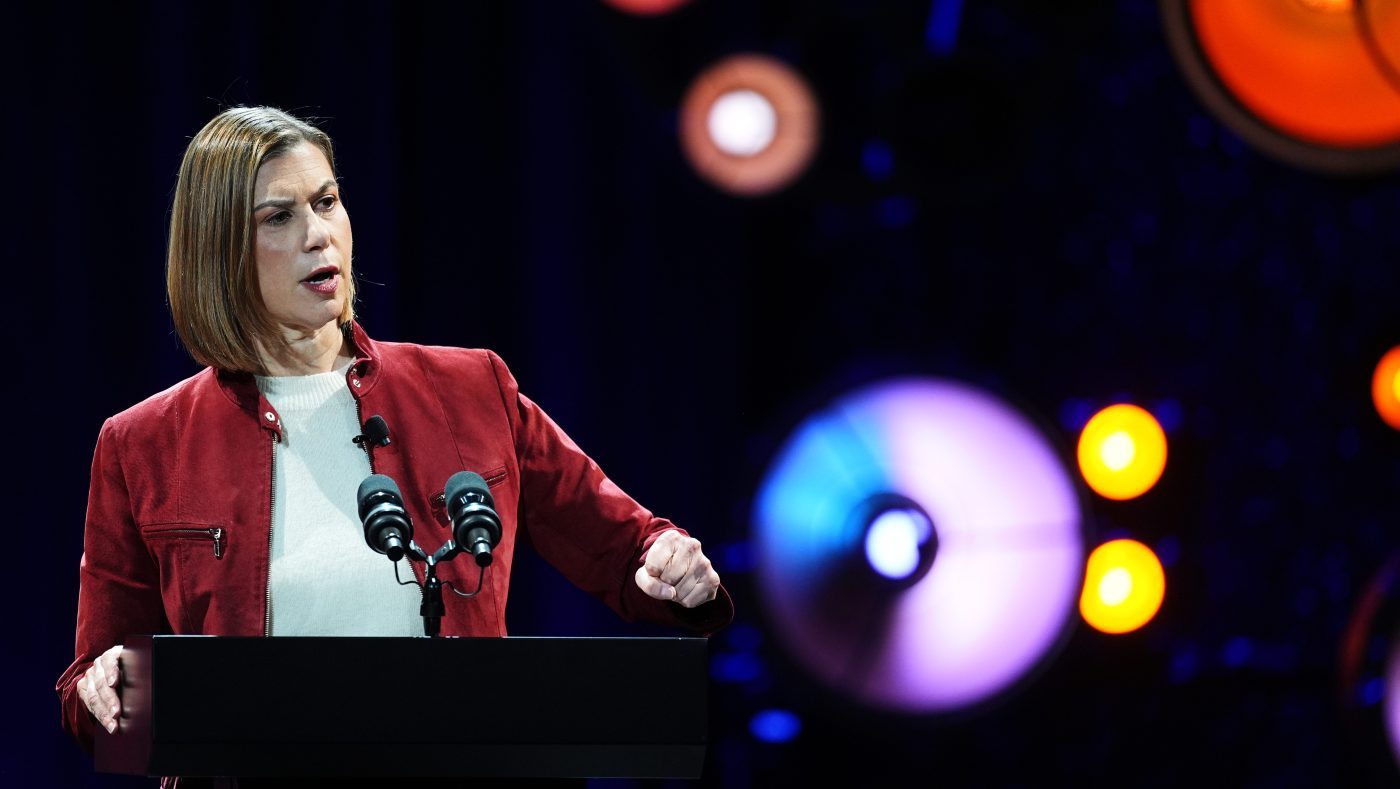
Sen. Elissa Slotkin (D-Mich.) delivered a pointed rebuke to Democrats locked in internal ideological battles, arguing they have misread the message from the midterm elections. Speaking Friday at the What's Next conference in Denver, Slotkin said the party's future lies not in the progressive-moderate divide but in a shared commitment to action over infighting.
"I think Michigan gave a really clear demonstration that whatever side of the Democrats you feel like you're on, that is not what is important right now," Slotkin told attendees. "Teamwork is what is important." She added that voters had "voted very clearly for a new generation of leadership."

The senator's remarks come as Democrats grapple with internal tensions following a mixed election cycle. Slotkin, who won a competitive Senate race in Michigan, said the party's focus should be on results, not labels. "If you have elected officials who are spending all their time fighting progressive versus moderate, then they have missed the plot of the election," she said. "That new generation is not going to be defined by progressive versus moderate. That new generation, quite simply, is are you on Team Fight or are you on Team Flight?"
Her comments echo a broader debate within the party about its direction, particularly as younger leaders rise. The conference also featured House Minority Leader Hakeem Jeffries (N.Y.), Pennsylvania Gov. Josh Shapiro, and Rep. Ro Khanna (Calif.), all of whom are seen as potential presidential contenders. Slotkin confirmed to reporters that she is "seriously" considering a White House bid in the next cycle, saying she wants to be part of a "new generation of leaders that does things differently."
Slotkin's call for unity comes as she has broken with Senate leadership on key votes, signaling her willingness to challenge the status quo. Her stance has resonated with voters who are frustrated with partisan gridlock, and she has emerged as a prominent voice for a pragmatic approach.
Political analysts note that Slotkin's message could reshape the party's internal dynamics. "She's tapping into a sentiment that many voters share—they're tired of ideological purity tests," said one strategist. "Her emphasis on teamwork over factionalism may appeal to independents and moderate Republicans as well."
The conference also highlighted the party's broader challenges, including how to craft a tech agenda that resonates with working-class voters. Slotkin's remarks suggest that Democrats may need to pivot from internal squabbles to a more cohesive, forward-looking platform.
As the 2028 election cycle approaches, Slotkin's potential candidacy adds another layer to the party's calculus. She joins a field that could include Shapiro, Khanna, and Sen. Ruben Gallego (D-Ariz.), all of whom attended the Denver gathering. Whether the party can heed her call for unity remains to be seen, but her message is clear: the voters have spoken, and they want action, not arguments.