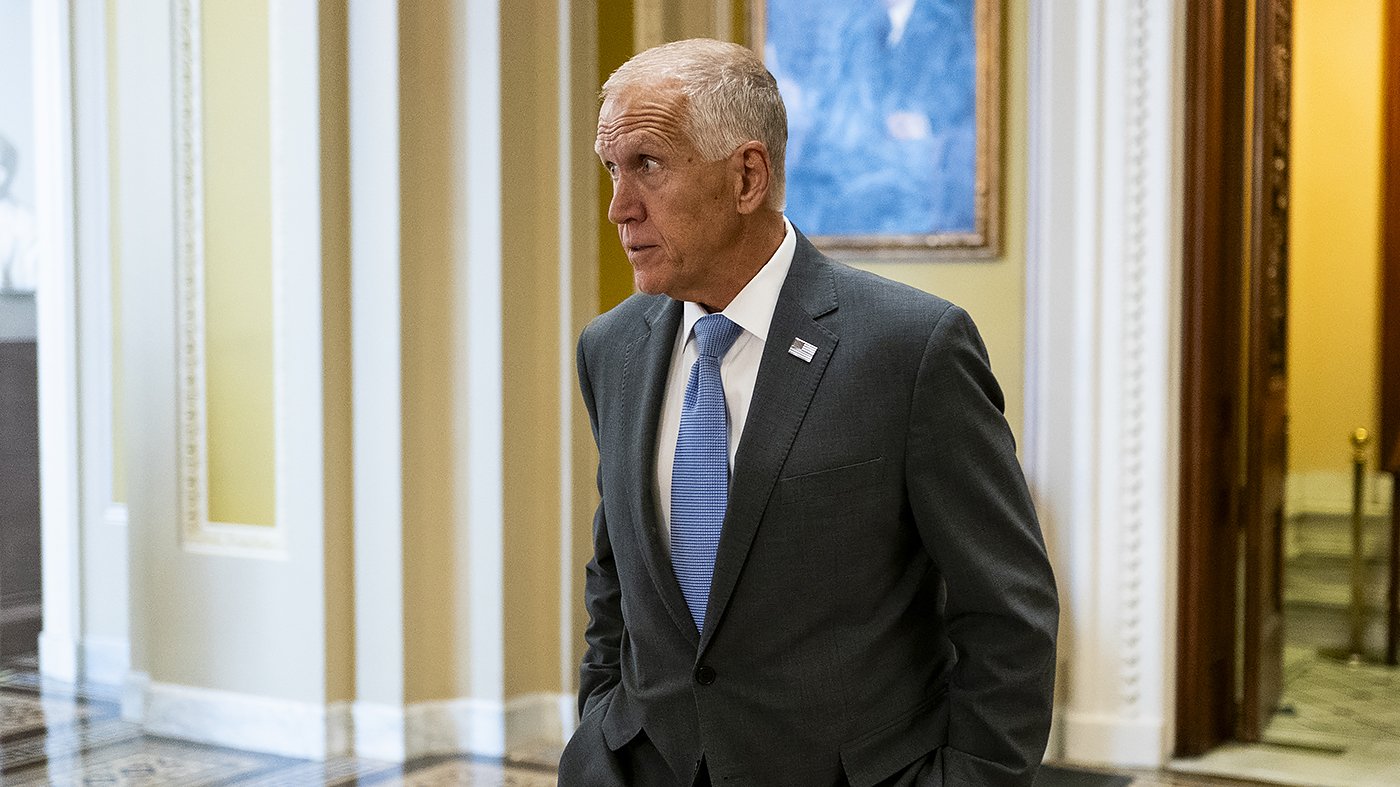
The Senate delivered a decisive blow Thursday to a Republican-led effort to repurpose a contested $1.8 billion fund, voting overwhelmingly against an amendment from Sen. Thom Tillis (R-N.C.) that would have redirected money from the Justice Department's anti-weaponization initiative to bolster fraud enforcement.
The amendment, offered as part of the broader $70 billion budget reconciliation package, sought to strip funding for the so-called anti-weaponization fund and instead allocate up to $1.7 billion to the DOJ's fraud division. Tillis framed the move as a straightforward anti-fraud measure, arguing it would simply codify existing DOJ policy and prioritize taxpayer protection over settlement payouts.
“All this amendment does is codify what I believe the policy of the DOJ is and rather than allow those funds to be directed toward settlement-related payments, it directs resources to the fraud division,” Tillis said on the Senate floor.
The vote to waive a procedural objection raised by Senate Budget Committee Chairman Lindsey Graham (R-S.C.) failed 15-84, effectively killing the amendment. Graham argued the proposal exceeded the budget authority granted to the Judiciary Committee for crafting the reconciliation package, a procedural hurdle that proved insurmountable.
Democrats, led by Sen. Jeff Merkley (D-Ore.), the ranking member on the Budget Committee, opposed the amendment on substantive grounds. Merkley characterized the proposal as merely swapping one problematic fund for another, warning it would hand acting Attorney General Todd Blanche a new pot of money to target political adversaries.
“Taking one slush fund and eliminating it and then creating a new slush fund under the control of the attorney general is not the way to go,” Merkley said. “We’ve already seen how the administration has an enemies list, how inclined this attorney general is to use his resources and office to go after those enemies.”
The defeat comes amid ongoing battles over the anti-weaponization fund, which has been a flashpoint in negotiations. Earlier this year, three GOP senators crossed party lines to block the fund, and a separate effort to halt it via judicial intervention has also stalled. Critics on both sides have argued the fund lacks clear oversight and could be used to punish blue states or political opponents under the guise of fraud enforcement.
Democrats argued that Tillis's proposal, far from eliminating the anti-weaponization fund, would simply rebrand it. They pointed to recent actions by the Trump administration, including a Medicaid fraud crackdown briefing in Ohio, as evidence that fraud enforcement is already being politicized.
The vote also highlighted internal GOP divisions over the reconciliation package, which has faced delays amid disputes over border security and spending. Senate Majority Leader John Thune has pushed forward with a revised $72 billion border bill after earlier setbacks, but the fate of the anti-weaponization fund remains uncertain. House Speaker Mike Johnson has reportedly told the White House the fund is dead given slim GOP margins.
With the amendment defeated, the anti-weaponization fund remains in the reconciliation package, though its future is far from settled. Democrats have vowed to continue opposing it, while some Republicans have signaled they may seek further changes as the bill moves toward a final vote.