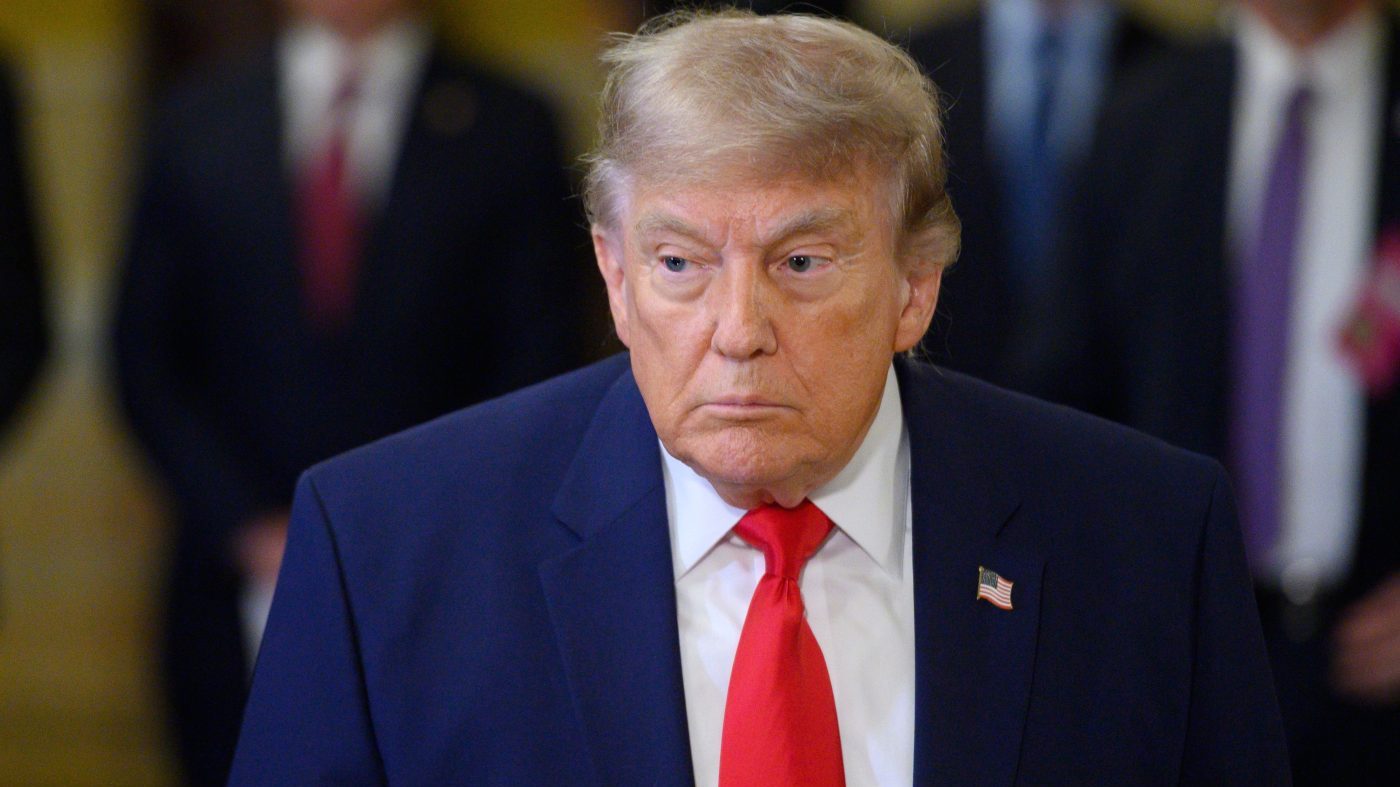
President Donald Trump declared late Wednesday that the Senate's defeat of a war powers resolution targeting U.S. military operations in Iran “puts Iran on notice,” as negotiations for a long-term agreement continue. The vote, which shifted from an earlier 50-48 defeat to a 50-47 victory for the administration, came after a concerted lobbying effort by the president and his team.
“Wow! The Senate just changed its vote on Iran from 50-48 against, to 50-47 for,” Trump posted on Truth Social. “This vote puts Iran on notice,” he added.
The reversal was driven largely by Sen. Bill Cassidy (R-La.), who had supported a similar resolution the day before but flipped after a contentious closed-door meeting with Trump on Capitol Hill. According to Cassidy, he confronted the president over the lack of transparency regarding the conflict, which has exceeded initial timelines.
“I stood and said, ‘You have not told the American people what’s going on [in Iran],’” Cassidy told reporters. “It was supposed to last four weeks, it’s lasted four months. Our original objectives have not been achieved and I want to know what’s going on.” Trump responded by yelling at the Louisiana Republican, who shouted back.
Following the exchange, Cassidy received a briefing from Vice President Vance and special envoy Steve Witkoff at the White House. He later thanked them for a “thorough” update on the military operation, writing on X: “I appreciate the quick invitation to the White House to address many of my concerns.”
Sen. Rand Paul (R-Ky.), who had consistently voted with Democrats on Iran resolutions since the U.S. and Israel struck Iranian targets in February, voted present. Paul said his views on the war and executive power remain unchanged, but he chose to give Trump “more space and leverage to negotiate a lasting peace” with Tehran.
Two Republicans broke ranks to back the resolution: Sens. Susan Collins (R-Maine) and Lisa Murkowski (R-Alaska). Collins faces a tough reelection challenge from Democrat Graham Platner. In his post, Trump specifically thanked Senate Majority Leader John Thune (R-S.D.) and GOP Sens. Lindsey Graham (S.C.) and Bernie Moreno (Ohio), the latter of whom has been a staunch supporter of the Iran campaign.
The vote underscores the delicate balancing act within the GOP as Trump seeks to maintain his negotiating position with Iran while managing dissent from his own party. For a deeper dive into the broader conservative discontent, see our analysis of the Massie-Greene alliance and its implications for Trump's grip on the GOP. The episode also highlights the limits of presidential influence, as explored in our piece on Trump's near-perfect primary endorsement record and its two notable exceptions.
With negotiations ongoing, the administration remains focused on securing a deal that would end the conflict. The Senate's action, while symbolic, provides Trump with a political win as he continues to navigate a complex international landscape.