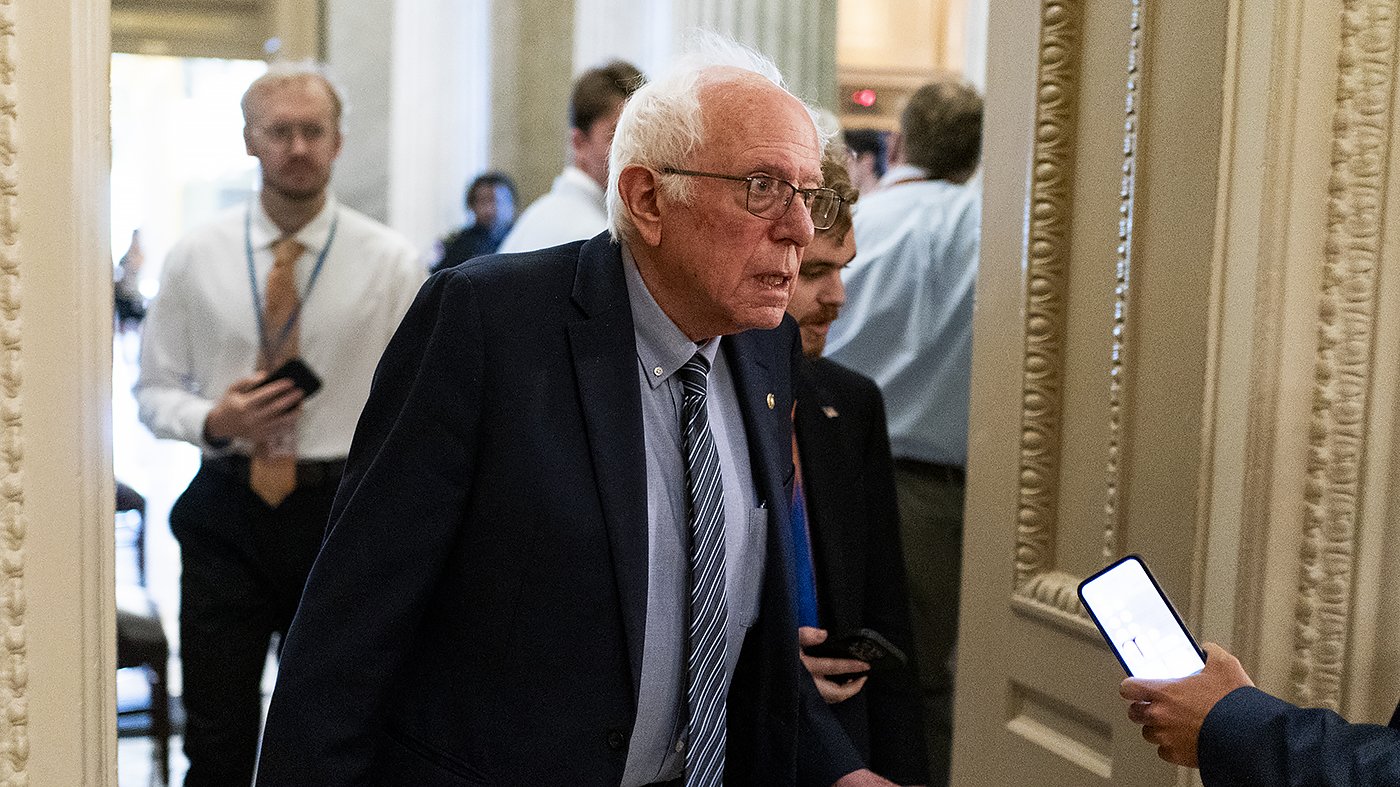
Sen. Bernie Sanders (I-Vt.) introduced a bill on Thursday that would establish a sovereign wealth fund funded by 50 percent stakes in the nation's largest artificial intelligence companies, with annual dividends distributed directly to American citizens. The proposal, which the senator previewed earlier this month, estimates the fund could reach $7 trillion based on current valuations of leading AI firms.
“AI was not created out of thin air,” Sanders said in a statement. “It was not a brilliant idea that just popped into Mark Zuckerberg’s head or Elon Musk’s imagination. The foundation of AI is based on the collective knowledge of humanity and the creative work of tens of millions of people.” He added, “The principle is simple: When a public resource generates wealth, the public should share in that wealth.”
The fund would be managed by a new bipartisan body called the Independent Commission for Democratic AI, consisting of seven members nominated by the president and confirmed by the Senate. The commission would use a 5 percent annual dividend to provide direct payments to Americans, which Sanders estimated would exceed $1,000 per person each year.
Under the legislation, AI companies with at least $200 million in annual revenue would be required to split their AI and non-AI operations. The commission would hold voting shares in these firms, allowing it to block decisions deemed harmful or dangerous to the public.
“Left unchecked, Artificial Intelligence and robotics threatens the jobs, privacy rights and mental health of every man, woman and child in America,” Sanders said. “As a society, we can no longer sit back and allow a handful of Big Tech oligarchs to determine the future of this revolutionary technology with no democratic input.”
The concept of giving Americans a direct stake in AI-driven wealth has gained traction over the past year. Versions of universal basic capital—where citizens receive shares in companies or infrastructure—have been endorsed by AI leaders like OpenAI and Anthropic. California Governor Gavin Newsom (D) signed an executive order in May directing state agencies to explore policies to mitigate AI-related job losses, including universal basic capital concepts.
Even former President Donald Trump has weighed the idea, confirming earlier this month that his administration was examining the possibility of taking stakes in AI companies. Sanders’ approach, however, is far more ambitious, proposing a mandatory 50 percent government stake in the largest players.
The bill reflects growing bipartisan interest in how the economic gains from AI should be distributed. Critics argue that such a fund could deter investment and innovation, while supporters see it as a way to ensure the public benefits from a technology built on collective knowledge. Sanders has long championed policies that redistribute wealth from powerful industries, and this proposal aligns with his broader push for economic justice.
For context, Sanders has also been active in other political battles, including backing Representative Cori Bush in her Missouri House race and reshaping Democratic primaries alongside Alexandria Ocasio-Cortez. Meanwhile, the AI boom has also fueled demand for skilled trades, exposing tensions in Sanders' labor-focused agenda.