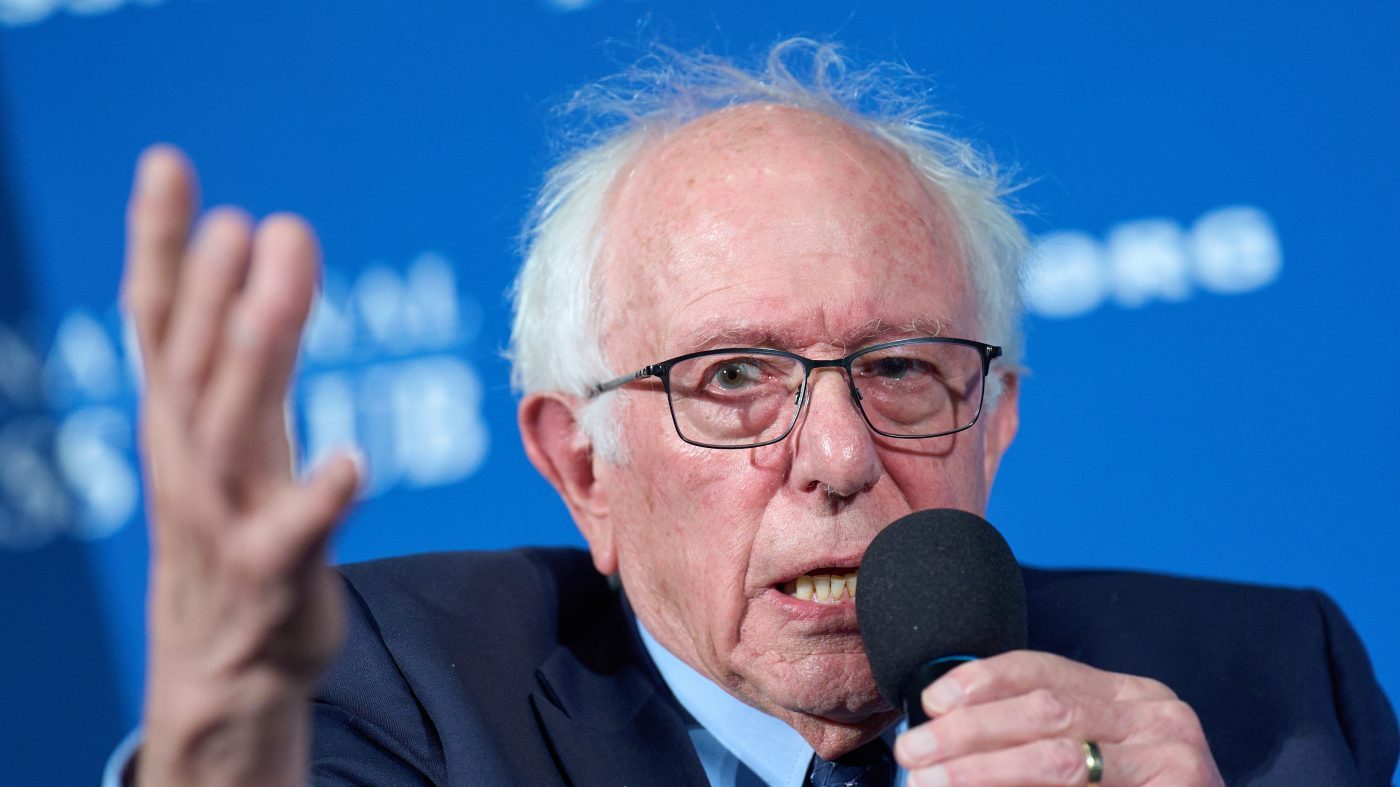
Sen. Bernie Sanders (I-Vt.) escalated his feud with Democratic strategist James Carville on Tuesday, telling the veteran campaign hand to "start his own party" if he objects to the growing influence of progressive candidates and activists within the Democratic coalition.
During an interview with CNN's Abby Phillip, Sanders responded to Carville's weekend comments that he would leave the Democratic Party if popular Twitch streamer Hasan Piker—a Sanders supporter who has campaigned for progressive candidates—becomes a prominent party figure. "Well, that's not much of a choice," Sanders said. "If Mr. Carville doesn't want to be in my party, the party I belong to, that Piker, that El-Sayed belongs to, he can start his own party."

The senator's reference to Abdul El-Sayed was timely: El-Sayed, a progressive physician and former Detroit health director, defeated Rep. Haley Stevens (D-Mich.) in Michigan's Democratic primary on Tuesday, in a race that highlighted the party's ideological divide. Sanders, a democratic socialist who caucuses with Democrats and ran for president as a Democrat in 2016 and 2020, argued that the party must be a "big tent" that welcomes figures like Piker. He also questioned what kind of party voters want to support, pointing to Democratic leadership's acceptance of money from AIPAC, the pro-Israel lobbying group, which he said supports "an extremist Netanyahu government that many of us believe have committed a genocide." Netanyahu has rejected such allegations. Sanders also criticized the party for not standing up to the AI and crypto industries, which he suggested have financial sway over Democratic leaders.
Carville, who gained fame as a strategist for Bill Clinton's 1992 campaign, has been openly skeptical of the leftward shift, warning that progressive candidates are "too hotheaded to know that they're not popular." In a Sunday interview with CNN's Donie O'Sullivan, Carville said, "People don't like them," and warned that a "skewered turnout in a primary" could lead to losses in races Democrats should win. He dismissed Piker's political involvement, suggesting he might leave the party if Piker becomes a mainstay, and pointed to Sanders's own primary losses to Hillary Clinton in 2016 and Joe Biden in 2020 as evidence of progressives' electability problems.
Piker fired back on social media, sarcastically referencing "previous neoliberal Democratic candidacies that have been spectacular successes so far," citing Clinton's 2016 defeat and Kamala Harris's 2024 loss to Donald Trump. The exchange underscores a broader tension within the Democratic Party as progressive challengers continue to score primary victories, including Sanders-backed candidates unseating incumbents and polls showing the liberal wing now dominant. Carville's criticisms have drawn rebuttals from other progressives, including Sen. Elizabeth Warren (D-Mass.), who dismissed his critique as an overabundance of opinions. Meanwhile, some conservatives have invited Carville to join the GOP as the Democratic Party moves left.
Sanders, who has long argued that the party needs to embrace working-class and progressive priorities to win elections, said the choice for voters is clear. "Do you really want to be in a party where your leadership is taking huge amounts of money from AIPAC?" he asked. "You want to be in a party with people who do that?" He also pointed to the party's failure to confront the influence of tech money in politics, suggesting that Democrats should focus on issues that resonate with everyday Americans rather than catering to wealthy donors.
The spat comes as the Democratic Party grapples with its identity after a series of primary upsets and debates over strategy. Carville, a fixture of the party's centrist wing, has become a vocal critic of the left's influence, while Sanders and his allies argue that the party must move further left to energize its base. With progressive candidates winning in Michigan and elsewhere, the battle for the party's soul is far from over.