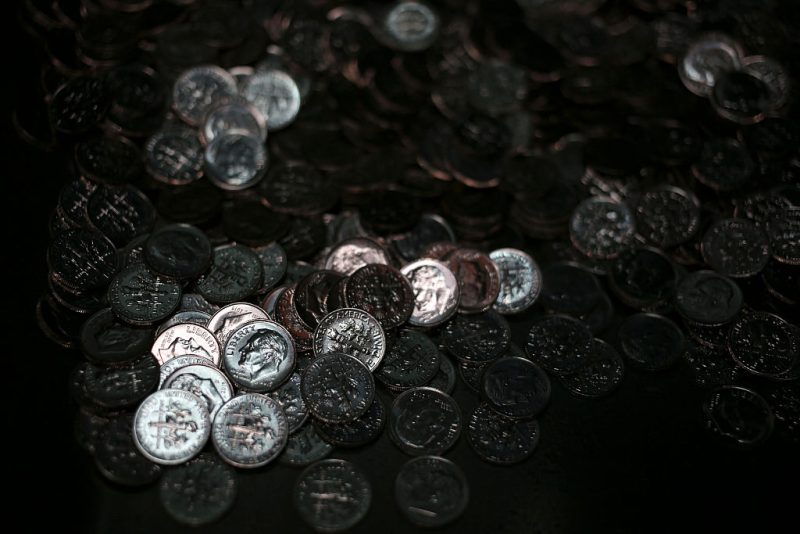
That dime rattling around in your change jar or tucked into an old coat pocket is probably worth just 10 cents. But one of its distant relatives, struck in San Francisco in 1894, is poised to fetch more than $1 million at auction next month.
The coin, a Barber dime, is part of a series designed by Charles E. Barber, the U.S. Mint's chief engraver in the late 19th century. While most Barber dimes are common and sell for modest sums, the 1894-S issue is legendary among collectors. According to Stack's Bowers Galleries, which is handling the sale, the dime carries an estimated value of $1.5 million — 15 million times its face value.
Only nine examples of the 1894-S Barber dime are known to survive, making it one of the rarest and most coveted coins in American numismatics. The specimen being offered is part of Stack's Bowers' Rarities Night auction, a showcase for high-value rarities. The auction house has not disclosed the consignor's identity.
For collectors, the allure goes beyond scarcity. The 1894-S has a storied history, with rumors that Mint officials struck the small mintage as special gifts for bankers or as presentation pieces. Some accounts suggest that as few as 24 were originally minted, and that many were spent or lost, leaving only a handful for today's collectors.
So how can you tell if your old dime is worth a fortune? The key is the date and mint mark. Look for a dime with the year 1894 and an "S" mint mark (for San Francisco) on the reverse, below the wreath. The design features Liberty facing right on the obverse, with the word "LIBERTY" in a headband, and a wreath surrounding "ONE DIME" on the reverse. Barber dimes were minted from 1892 to 1916, so any dime from that era is worth checking, but only the 1894-S commands seven figures.
Even if your dime isn't an 1894-S, older dimes can still have value. For instance, Barber dimes from other years and mint marks can sell for hundreds of dollars, depending on condition and rarity. Mercury dimes (1916-1945) and Roosevelt dimes (1946-present) are also collectible, with certain dates and mint marks being more valuable. If you suspect you have a rare coin, experts recommend having it professionally authenticated and graded by a reputable service like PCGS or NGC before seeking a buyer.
The upcoming auction highlights a broader trend in collectibles: rare coins have become an alternative investment, with values sometimes outpacing traditional assets. In recent years, other U.S. rarities, such as the 1913 Liberty Head nickel and the 1804 silver dollar, have sold for millions. For the lucky owner of an 1894-S dime, the payoff could be life-changing.
As the auction date approaches, collectors and investors will be watching closely. Whether the dime meets or exceeds its estimate remains to be seen, but its place in numismatic history is already secure.