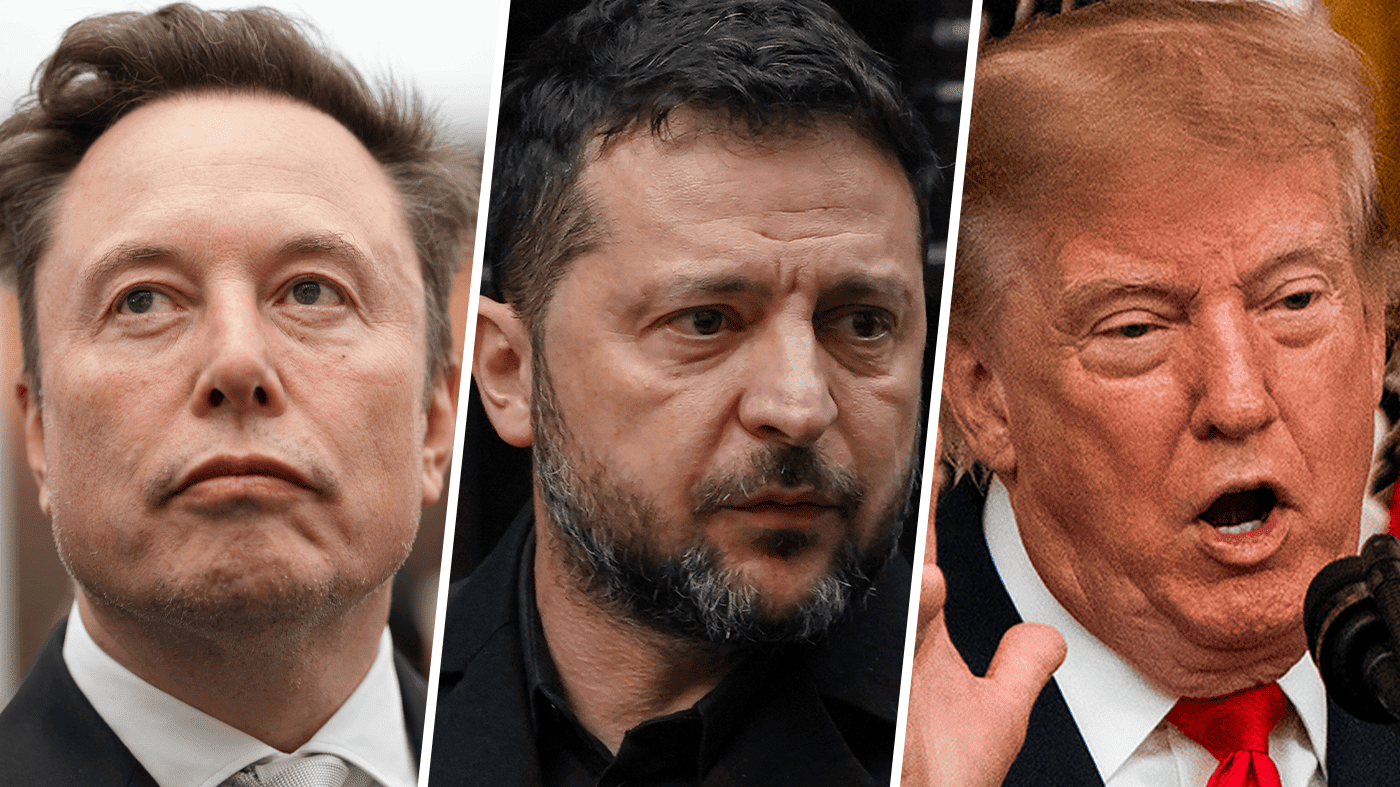
The war in Ukraine has entered a new phase of turmoil, with Kyiv suddenly losing access to a critical military satellite service, sparking accusations of betrayal from President Zelensky and deepening concerns about President Trump's approach to the conflict.
On Wednesday, reports emerged that the Ukrainian military had, without warning, been restricted in its use of Starshield—a military-grade version of Starlink that is essential for battlefield communications and drone operations. The restriction immediately blunted some Ukrainian operations, according to commanders on the ground, as the service is used for offensive actions and is a pillar of Kyiv's ability to strike deep into Russian territory.
The development comes amid a backdrop of escalating tensions. Over the weekend, Elon Musk, who owns the parent company SpaceX, posted on social media that "Zelensky has gone too far," aligning with President Trump's frustrations over Ukrainian attacks on Russian oil refineries. But on Wednesday, Musk appeared to shift blame, writing on X: "Starshield systems are owned and controlled by the US government. Any limits on speed or usage are decided by the US military and ultimately POTUS."
Ukrainian President Volodymyr Zelensky, in an interview with British journalist Piers Morgan, said he felt "betrayed" by the combination of the Starshield restrictions, a recent deal allowing Russian diesel onto the global market, and continued Russian attacks despite a purported "energy ceasefire." He expressed regret at losing a "strong partner" in the U.S. and insisted that Trump is "not [on the] right side of history."
The White House did not respond to requests for comment on its role in the Starshield restrictions. However, experts and lawmakers are drawing stark conclusions. Luke Zahner, a senior fellow at the Center for American Progress, told The World Signal that the combination of the Starshield move and the diesel deal "would mean the Trump administration is helping Russia."
The diesel deal, announced on Friday, is widely seen as an end-run around sanctions on Russia, easing pressure on Putin at a time when Ukraine's only hope lies in intensifying that pressure. The move has sparked rare dissent within Trump's own party. Rep. Ashley Hinson (R-Iowa), the GOP Senate nominee, broke with the president during a debate, saying, "We need to lower diesel prices, but I don't think we need to be making a deal with Russia to do it." Rep. Don Bacon (R-Neb.) went further, suggesting that reduced intelligence sharing and the Starshield restrictions "equates to aiding the invader & the war criminal who bombs cities."
Meanwhile, Russia continues to occupy roughly one-fifth of Ukraine and has ramped up attacks on Ukrainian energy infrastructure, despite Trump's claim of an "energy ceasefire." The U.S. president has remained largely silent on the specifics of the crisis, even as Democrats and some Republicans express alarm over his apparent favoritism toward Moscow.
For Ukraine, the loss of Starshield access could be devastating, particularly as its drone warfare has been vital to maintaining a rough equilibrium on the battlefield. The restrictions also raise questions about the reliability of U.S. support, especially as Trump has been pushing for a quick end to the war, even if it means concessions to Russia.
As the situation unfolds, the political ramifications for Trump are becoming clearer. High energy prices at home—driven largely by the war with Iran and its impact on the Strait of Hormuz—are dragging down his approval ratings, and the Ukraine crisis is adding another layer of complexity. With the midterm elections looming, Trump's handling of Russia and Ukraine could become a liability, even among his usual allies.
The coming days will determine whether this is a temporary glitch or a fundamental shift in U.S. support for Ukraine. But for now, the chaos and crisis show no signs of abating, and the questions over Trump's role in the conflict are growing louder.