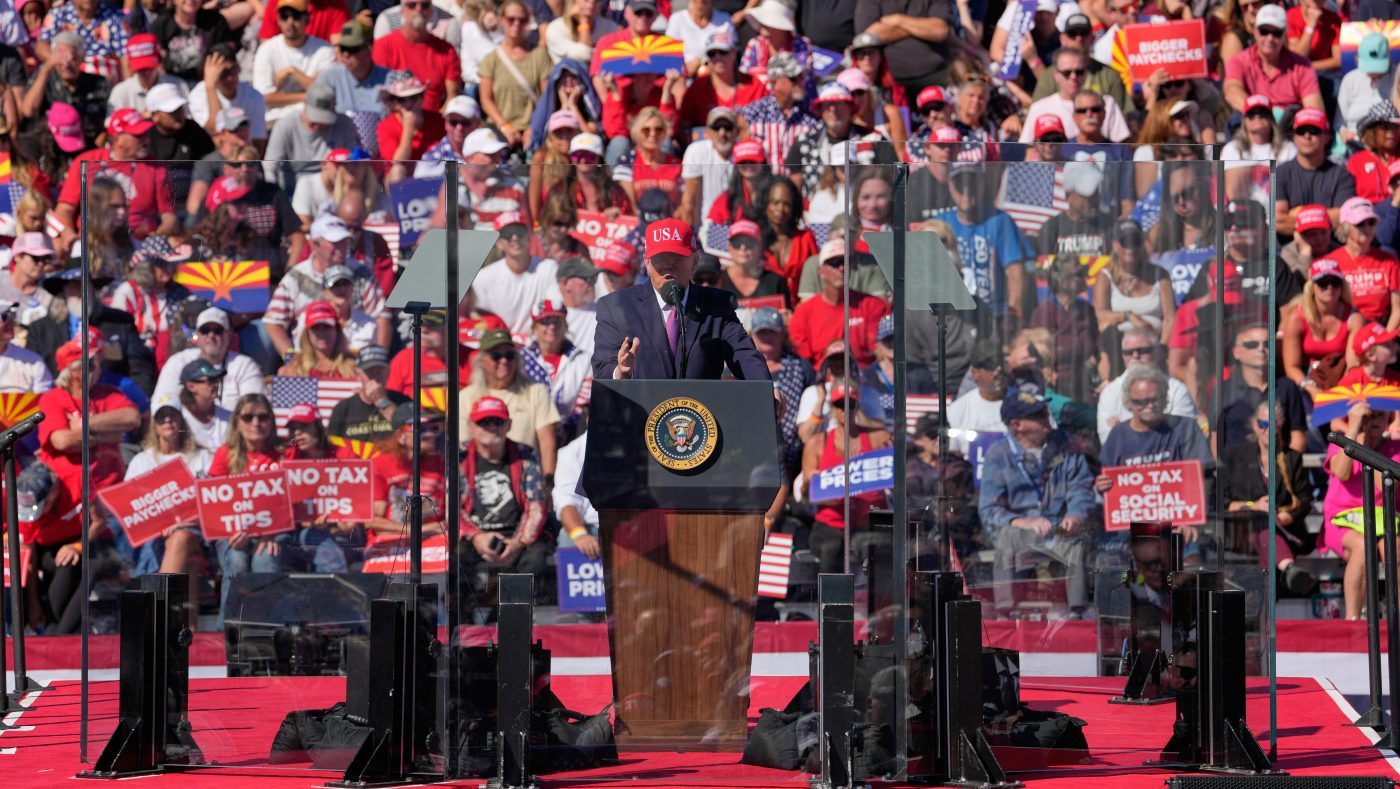
President Trump told supporters in Bullhead City, Arizona, on Wednesday that leakers should be shot, escalating his long-running war with the national security bureaucracy and the press during a campaign rally appearance.
“Somebody leaked, some sleazebag. They ought to go to jail and be shot. For the rest of their life, they should be in jail,” Trump said, according to a transcript of his remarks. The president appeared to be referring to disclosures surrounding a U.S. military operation against Iran’s nuclear facilities.
Trump specifically mentioned Operation Midnight Hammer, the June 2025 mission, and complained that details of the strike had been compromised. “They leaked that we were leaving at 12:07 from Missouri, and it was in the New York Times, CNN. They leaked the time that we were leaving, the time that we were arriving,” he said, adding that the raid had to be postponed by two days as a result.
“In my opinion, leakers should be shot. In the old days, we used to shoot leakers,” Trump continued. “When they leak what time you’re going to attack a country, and the reason you’re attacking is really for defense because you don’t want them to have a weapon that can blow up millions of people in one shot.”
The president then broadened his attack to include journalists covering his administration, saying they were “almost as bad as a leaker.” He accused reporters of fabricating sources and spreading false information. “They leak false information. That makes them a leaker,” he said. “Often times, without a source. I think they make up a lot of their sources.”
The remarks drew immediate attention given their violent imagery, though Trump has a history of using inflammatory language about leaks and the media. His comments come as he continues to campaign aggressively ahead of the midterm elections, including a recent stop in Arizona to boost Republican candidates. That event was part of a broader push in the state, where Trump has thrown his weight behind a gubernatorial bid by Rep. Paul Biggs, as reported in coverage of Trump’s Arizona rally for Biggs.
Trump’s rhetoric on leakers has previously raised concerns about press freedom and government transparency. While he has often called for prosecuting those who leak classified information, his suggestion that they should be shot marks a notable escalation. Legal experts note that leaking classified information can carry criminal penalties, but advocating execution is outside the bounds of normal political discourse.
The White House did not immediately respond to a request for comment on whether the president was speaking literally or figuratively. The rally remarks are likely to reignite debate over the balance between national security secrecy and the public’s right to know, especially regarding military operations.
Trump’s focus on the Iran strike leaks also underscores his continued preoccupation with the 2025 operation, which he has touted as a success. The disclosure of timing details, he argued, put American forces at risk. However, it remains unclear whether the leaks he described actually occurred as stated or whether they originated from within the government or were independently reported.
The president’s comparison of reporters to leakers is part of a broader pattern of hostility toward the media. He has frequently labeled unfavorable coverage as “fake news” and threatened to revoke press credentials. His latest comments are likely to further strain relations with news organizations and could prompt renewed calls from press freedom advocates for him to tone down his language.
As Trump continues to dominate Republican politics, his rally rhetoric remains a central feature of his appeal to supporters. But the calls for violence against leakers may also alienate moderate voters and complicate his party’s messaging in competitive races. For now, the remarks have succeeded in generating headlines and keeping the spotlight on the president’s grievances.