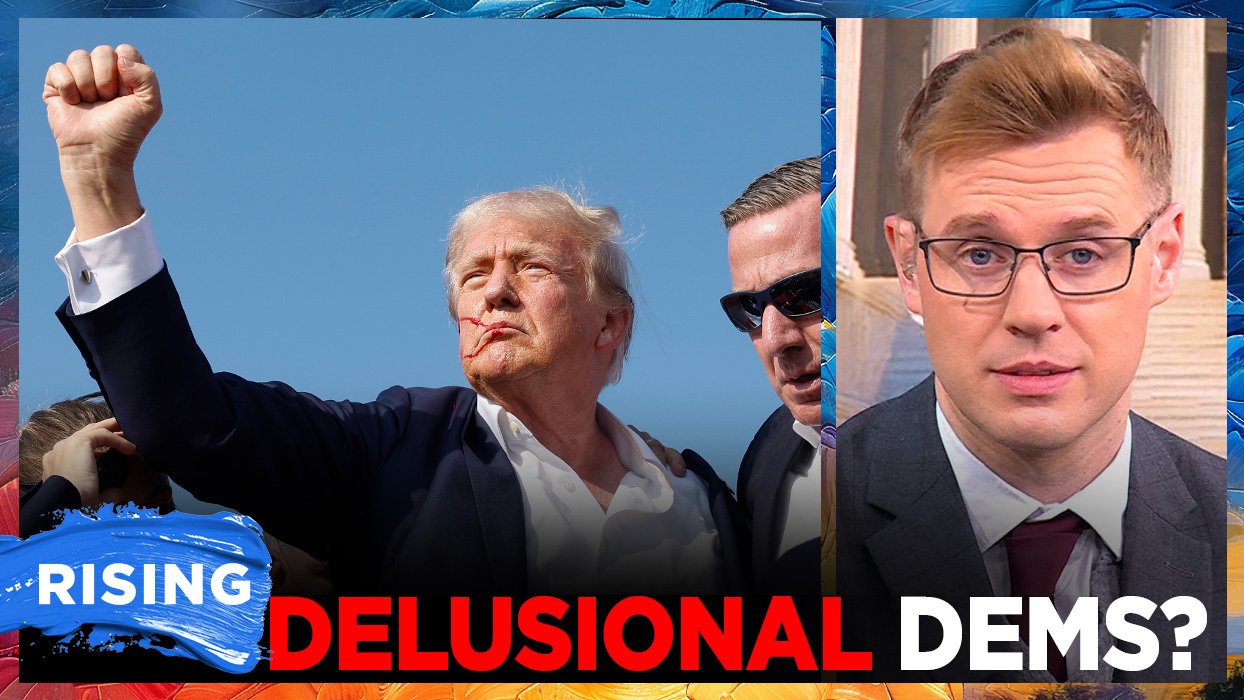
A new poll from the Manhattan Institute has rattled assumptions about partisan conspiracy theories, finding that nearly half of Democrats believe the assassination attempt on former President Donald Trump in Butler, Pennsylvania, was a staged event. The survey, released this week, shows 46% of Democratic respondents said the July 2024 shooting — which left one attendee dead and Trump wounded — was “orchestrated by his supporters in order to increase sympathy for him.”
The findings challenge the widespread narrative that only conservatives or Trump backers fall for baseless claims. The same poll also found that 64% of Democrats believe Russian President Vladimir Putin holds compromising information on Trump, influencing his foreign policy. That perception has persisted despite the lack of public evidence and multiple investigations that failed to substantiate such claims.
Conservative commentator Stephen L. Miller highlighted the prevalence of this thinking among mainstream figures, including podcasters, cable news hosts, and late-night comedians. “And because of how normalized this is, a dude with those same exact positions just tried to shoot up the WHCA,” Miller wrote, referring to the recent incident at the White House Correspondents’ Association dinner.
Cole Tomas Allen, the suspect in that shooting, had a documented history of posting conspiracy theories online, including claims that the Butler attack was a false flag. CNN reporter Andrew Kaczynski detailed Allen’s social media activity, noting his repeated assertions that the assassination attempt was staged. Allen’s case underscores how deeply such beliefs can take hold, even among those who consider themselves opponents of Trump.
Despite these beliefs, evidence confirms the Butler shooting was real. A gunman opened fire at Trump’s rally, wounding the former president and killing Corey Comperatore, a retired firefighter in the crowd. No credible evidence supports the theory that Trump’s supporters orchestrated the attack.
The poll results do not imply that all Democrats who hold these views bear direct responsibility for violent acts. But they do challenge the smug assumption that liberal-leaning individuals are immune to conspiracy thinking. As the author of the original column, Robby Soave, noted, partisans on both sides can be gullible when motivated by political animus. He pointed to Trump voters who believe the 2020 election was stolen as a parallel example.
Soave, co-host of The Hill’s “Rising” and a senior editor at Reason Magazine, called on media outlets to apply the same scrutiny to Democrats who embrace such theories as they do to Republicans who question election integrity. “Will the media take Dems to task for buying this nonsense about the threats to Trump’s life?” he asked.
The Manhattan Institute survey adds to a growing body of research showing that conspiracy theories are not confined to one party. It also raises questions about how news organizations cover political violence and the narratives that emerge around it. As the 2026 midterms approach, the persistence of such beliefs could shape voter attitudes and trust in democratic institutions.