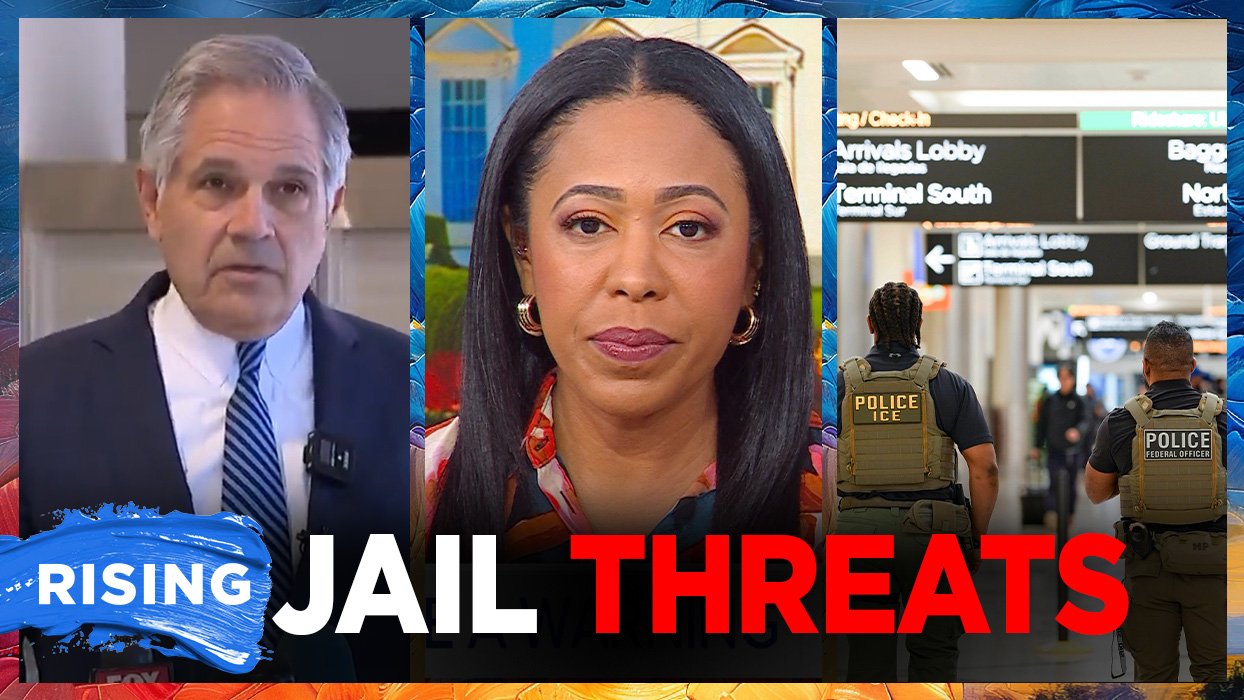
Philadelphia District Attorney Larry Krasner has intensified a national confrontation by explicitly warning federal Immigration and Customs Enforcement agents that they will face criminal prosecution if they violate local laws while deployed at the city's airports. The declaration marks a significant escalation in the jurisdictional battle between federal authority and municipal control, unfolding against the backdrop of a protracted Department of Homeland Security shutdown.
A Direct Warning to Federal Agents
"This is how it works. You commit crimes within the jurisdiction that is the city and county of Philadelphia, I prosecute you," Krasner stated unequivocally. "No, I don't take a phone call from the president saying, 'Let them go.' No, the president cannot pardon you." He further warned that agents could be handcuffed, brought to court, and jailed, specifically cautioning against any actions resembling "the criminal homicide of unarmed, innocent people"—a pointed reference to controversial ICE operations elsewhere.
This warning comes as the Trump administration deploys ICE officers to airports nationwide to address critical staffing shortages caused by the ongoing Homeland Security funding lapse. Unlike Transportation Security Administration workers, many of whom are working without pay or calling out sick, these ICE agents are being paid through separate appropriations. However, they lack standard TSA training for screening and security, performing roles like crowd control instead.
Broader Political Standoff
The deployment is not merely an operational stopgap but a flashpoint in a deeper political conflict. Congressional Democrats are demanding reforms to ICE operations—including requirements for judicial warrants, body cameras, and bans on face coverings—as part of any funding deal. Republicans have refused to decouple ICE funding from the broader DHS budget, creating a stalemate that has left thousands of TSA employees in financial limbo and triggered an airport security crisis that intensifies political pressure to resolve the shutdown.
Krasner's stance tests the limits of local prosecutorial discretion when confronting federal officers. District attorneys possess broad authority to bring charges within their jurisdictions, even against federal agents accused of crimes. This sets up a direct conflict with the federal government's expansive authority over immigration enforcement, highlighting a fundamental tension in American governance.
Potential for Further Escalation
President Trump has shown no sign of backing down, telling reporters he is "pretty much not happy" with existing negotiations and suggesting on social media that he "may call up the National Guard for more help." This raises the possibility of military personnel joining federal agents at airports, further complicating the jurisdictional landscape and intensifying the standoff.
The situation transcends immediate concerns about airport delays or specific immigration policies. It has become a raw test of how far each level of government will go to assert its authority. As agencies clash and politicians remain entrenched, the core legislative duty—funding the government—remains unfulfilled. The refusal to negotiate or to separate funding for critical services like TSA and FEMA prolongs a crisis with tangible public consequences.
Meanwhile, the public bears the brunt of this dysfunction. Travelers face unprecedented security lines and uncertainty, caught between competing power centers. The TSA has warned that airport closures are possible as absences cripple checkpoints, underscoring the real-world impact of the political impasse.
The longer this conflict continues, the more it exposes the fragility of intergovernmental relations and the high cost of political brinksmanship. Krasner's warning is not an isolated local action but a symptom of a broader systemic failure, where the breakdown of basic governance places everyday citizens in the crossfire of a federal-local power struggle.