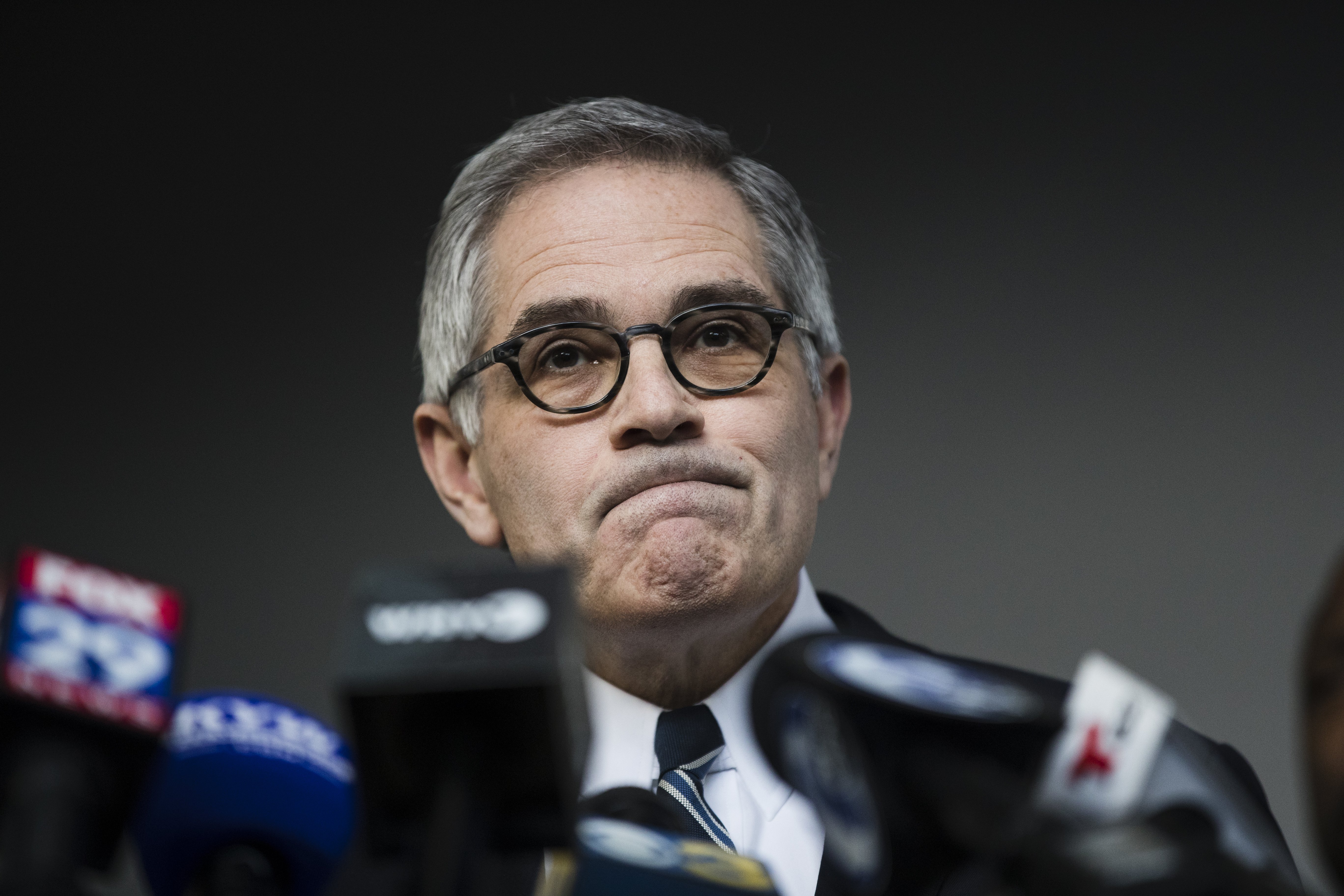
Philadelphia District Attorney Larry Krasner, a progressive prosecutor backed by national liberal donors, has been dealt a harsh rebuke by the Pennsylvania Supreme Court. In a unanimous decision, the court accused Krasner's office of systematically undermining criminal cases in a manner that 'facilitates injustice' rather than justice.
Court Finds Pattern of Misconduct
The ruling, issued in Commonwealth v. Brown, describes a troubling pattern since 2018: Krasner's prosecutors have conceded relief in roughly 100 murder cases, often without proper investigation or legal basis. The court found that his office 'violated its duty of candor,' 'withheld material evidence,' and 'submitted a false stipulation of fact.' In one instance, the court noted, the 'predictable result was the erroneous grant of a new trial.'
Justice Kevin Dougherty, writing for the majority, highlighted that such concessions robbed the public of 'the benefits of opposing advocacy.' The opinion explicitly called out Krasner's possible political motivations, stating that concessions made for 'personal, political, ideological, policy, or other non-legal reasons' do not minister justice but facilitate it.
Krasner's Response: Deflection and Defense
Krasner, who has cultivated a reputation as a champion of the far left, responded characteristically. He framed the criticism as an attack on racial justice and democracy, saying it 'undermines the value of a vote in Philadelphia.' He defended his staff as furthering reform, noting that 'on the eve of Juneteenth, we should all remember that reform is necessary.'
This response echoes past behavior. In 2021, a court admonished Krasner for maintaining an unconstitutional blacklist of police officers he refused to call as witnesses, even when their testimony was needed to convict criminals. In 2022, a state Supreme Court justice criticized him for abusing the grand jury process.
A Case Study: The Wharton Matter
The court's opinion details the 1984 case of Robert Wharton, convicted of first-degree murder for strangling and drowning Bradley and Ferne Hart, and leaving their seven-month-old baby to freeze. Krasner's office misrepresented that the victims' family supported overturning the conviction; in fact, the couple's surviving daughter vehemently opposed it. Krasner was ordered to write apology letters to the family.
Such conduct led to the disbarment of Krasner's supervisor, Nancy Winkelman, who was barred from handling cases for three years for repeatedly lying to overturn the conviction.
Broader Implications
The court expressed alarm that more than a thousand cases remain in the pipeline, with Krasner's office expected to continue what it called 'its checkered concession program.' The ruling comes amid broader political battles, including the LePage-Dunlap Showdown Set for Maine's Open 2nd District Seat and the Georgia GOP Shelves Redistricting Plans, Delaying Post-Supreme Court Map Battle.
For Krasner, a Soros-funded figure who once threatened to arrest FBI agents and 'hunt down' ICE officers, the court's ruling marks a significant setback. It suggests that even the state's Democratic-controlled Supreme Court has lost patience with his approach.