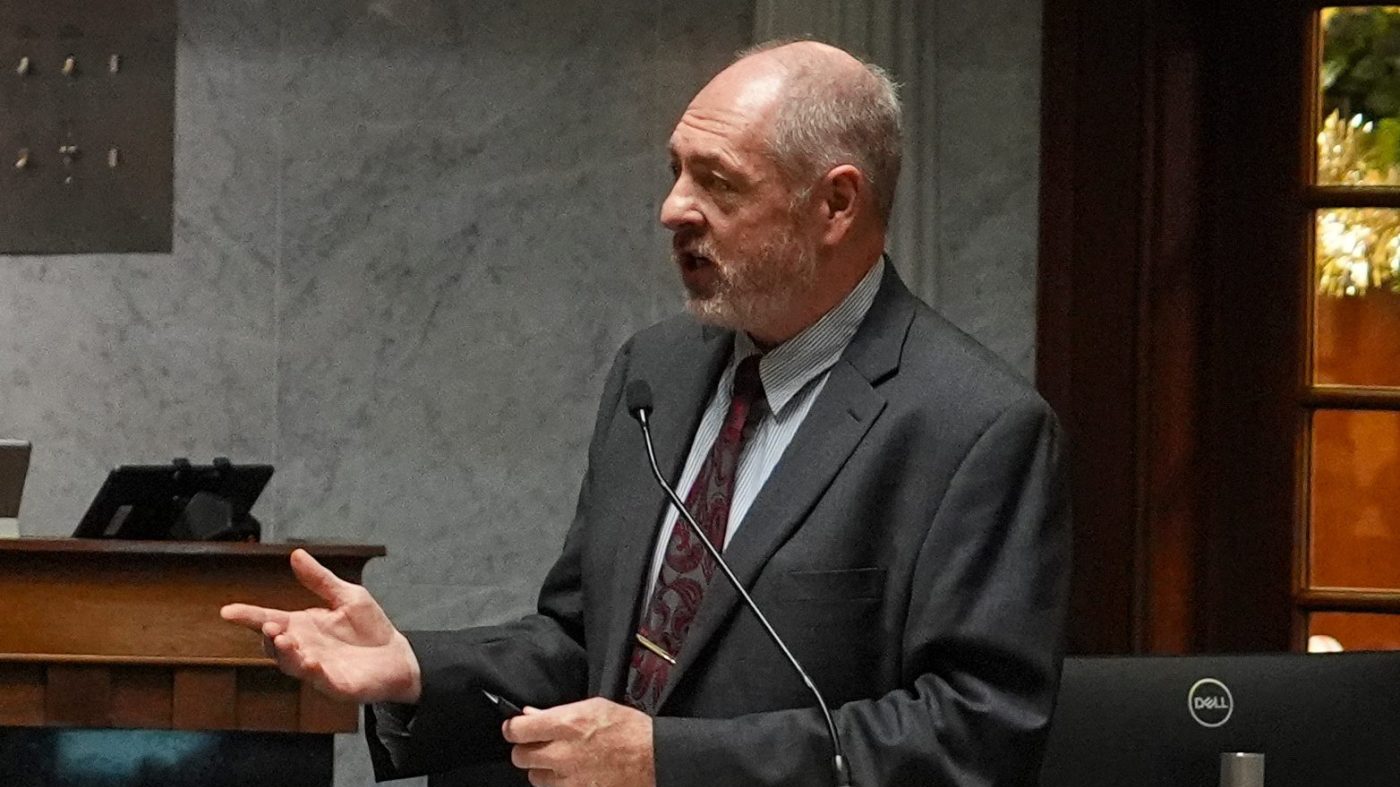
Indiana State Sen. Greg Walker (R) is unapologetic about the vote that cost him his political career. In an interview on NBC's "Meet the Press NOW," Walker told host Kristen Welker he has no regrets about opposing a state redistricting plan that had the backing of former President Donald Trump. "I do not," he said. "I made the right choice."
Walker was defeated by challenger Michelle Davis in the GOP primary for Indiana's 41st state Senate district, losing by 17.5 points after holding the seat for two decades. The race was widely seen as a test of Trump's continued influence over the party, and Walker's loss was one of several that followed his defiance on the map.
Walker said he was "surprised" by the strength of Trump's endorsement against him, noting that his opposition to the redistricting plan had "90 percent approval" among his constituents. He felt confident heading into the election, but the former president's backing of his opponent proved decisive.
From the start, Walker had reservations about the proposed congressional map. "My very first words when I heard of this was this is ridiculous and this will backfire," he said. "Clearly on the national level, it has been a backfire. There have been no groundswell of Republican drafted seats." He warned that Indiana's current 7-2 GOP advantage in the U.S. House could shrink to 6-3 if the map reduced safety margins in key districts.
The primary capped a pressure campaign by Trump and his allies, who vowed to challenge any Republican who rejected the map, which would have favored the GOP in all nine House districts. Walker described an atmosphere of intimidation: "There have been many Republicans that told me how turned off they were by the pressure on the President of the United States to where we had members that were being swatted, myself included, bomb threats, etc. And it was just that sense of force and coercion and authoritarianism that really struck a bad tone."
Indiana's lower chamber passed the Trump-backed map, but 21 Republican senators joined with 10 Democrats to defeat it in the state Senate. Trump then endorsed challengers against those up for re-election, and outside groups spent millions targeting them. The outcome has been compared to other high-profile redistricting battles, such as the FBI raid linked to a redistricting push in Virginia.
Walker pushed back on Trump's characterization of his opponents as "RINOs" or "Republicans in Name Only." "Anyone that stands up and says, we don't agree with the president, you're a RINO," Walker said, calling the taunt the "same tired tune." He questioned why it remains effective: "I don't understand why it continues to be effective. Can the whole nation be wrong and one person right? I don't think that's possible."
The primary results were a clear victory for Trump, with five of the seven Republican senators who opposed the map losing their seats. Only one incumbent, Spencer Deery, survived, and his race remains too close to call. Walker suggested the purge sends a chilling message. "I think this was meant to be a clear message of retribution," he said. "We had various reasons why we supported or rejected it, but it's clearly meant to be a message sent to the nation that you will pay a dear price." He added that Congress has become "a land of hyper partisanship and threats of primaries constantly in order to hold power, and that's no way to govern."
The Indiana results echo broader trends in GOP primaries, where Trump's endorsements have often been decisive. In a related race, Trump-backed challengers toppled five Indiana GOP senators in what some see as a preview of the midterms. Walker's defeat, however, stands out as a case of a seasoned lawmaker who chose principle over party loyalty, even at the cost of his seat.