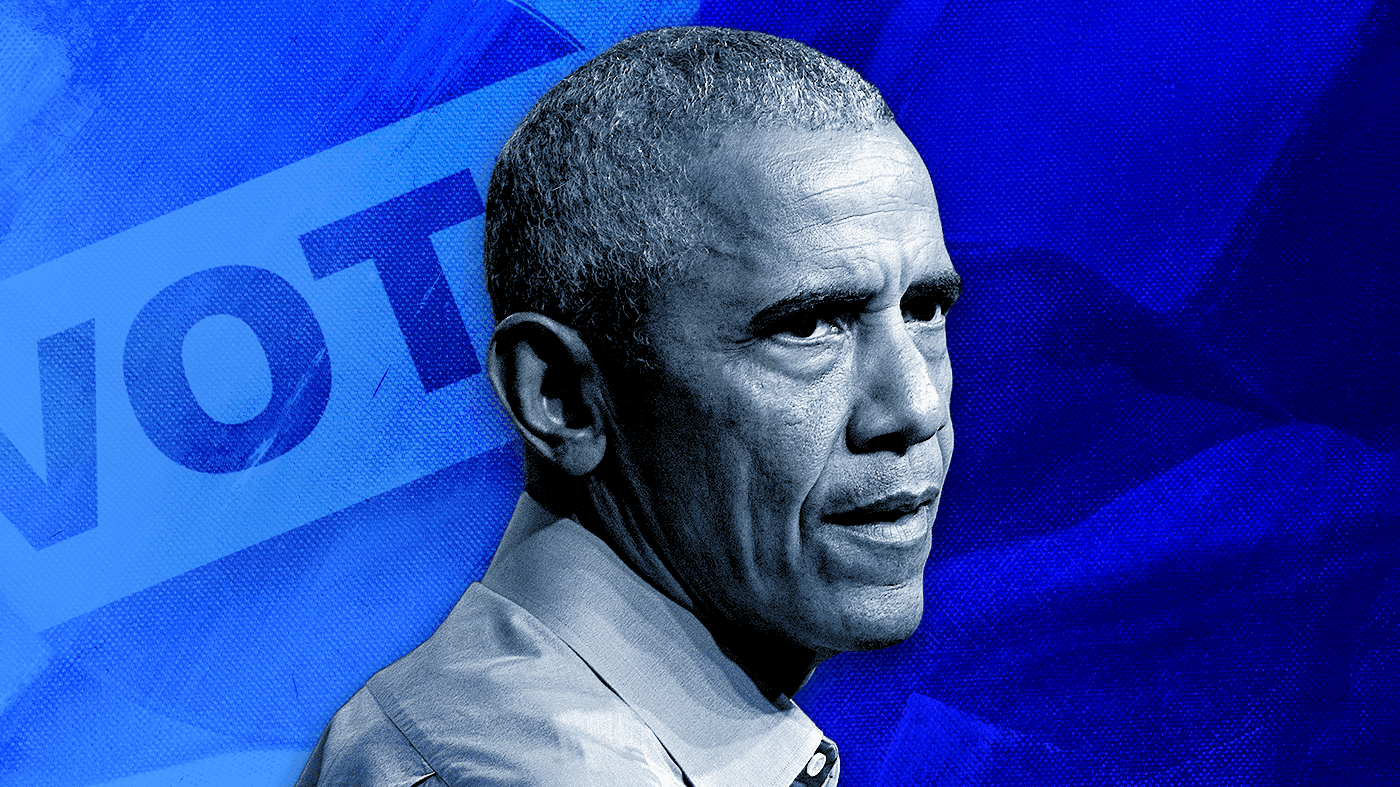
Former President Barack Obama will headline a fundraiser for the National Democratic Redistricting Committee (NDRC) on Aug. 31, according to an invitation obtained by Punchbowl News. The event, which includes a dinner and discussion, comes as Democrats escalate their push to reclaim House and Senate majorities while grappling with financial headwinds.
The NDRC, led by former Attorney General Eric Holder, is at the center of Democratic efforts to combat Republican-drawn maps that have tilted the playing field in states such as Texas, Ohio, North Carolina, and Florida. Obama's involvement signals a high-profile attempt to rally donors and activists behind a strategy that has so far yielded mixed results.

Democrats enter this fight with $15 million in cash on hand but carry $18 million in debt, according to Axios. The party's financial struggles have prompted internal measures, including requiring Democratic National Committee leaders to sign nondisclosure agreements to prevent leaks about the fiscal situation. The Obama fundraiser is seen as a critical tool to shore up resources for legal battles and ballot initiatives.
The stakes are high: Republican-led redistricting efforts have drawn praise from former President Donald Trump, who has encouraged GOP leaders to pursue aggressive map redraws nationwide. In contrast, Democratic attempts to secure fairer maps have often stalled or failed. Voters approved new congressional maps in Virginia, but courts struck them down. In Maryland, lawmakers delayed approving new districts earlier this year despite pressure from Governor Wes Moore.
The NDRC is now recalibrating its approach, focusing on campaign strategy, fundraising, ballot measures, and litigation. The group aims to counter GOP gains in mid-decade redistricting, a process that could shape control of the House for years to come. The Obama fundraiser is part of a broader Democratic push to leverage high-profile surrogates as the party tries to overcome internal divisions and financial constraints.
Meanwhile, the political landscape is shifting. Young voters are driving primary upsets based on age rather than ideology, a trend that could influence Democratic strategy. At the same time, Republicans are planning to weaponize Democratic Socialist labels in the 2026 midterms, adding another layer of complexity to the redistricting fight.
For Democrats, the path to a House majority runs through these redistricting battles. With Obama stepping into the fray, the party hopes to energize donors and activists alike. But the financial reality—$18 million in debt against $15 million on hand—underscores the uphill climb. The NDRC's success will depend on whether it can convert Obama's star power into sustained funding and strategic wins in the courts and at the ballot box.

