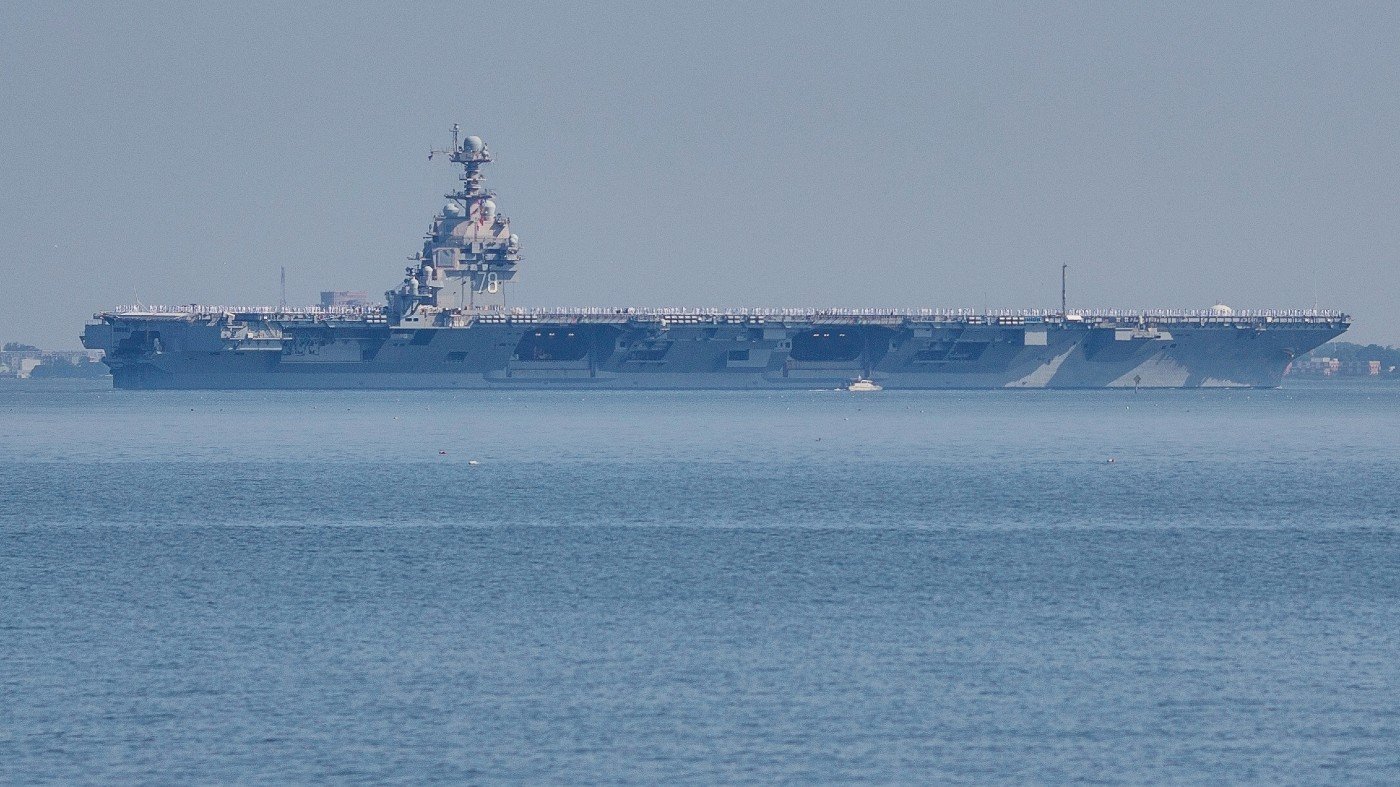
The U.S. Navy is conducting an internal review that could lead to a significant redesign of its newest class of aircraft carriers, driven in part by President Trump's stated preferences for the look of warships. The review, expected to conclude in several weeks, is exploring whether to relocate the carrier's command tower—known as the "island"—from its current position on the starboard side to a more centralized spot, according to a former senior U.S. official familiar with the deliberations.
This potential shift would mark the second major design change to the Ford-class carriers influenced by the president. Earlier this week, Trump directed the Navy to replace the electromagnetic catapult system with older steam-powered technology, a move that experts say would cost billions and reduce operational efficiency.

Critics within the defense community have sharply questioned the rationale behind the island relocation. Hunter Stires, who served as Maritime Strategist to the Navy Secretary until last year, argued that warships are built to win combat, not beauty contests. "The placement of the island on the Ford class was chosen to support the ship's design purpose of maximizing aircraft sortie generation—which for an aircraft carrier, directly translates to combat power," Stires told The Hill. He added that indulging the president's aesthetic whims would be "wasteful and abusive" and would exemplify "Trump's evident contempt for America's fighting sailors."
The island serves as the nerve center for flight-deck operations, tactical command, and navigation. Its current location on the Ford class, set back from the bow, provides extra deck space forward, allowing aircraft to line up more efficiently before launch. Navy Capt. Paul "Paulie" Lanzilotta, former captain of the USS Gerald R. Ford, explained in 2022 that this configuration gives pilots room to troubleshoot or reset systems before taxiing to the catapult. On older ships with the island further aft, such maneuvers require a break in recovery operations, slowing the tempo of flight operations.
The review was first reported by The Washington Post on Saturday. The Pentagon and Navy have not yet commented on the matter.
Beyond the island, Trump's recent directive to alter carrier launch systems has raised concerns about the future of the Ford-class program. The president's national security memo specifically orders that the USS Doris Miller, currently under construction, be equipped with steam catapults and hydraulic systems instead of the newer Electromagnetic Aircraft Launch System (EMALS) and Advanced Weapons Elevators.
The Ford-class carriers are among the most expensive vessels ever built, with each ship estimated to cost around $22 billion, according to an August report from the Congressional Budget Office. Three Ford-class carriers are under construction, including the USS Enterprise at Huntington Ingalls Industries in Newport News. The Navy also operates 11 Nimitz-class carriers.
Defense analysts note that any design change at this stage would likely delay construction and increase costs, potentially affecting the Navy's ability to meet its carrier fleet requirements. The internal review, while focused on aesthetics, underscores the broader tension between presidential preferences and operational needs—a dynamic that has become increasingly prominent in Trump's interactions with the military.
As the review progresses, the Navy faces a delicate balancing act: satisfying the commander-in-chief's vision while maintaining the combat effectiveness that has defined American carrier aviation for decades. The outcome could set a precedent for how political considerations influence future naval ship design.