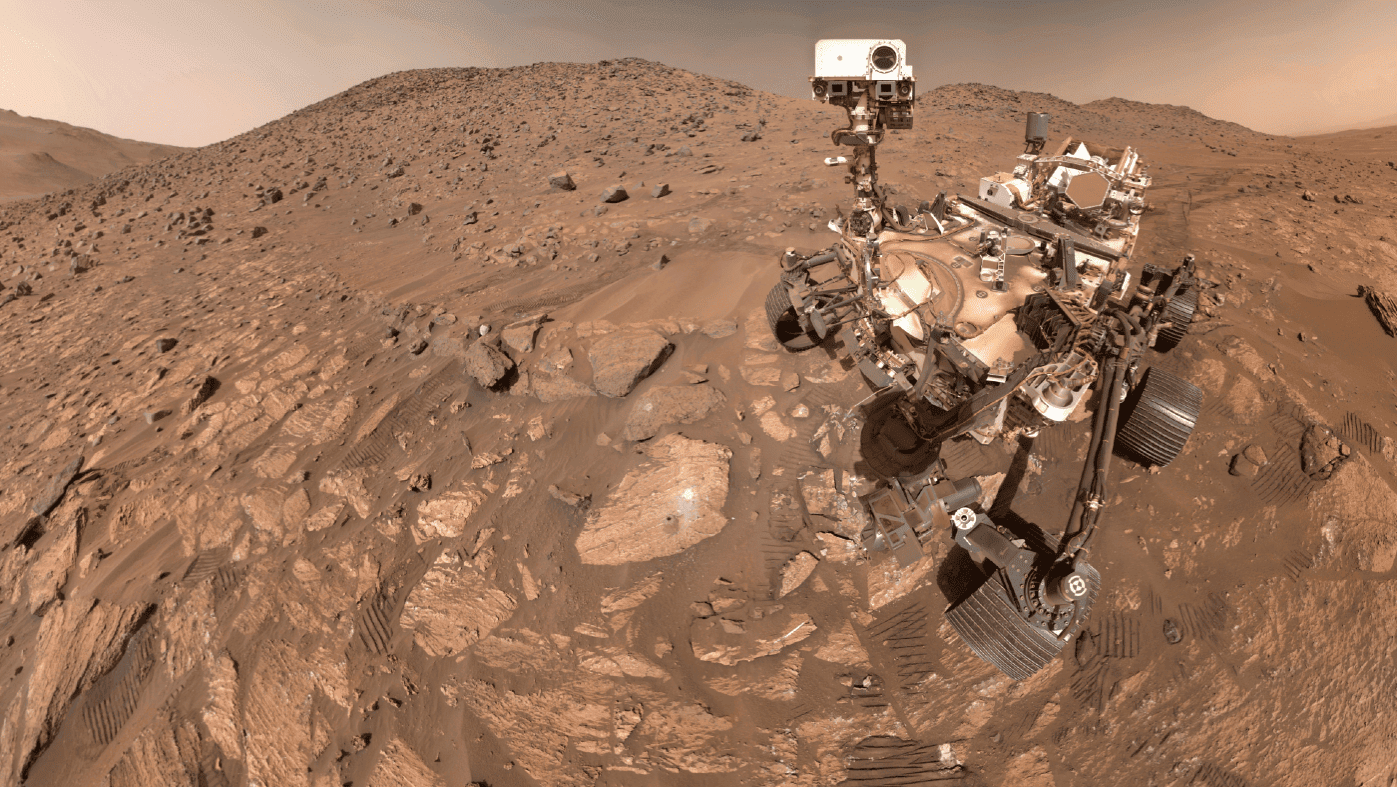
NASA Administrator Jared Isaacman floated a bold idea during a recent briefing on the agency's lunar plans: sending a spare nuclear-powered Mars rover to the moon. The rover, an engineering model of the Perseverance rover currently exploring Mars, would be refurbished for lunar duty, according to Ars Technica.
This proposal marks a sharp departure from NASA's traditional, multibillion-dollar development cycles. In the past, a project of this scale would have triggered years of studies and cost overruns. The Perseverance rover alone cost an estimated $2.7 billion, including launch and initial operations. By contrast, repurposing an existing vehicle could slash expenses dramatically.
The rover, now dubbed Promise (Polar Rover for Observation, Mapping, and In-Situ Exploration), would require modifications to handle the moon's unique environment. Unlike Mars, the moon lacks an atmosphere, so landing would rely on thrusters rather than parachutes. Ars Technica suggested that either a SpaceX Starship or a Blue Origin New Glenn rocket could deliver Promise to the lunar surface, potentially as part of an uncrewed test of the Starship Human Landing System.
A nuclear power source offers significant advantages at the lunar south pole, where permanently shadowed craters hold water ice and other resources. Solar-powered rovers struggle in these dark zones, but a nuclear rover could operate for years and explore widely, much like its predecessors Curiosity and Opportunity did on Mars.
Isaacman's tenure has been marked by a willingness to embrace unconventional ideas. Alongside the Promise proposal, he announced funding for four more Commercial Lunar Payload Services (CLPS) missions, set for late 2028. The CLPS program, which began in 2018 under the first Trump administration, contracts private companies to deliver NASA payloads to the moon, saving the agency from building its own landers. However, the program's track record is mixed: of four CLPS missions attempted so far, only one—a Firefly Blue Ghost landing in March 2025—has been fully successful.
NASA has committed significant funds to CLPS: $297.9 million to Astrobotic for two deliveries, $144.2 million to Firefly Aerospace, and $148.3 million to Intuitive Machines for one each. Each lander will carry a standard suite of instruments, including a stereo camera, laser retroreflector array, and linear energy transfer spectrometer. Additional payloads from commercial and academic partners may be added.
Meanwhile, NASA's Jet Propulsion Laboratory is testing autonomous rover technology. The ERNEST rover recently completed a 16-mile trek through the Southern California desert almost entirely on its own. Currently, rovers rely on Earth-based operators, a cumbersome process for Mars due to signal delays of up to 20 minutes each way. Even for lunar rovers, where communication is nearly instantaneous, autonomous systems could free up human supervisors for other tasks.
The combination of repurposed hardware, commercial partnerships, and AI-driven autonomy signals a broader shift in how NASA approaches space exploration. As Isaacman pushes for faster, cheaper missions, the Promise rover could become a test case for a new era of lunar science.