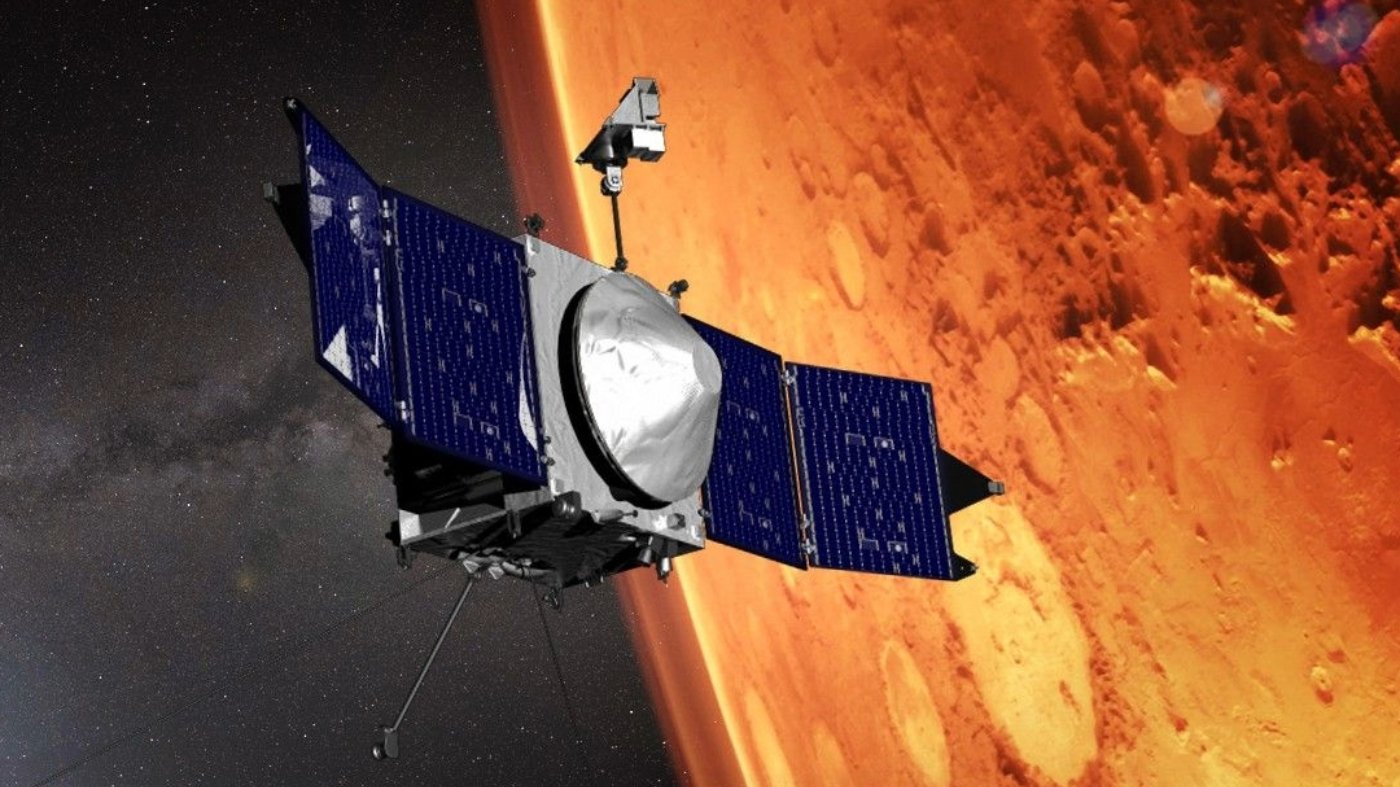
NASA is taking its commercial partnership model interplanetary. The agency has signed an agreement with Relativity Space to send an orbital probe to Mars, with a launch date no earlier than 2028. The mission, named Aeolus after the Greek god of winds, will carry four NASA instruments designed to produce the first daily global maps of Martian winds, temperatures, dust, and clouds. That data is critical for planning future crewed missions to the Red Planet.
The probe will also study shallow ice and subsurface geology. Relativity Space is providing the spacecraft and launch vehicle, and will solicit additional instruments from commercial firms, academia, and philanthropies. The company is betting that Terran R, its heavy-lift rocket still awaiting its first flight, will deliver Aeolus to Mars. Terran R is designed to lift 23,500 kilograms to low Earth orbit, putting it in direct competition with SpaceX, Blue Origin, and Rocket Lab.

A New Model for Planetary Science
The partnership is a test of whether commercial planetary science missions can work at scale. If Aeolus succeeds, NASA could open the door to a wave of smaller, cheaper interplanetary probes from private companies. The agency has long used public-private partnerships for cargo and crew transport to the International Space Station, and more recently for lunar landers under the Artemis program. But extending that model to deep space is a significant step.
The timing is politically charged. The Trump administration has proposed cutting planetary and Earth science budgets to fund its Artemis lunar ambitions, reigniting the debate between human and robotic exploration. Aeolus is an attempt to squeeze more science out of limited dollars, using private capital and innovation to fill gaps left by federal cuts.
Relativity Space, founded in 2015, retired its smaller Terran 1 rocket after a partially successful 2023 flight and is now focused on Terran R. The company is led by former Google CEO Eric Schmidt, who took the helm in March 2025 and has acquired a controlling stake. Schmidt has personally funded several observatories, including the Lazuli space telescope intended as a Hubble successor.
Political and Commercial Stakes
The mission is the first under Relativity's Interplanetary Sciences Program, which aims to fly deep space science missions at what the company calls “more science per dollar.” The program is designed to develop and fly foundational technologies and payloads that advance high-priority research goals.
Success would do more than advance science. It would establish Relativity as a serious competitor in the launch market, challenging SpaceX's dominance. That competition is welcome in an industry where SpaceX currently “bestrides the universe like a colossus,” as one analyst put it.
The public-private partnership model has a bipartisan pedigree. It was launched under George W. Bush after the Columbia disaster, expanded under Obama, and turbocharged under Trump with the Artemis program's Human Landing System contracts to SpaceX and Blue Origin. The Commercial Lunar Payload Services program has had mixed results—only Firefly Aerospace's Blue Ghost lander has succeeded so far—but NASA is pressing ahead.
If the Relativity partnership works, it could reshape how the U.S. explores the solar system. Big flagship missions like Europa Orbiter or Titan Dragonfly will likely remain government-led, but a host of smaller science missions could be commercialized. The era of commercial planetary science may be about to dawn.