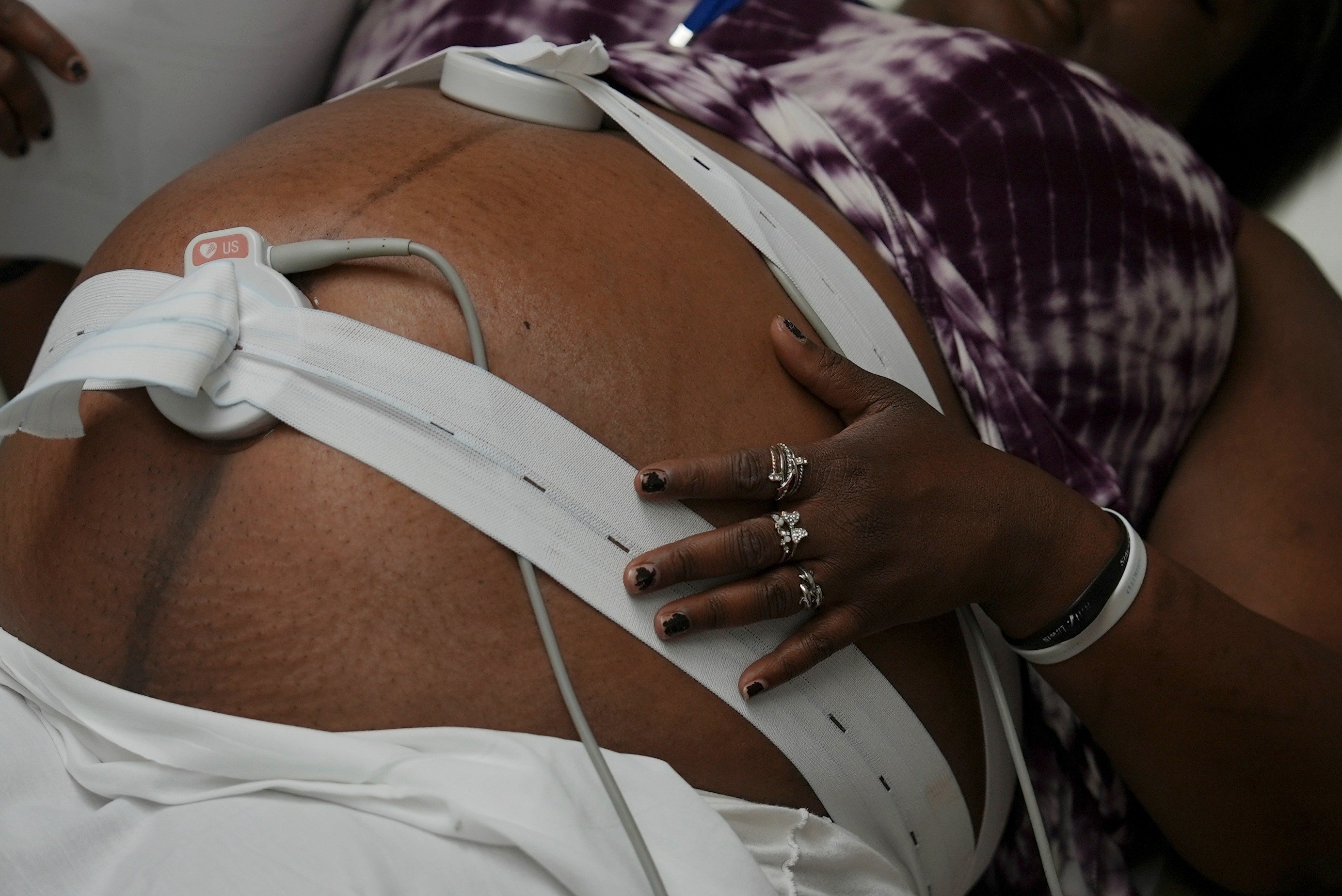
In rural Arkansas, a woman in labor faces an 84-minute drive to the nearest delivery room—a reality that became even more dire when the region's only OB-GYN died and no replacement could be found. This is not an isolated anecdote; it's a symptom of a broader crisis that has quietly worsened across the United States.
According to a new national survey of 1,000 voters, a striking 86% of Americans believe that mothers should not be dying from preventable causes related to childbirth. This consensus cuts across party lines, offering a rare moment of agreement in a deeply polarized political climate. The survey, conducted by KAConsulting LLC and commissioned by Healthy Moms, Healthy Babies America, tested 15 specific policy solutions—and every single one received majority support. Thirteen of those policies cleared the 80% threshold.

The most popular proposal, endorsed by large majorities, is expanding telehealth and specialty care for rural and high-risk pregnancies. This approach brings the specialist to the mother, rather than forcing her to travel long distances. Another widely supported measure is extending insurance coverage through the baby's entire first year, instead of cutting it off at six weeks postpartum.
The survey also found that voters are more likely to support a political candidate who prioritizes maternal health. This issue, unlike immigration, the economy, or foreign policy, seems to transcend the usual partisan divides. As Olivia Walton, founder of Healthy Moms, Healthy Babies America, and Kellyanne Conway, former senior counselor to President Trump, wrote in an op-ed, "Ask Americans nuanced questions about immigration, education, the economy, foreign policy or almost anything else on the ballot this year and the country fractures... The issue of healthy moms and healthy babies lands differently."
The shift in public opinion is notable. Before hearing any statistics, 77% of respondents already wanted the system to improve. After learning just a few key facts—such as the U.S. being the only wealthy nation where maternal mortality has increased over the past 40 years, and that two-thirds of maternal deaths occur after delivery—support jumped to 86%. The fact that the U.S. now ranks behind Russia and Ukraine on this metric is a stark wake-up call.
The policy solutions are not complicated. Simple interventions, like a nurse checking on a new mother within two weeks, can catch dangerous complications early. Yet, as the op-ed points out, "We require a car seat before a newborn can leave the hospital; we can do better than sending the mother home with an 'Attagirl!' and a six-week follow-up."
Two bipartisan bills currently sit in Congress, both of which have cleared significant hurdles. The Rural Obstetrics Readiness Act, sponsored by Senators Maggie Hassan (D-N.H.), Susan Collins (R-Maine), Katie Britt (R-Ala.), and Tina Smith (D-Minn.), would train and equip rural emergency rooms to handle obstetric emergencies and provide access to maternal health specialists. It passed the Senate Health Committee unanimously in July. The NIH Improve Act, led by Senator Britt and Senator Cory Booker (D-N.J.), with Representatives Lauren Underwood (D-Ill.) and Brian Fitzpatrick (R-Pa.), would ensure steady funding for NIH research into why American mothers are dying. The House passed it unanimously in July.
Despite this bipartisan support, neither bill has moved forward. As the op-ed authors urge, "Now policymakers in Washington must act." The public is already on board—it's time for Congress to catch up. For those who agree with the 86%, the message is clear: call your senators and ask when they will vote. Healthy moms build healthy families, and healthy families build a stronger country.
This rare moment of consensus could be a catalyst for action, especially as lawmakers look for wins in a divided government. The question is whether Washington will seize it.