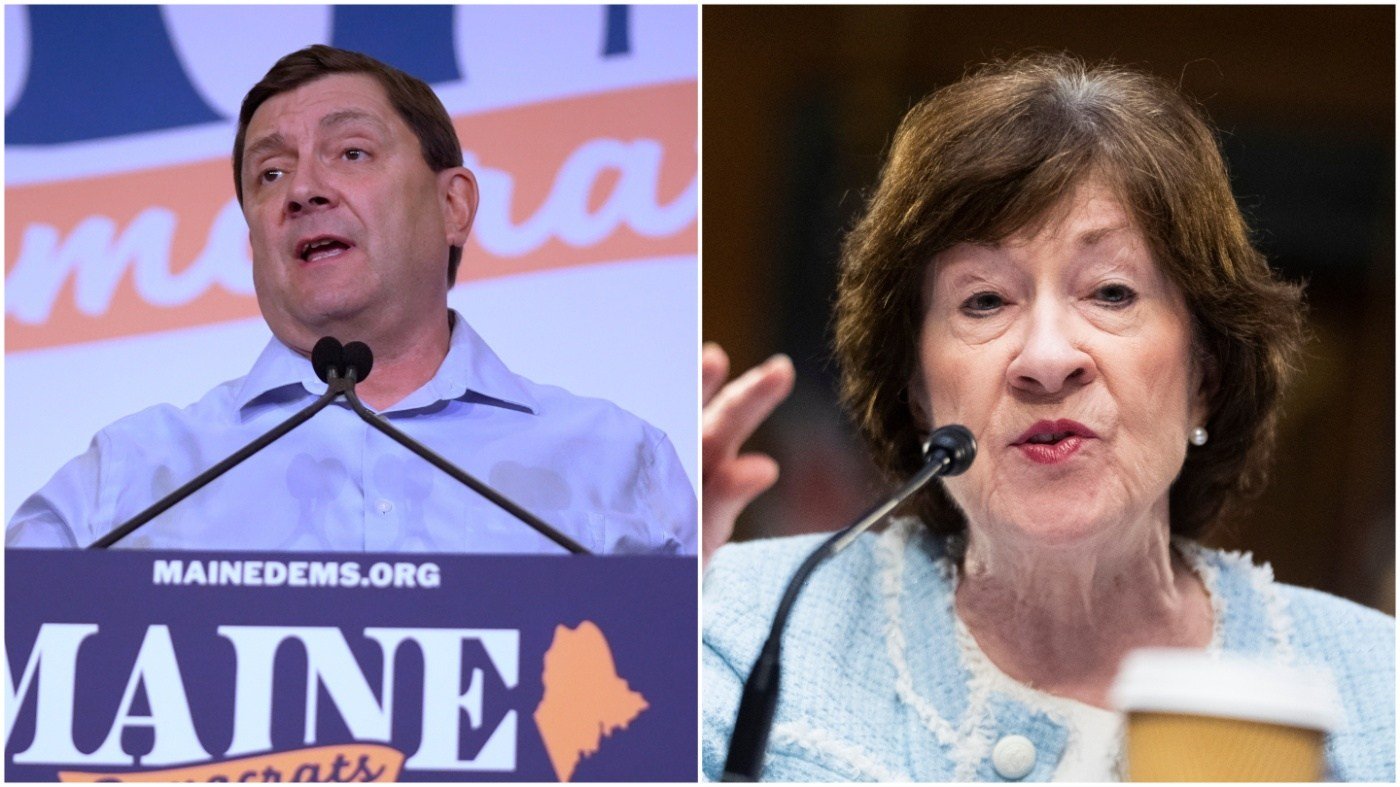
A fresh poll from the University of New Hampshire gives Democrat Graham Platner a 9-point advantage over Republican Senator Susan Collins in Maine's closely watched Senate contest. The Pine Tree State Poll, released Wednesday, shows 51% of likely voters backing Platner, while 42% support Collins. Two percent say they'll vote for another candidate, and 6% remain undecided.
The survey, conducted May 21-25 among 1,397 Maine residents, carries a margin of error of plus or minus 2.6 percentage points. The results mirror a February poll where Platner led 49% to 38%, indicating sustained momentum for the oyster farmer and political newcomer.
Platner's rise comes after Maine Governor Janet Mills ended her own Senate bid, clearing the Democratic field. Mills still appears on the ballot and garnered 10% support in the latest poll, but she is not actively campaigning. The state's primary is scheduled for June 9.
While Platner has secured backing from progressive stalwart Senator Bernie Sanders, he has faced criticism from some Democrats. Representative Jake Auchincloss, a Jewish Democrat from Massachusetts, publicly refused to endorse Platner over a tattoo that some likened to a Nazi symbol. “As I said months ago, I find Platner's Nazi tattoo and his commentary about it personally disqualifying,” Auchincloss posted on social media Tuesday. “If it were me, I'd vote for someone else in the Maine Democratic primary.”
Platner has denied knowing the tattoo resembled a Nazi symbol and said earlier this year he had it covered after the controversy emerged. He also faced scrutiny over past Reddit posts, but his campaign has focused on economic populism and criticizing the billionaire class. In a recent statement, Platner accused Amazon founder Jeff Bezos of spreading “propaganda” to shield the wealthy.
The poll underscores the competitive nature of the race, with Collins—a four-term incumbent known for her moderate brand—facing a stiff challenge in a state that has trended Democratic in recent presidential elections. Maine's Senate race is one of several that could determine control of the chamber in 2024.
Political analysts note that Collins has survived tough races before, but the persistent polling deficit suggests a difficult path to reelection. The survey also comes amid broader national debates over economic insecurity, with recent New York Fed data showing a sharp rise in food insecurity since 2020, disproportionately affecting low-income and non-white households.