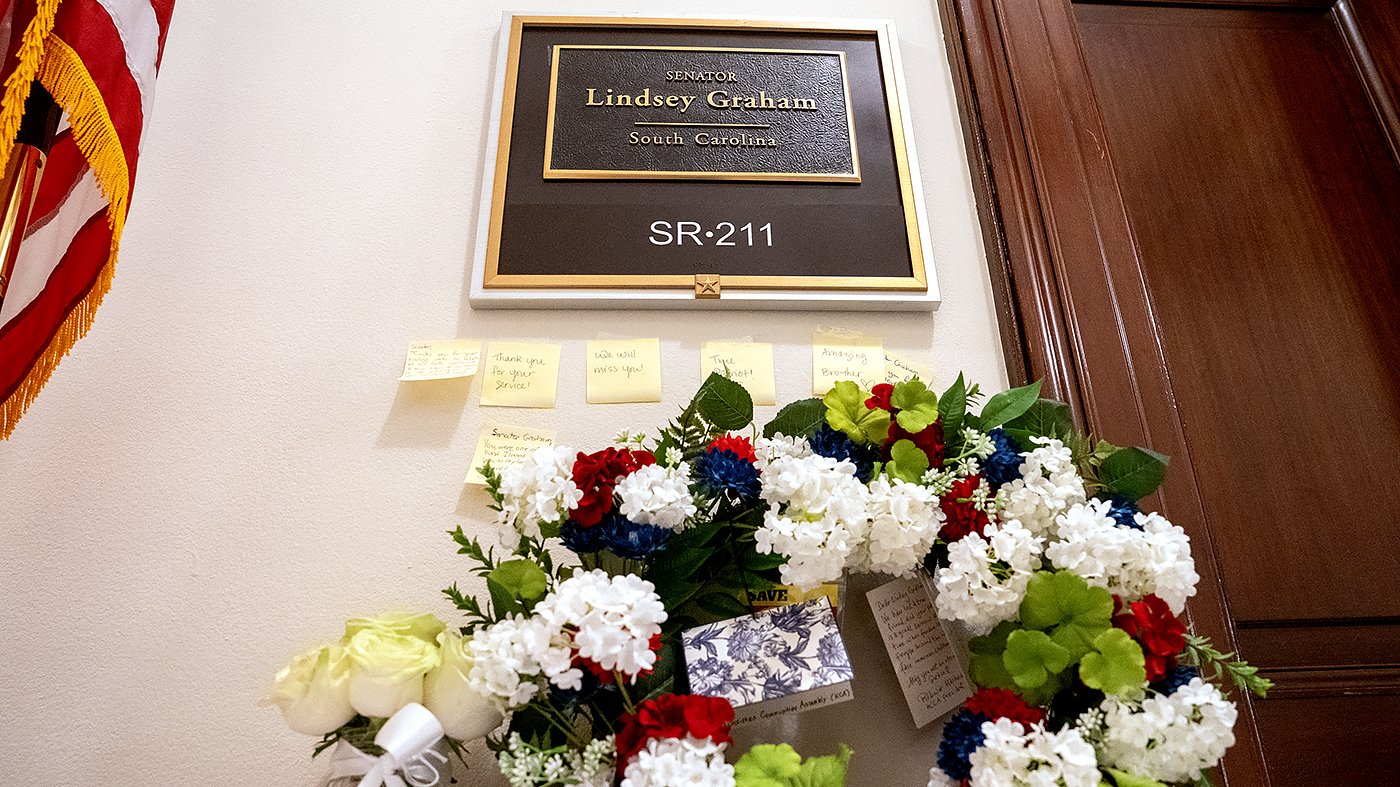
Sen. Lindsey Graham (R-S.C.) died Saturday, leaving behind a legacy that defies easy categorization. For 30 years, from his House debut in 1995 to his death, Graham was a rare breed in Washington: a politician who genuinely loved the job. While many in Congress publicly disdain the institution while scrambling to stay in it, Graham embraced the grind, the dealmaking, and the constant maneuvering that defines politics at its most elemental.
Graham's ambition was not just for power itself, but for the work required to get it. He understood that being a tyrant is exhausting, but he also knew that someone has to keep the government running. He was, as one observer put it, the Cicero of upstate South Carolina, a figure who turned the raw material of ambition into governance.
His rise from a poor background—his parents ran a pool hall and bar in South Carolina—to a 24-year Senate career was driven by a relentless drive. He earned a law degree, served in the Air Force, and entered politics just shy of age 40. He never acted above his work, even when facing humiliation or defeat. He was a power broker in an era where such figures are increasingly rare.
Two core ideas anchored Graham's political career: a belief that America should act as the world's policeman and a commitment to placing conservatives on the federal bench, especially the Supreme Court. Beyond those pillars, almost everything was negotiable. This pragmatism made him a key player on issues like the Russia sanctions bill and U.S. involvement in Ukraine.
Graham's death has already triggered a scramble for his seat. A snap election in South Carolina is expected to be a fierce contest, with the state's notoriously rough-and-tumble politics on full display. The fight to succeed him will test whether the party can find a similar figure who loves the process as much as the outcome.
But in the Senate, the loss may be irreplaceable. Graham was present at the creation of the modern, cable-TV-driven political era that rewards partisan conflict over lawmaking. Yet he thrived within it, a dealmaker in a time of mudslinging. His passing leaves a void that no single successor can fill, as the business of politics has become no place for the kind of politician Graham was.