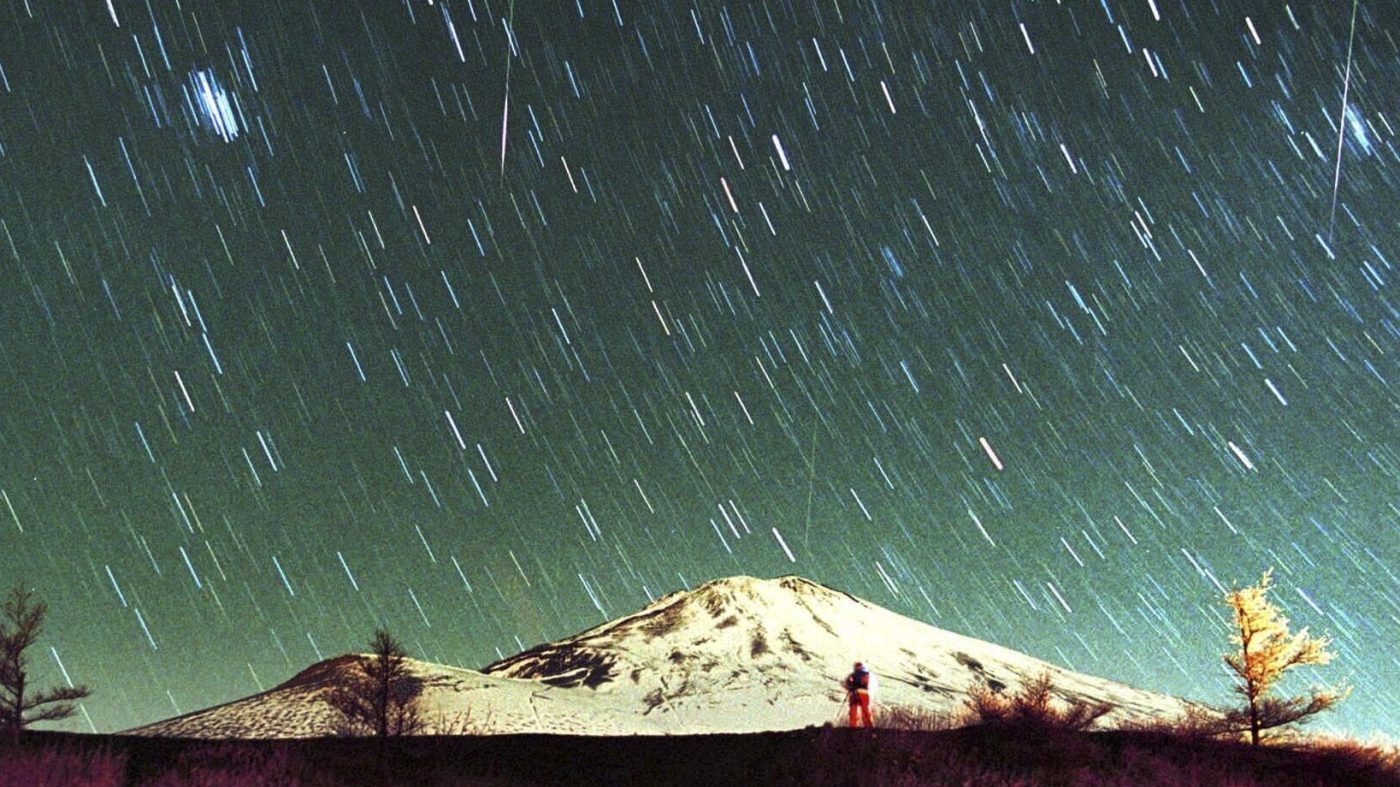
The Leonids meteor shower is set to light up the night sky this week, with its annual peak arriving Monday night into Tuesday morning. Skywatchers across the Northern Hemisphere can expect a modest but potentially dazzling display of shooting stars.
What are the Leonids?
The Leonids get their name from the constellation Leo, the radiant point from which the meteors appear to emanate. As the comet 5P/Tempel-Tuttle loops around the Sun, it sheds tiny fragments of rock and dust. When Earth plows through this debris trail, those particles slam into our atmosphere and burn up, creating bright streaks of light.

Comet Tempel-Tuttle is a small comet with an orbital period of about 33 years. It was independently discovered by Ernst Tempel and Horace Tuttle in 1865 and 1866, respectively, hence its double-barreled name.
The Leonids are among the swiftest meteors, zipping through the sky at speeds of up to 44 miles per second. They are known for their brightness and vivid colors, and they frequently produce fireballs—explosive flashes of light—and Earth-grazers, which are long, colorful trails that skim close to the horizon.
Although typical rates are low—often just three meteors per hour—the Leonids are still classified as a major shower. But every 33 years or so, Earth encounters a denser part of the debris stream, triggering a meteor storm with hundreds to thousands of meteors per hour. The last such storm occurred in 2002. In 1966, observers witnessed thousands of meteors falling in a 15-minute span, so intense that NASA described it as raining meteors.
How to watch the Leonids
The best viewing window is from midnight until dawn on Tuesday morning. To maximize your chances, get away from city lights and find a dark, open area. Lie flat on your back with your feet pointing east, and take in as much of the sky as possible. Allow up to 30 minutes for your eyes to adapt to the darkness before you start spotting meteors.
No special equipment is needed—just patience and a clear sky. For those who miss the peak, the shower will remain active for several more days, though at lower rates.
For more on celestial events and other science news, check out our coverage of daylight changes in November.