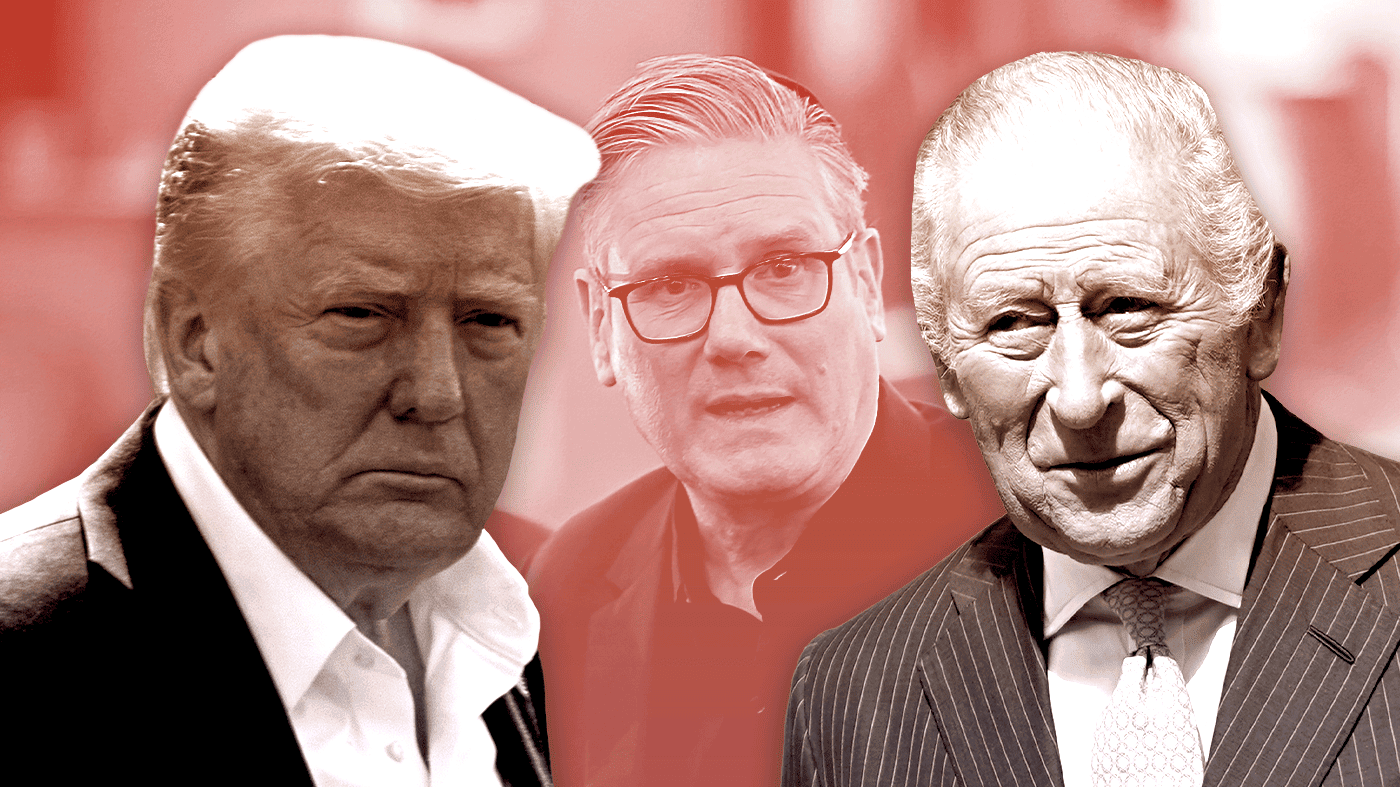
King Charles III and Queen Camilla will arrive in Washington next week for a state visit that London hopes will repair the deteriorating U.S.-U.K. relationship. The trip comes as President Trump has openly blasted Prime Minister Keir Starmer for refusing to back the American military campaign in Iran and for resisting pressure to help secure the Strait of Hormuz.
While Trump has been sharply critical of Starmer, he has reserved only praise for the British monarch. White House press secretary Anna Kelly said the president “has always had great respect for King Charles” and that their bond was strengthened during Trump’s trip to the U.K. last year. She highlighted plans for a “beautiful State Dinner” and multiple events throughout the week.

Trump himself told the BBC on Thursday that he believes the king’s visit could “absolutely” help bridge the widening gap between the White House and Downing Street. But the relationship remains fragile. In an Oval Office meeting Thursday, Trump threatened to impose a “big tariff” on the U.K. in response to its digital services tax on American tech firms. A Pentagon memo leaked Friday outlined potential retaliatory measures against allies deemed insufficiently supportive in the Iran conflict, including a review of Britain’s claim to the Falkland Islands.
Starmer is also dealing with domestic fallout from his appointment of Peter Mandelson as ambassador to Washington, which was quickly overshadowed by Mandelson’s dismissal after references to the Jeffrey Epstein files. The prime minister has stood firm, repeating as recently as Thursday that keeping Britain out of the Iran war is in the “best national interest.”
Ed Owen, a former U.K. government adviser and fellow at the Atlantic Council, told The Hill that the royal visit arrives at a moment of unusual political tension between the two allies. “His visit will, I hope, act as a timely reminder of why the strategic relationship between the U.K. and U.S. in a world of insecurity and instability is so important,” Owen said.
A British official underscored the soft power the royals bring, describing their ability to “shine a light on and celebrate others who do great work to drive the U.S.-U.K. relationship.” Elizabeth Holmes, an American journalist who covers the monarchy, said the Windsors are particularly valuable in moments of tension, especially with a president “so clearly enamored by royalty.” She predicted Trump would be on his best behavior: “He’s not going to want to do anything to look any sort of way in front of the royals.”
Although the royal family is officially apolitical, Charles was outspoken on issues like climate change before ascending the throne. Holmes said the king, who will also address a joint session of Congress, is likely to subtly advance British interests. “There is a lot going on in global politics right now, and I would be surprised if he did not take this opportunity to, in some way, shape or form, press forward Britain’s interests,” she said. “The Palace is always encouraging people to read between the lines of his speeches.”
The visit is the second royal state visit to Washington this month. Earlier, King Willem-Alexander and Queen Máxima of the Netherlands attended a White House dinner, highlighting the diplomatic tightrope NATO royals must walk as Trump’s rift with the alliance deepens. Charles’s trip has been two years in the making, predating both Trump’s second term and Starmer’s premiership.
Plans for the visit aim to mirror the grandeur of Queen Elizabeth II and Prince Philip’s 1976 bicentennial tour. Charles and Camilla will travel to Washington, New York, and Virginia, where they will meet with Appalachian cultural groups. The itinerary includes engagements focused on business, tech, defense, creative industries, and the arts—all intended to showcase Britain’s strengths and the bilateral partnership in those fields.
The visit also comes as both Charles and Trump seek to solidify their legacies. Holmes noted that Charles, who has not reigned long, is thinking about his impact. Trump, in his second term, has pursued an aggressive foreign policy to cement his place in history. Even with the flattery of a royal visit, the underlying fractures in the U.S.-U.K. relationship remain unresolved, as the White House continues to press London on Iran and trade while the king offers a diplomatic veneer of unity.