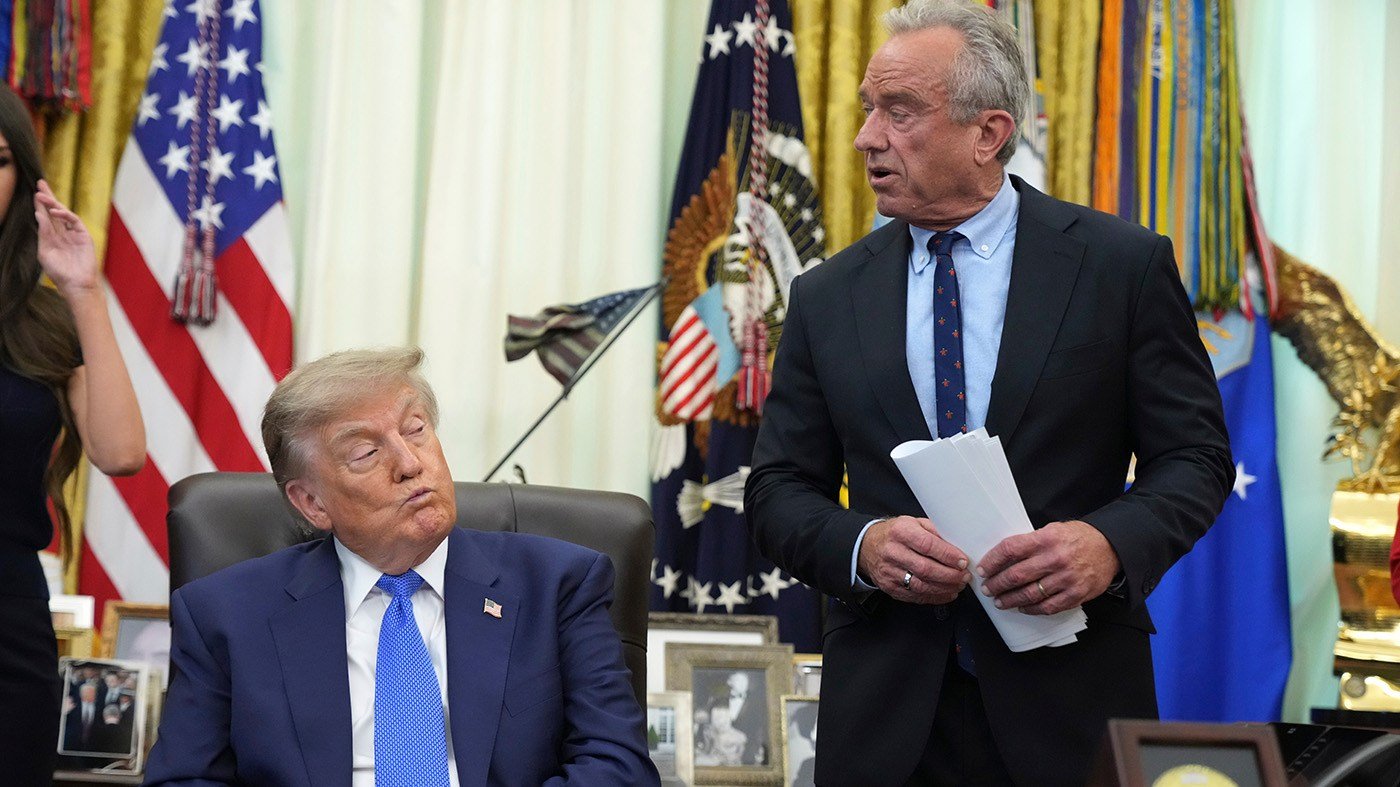
Health and Human Services Secretary Robert F. Kennedy Jr. was present in the Oval Office last week as President Trump signed an executive order aimed at reducing childhood vaccines, with both men suggesting a link to autism—a claim widely discredited by medical research. Yet, over the following days, as Kennedy traveled to California and then campaigned for Republicans in Iowa, vaccines were conspicuously absent from his public remarks.
In Iowa, Kennedy focused on nutrition, youth fitness, and reviving the presidential fitness test, appearing alongside Rep. Mariannette Miller-Meeks at a YMCA. He emphasized the dangers of sedentary lifestyles, saying, "We think the sedentary condition of many of our children is contributing to this malaise, to the mental health crisis, to the physical fitness crisis, to the chronic disease crisis in our country."
With Republican Gov. Kim Reynolds, Kennedy announced a new statewide addiction treatment and prevention initiative. He also visited a community health center for a roundtable on expanding access to primary and preventive care. In a lighter moment, he went fishing with GOP gubernatorial candidate Zach Lahn, who has received an endorsement from Kennedy's Make America Healthy Again PAC.
Throughout the week, Kennedy addressed vaccination—and the ongoing measles outbreak—only when directly questioned. In Dubuque, he told reporters, "We're doing everything that we can," while asserting the U.S. was in better shape than other nations. He attributed declining vaccination rates to a loss of trust in public health systems following the COVID-19 pandemic, saying, "During COVID, people lost faith in the public health system. … My job is to make the public health establishment trustworthy."
The 10-day swing through Iowa, Minnesota, and Florida is part of the administration's "Make America Healthy Again Tour," aimed at keeping MAHA supporters energized ahead of the midterms. The White House views Kennedy as a key asset in maintaining Republican control, with spokesperson Kush Desai touting the administration's record on chronic disease and food safety, crediting Kennedy and his team.
However, Kennedy's selective messaging underscores a tension within the administration. The MAHA movement, born from the alliance between Kennedy and Trump, addresses a broad range of issues—from vaccine safety to corporate influence in federal agencies and chemical additives in food. David Mansdoerfer, a former HHS official in the first Trump administration, noted that the MAHA agenda spans multiple policy areas and that Kennedy is not shying away from vaccines but rather highlighting successes. "Whether you agree or disagree with us, we are delivering on the agenda that we promised," Mansdoerfer said, framing the appearances as a chance to translate D.C. policy to the local level.
The executive order, which Trump signed with Kennedy in attendance, revives a contentious debate. Both men reiterated the debunked theory that vaccines contribute to autism. Trump stated, "Decades ago, children received only a small fraction of the vaccines required today. In those times, people were much healthier, and of course, the high rates of autism now observed did not exist." Kennedy added, "Genes don't cause epidemics. You need an environmental toxin."
But within 24 hours, Kennedy was in California, discussing substance abuse treatment and faith-based solutions to addiction and homelessness. He also spoke about combatting health fraud, a priority for the administration. During a community health center visit in the Central Valley, he was asked about the order's impact on California, responding that "The president's executive order should not change the way that children are vaccinated. In California, the state decides what the vaccination schedule will be."
This strategic avoidance reflects a broader challenge for the administration as it balances the demands of MAHA voters, who may not be typical Republican primary voters, with the need to maintain electoral support. The tour, which continues in Florida, aims to keep the movement engaged without alienating moderates on a polarizing issue.