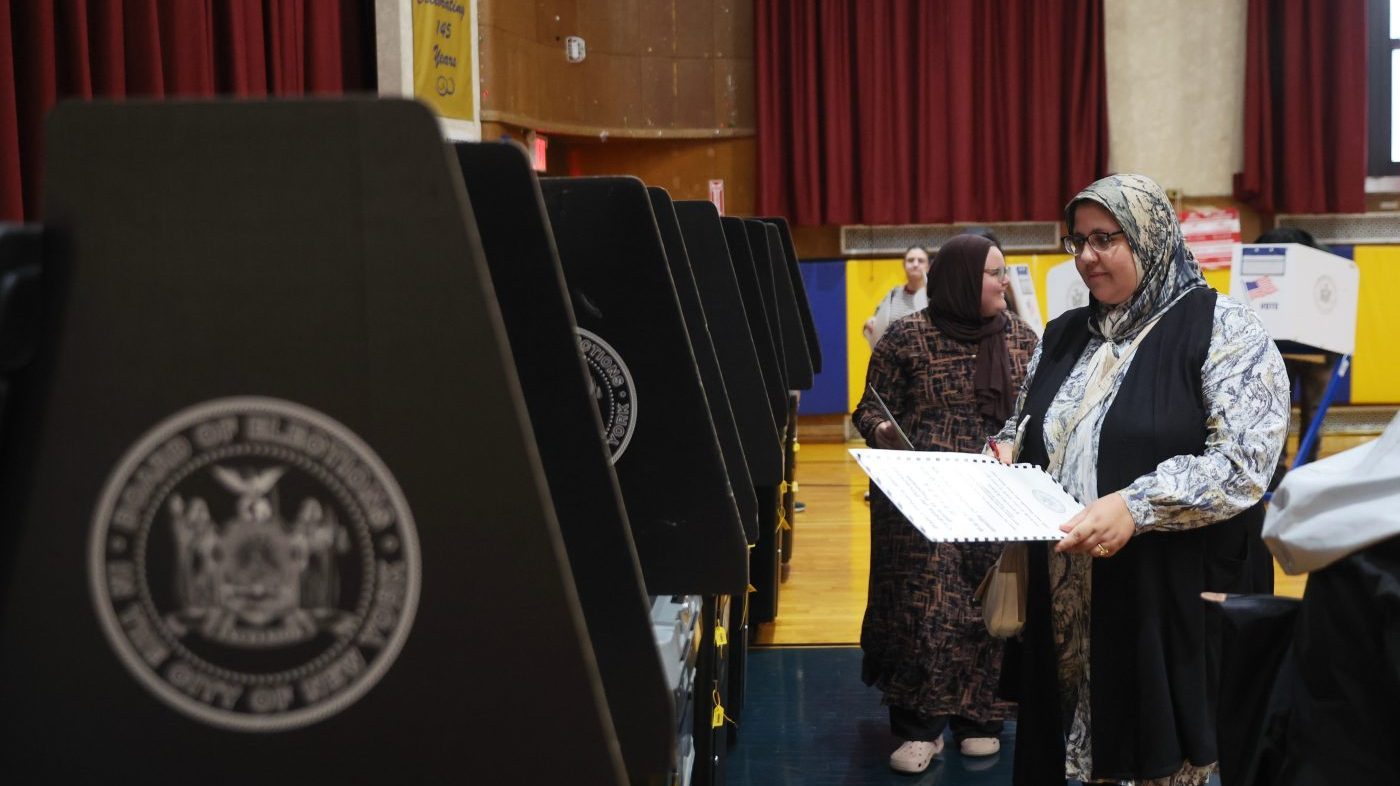
Kansas voters are casting their ballots today in the state's four congressional districts, with polls set to close at 8 p.m. Eastern Time. Republicans currently hold three of the four seats, while Democrats control the Kansas City-area 3rd District.
Earlier this year, Kansas Republicans attempted to redraw the congressional map to make the 3rd District more favorable to the GOP. However, Gov. Laura Kelly, a Democrat, blocked the effort, leaving the district's boundaries intact. As a result, the 3rd District remains a safe Democratic seat. Rep. Sharice Davids is seeking a fifth term and faces Republican Eric Jenkins, a former Shawnee City Council member.
The political landscape in Kansas is also shaped by other key races. For instance, the Kansas Senate contest between Hamilton and Marshall is drawing attention, and the open governor's race featuring Masterson and Holscher could influence down-ballot turnout.
National Democrats have recently added Kansas's 2nd District to their target list. The district, which encompasses eastern Kansas including Topeka, as well as parts of Kansas City and Lawrence, is currently represented by first-term Republican Rep. Derek Schmidt. Schmidt is being challenged by Democrat Don Coover, a veterinarian. The race has become more competitive as Democrats seek to expand their majority in the House.
The 2nd District's shifting demographics and suburban growth have made it a battleground. Schmidt, a former Kansas attorney general, won the seat in 2024 by a comfortable margin, but changing political dynamics and increased Democratic enthusiasm could put it in play. Coover, a political newcomer, has focused on healthcare and agricultural issues important to the district's rural and suburban voters.
In the 1st District, which covers western and central Kansas, Republican Rep. Tracey Mann is seeking re-election. He faces Democratic challenger Paul Buskirk. The district is heavily Republican, and Mann is expected to win easily. Similarly, the 4th District, anchored by Wichita, is held by Republican Rep. Ron Estes, who is running against Democrat Esau Freeman. Estes is also favored to retain his seat.
While the 3rd District is considered safely Democratic, Davids has not taken the race for granted. She has emphasized her work on healthcare and economic development, while Jenkins has criticized her for aligning too closely with national Democrats. The district includes diverse communities in Johnson County and Wyandotte County, and Davids has maintained strong support there since first winning in 2018.
Turnout is expected to be moderate, with early voting numbers showing increased participation compared to previous midterms. Both parties have invested in get-out-the-vote operations, particularly in the 2nd and 3rd Districts. National political observers are watching Kansas as a bellwether for suburban trends and the effectiveness of redistricting battles.
The outcome in Kansas could have implications for the national balance of power in the House. While Republicans are likely to hold the 1st and 4th Districts, a Democratic flip in the 2nd would signal broader momentum for the party. As voters head to the polls, all eyes are on whether Kansas will remain a Republican stronghold or show signs of a Democratic surge.