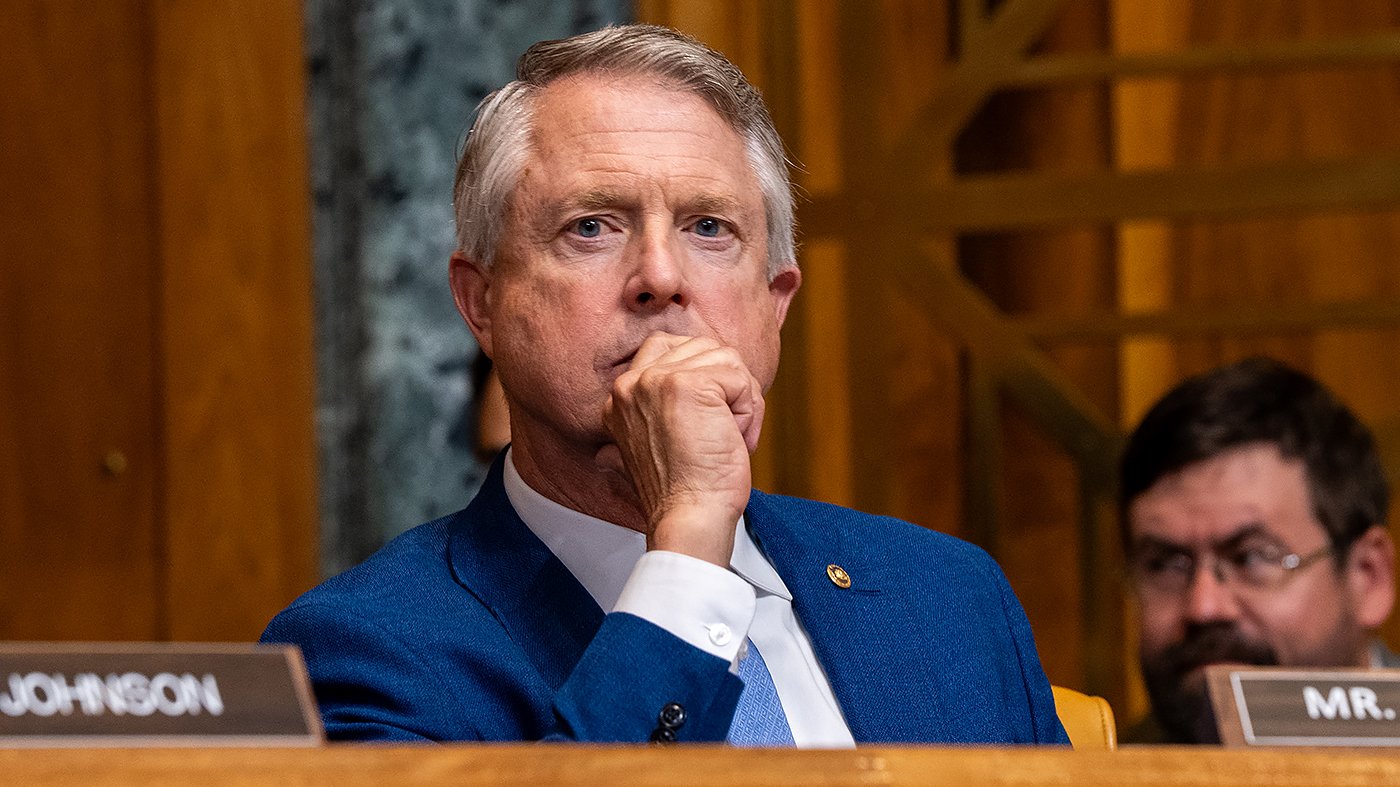
Republican Sen. Roger Marshall is on track to secure the GOP nomination in Tuesday's Kansas primary, setting the stage for a general election battle in a state that has trended reliably red in recent cycles. Marshall, first elected in 2020, faces a single intraparty challenger, Pond Naramore, who has run a low-profile campaign without significant financial backing or institutional support.
The real competition appears to be on the Democratic side, where pastor Adam Hamilton has emerged as the frontrunner in a crowded field. Hamilton, who leads the United Methodist Church of the Resurrection in Leawood, has surprised many by outraising Marshall in the most recent fundraising quarter, according to the Topeka Capital-Journal. That financial edge underscores Democratic hopes of making Kansas more competitive, even as the state's electoral landscape remains challenging for the party.
Marshall, a former obstetrician and member of the House Freedom Caucus during his time in the lower chamber, has aligned himself closely with former President Trump and his agenda. He has focused his campaign on border security, energy independence, and opposition to Democratic spending plans. His voting record in the Senate has consistently reflected those priorities, making him a reliable conservative vote on Capitol Hill.
Polls close at 8 p.m. EDT, and Decision Desk HQ will provide live results as they come in. The outcome in Kansas will be closely watched not only for the Senate race but also for what it signals about the broader political climate heading into the November midterms. In a year when Republicans are expected to make gains, Marshall's performance could offer a benchmark for the party's strength in the heartland.
Meanwhile, the Democratic primary features several candidates beyond Hamilton, including progressive activists and local officials. Hamilton, however, has attracted the most attention and money, positioning himself as a moderate who can appeal to independents and disaffected Republicans. His fundraising haul has given him the resources to compete in the general election, though he will still face an uphill battle in a state that hasn't elected a Democrat to the Senate since 1932.
The race has also drawn national interest as part of a broader pattern of competitive Senate primaries across the country. In Michigan, for instance, a progressive vs. establishment battle is testing the party's direction, and in Alaska, a quirky ballot situation has added intrigue. These contests, along with Kansas, are shaping the narrative for the 2026 midterm elections.
Marshall's campaign has downplayed the significance of Hamilton's fundraising, noting that Kansas voters have consistently chosen conservative candidates in recent elections. The senator's team points to his strong name recognition and grassroots support among Republican base voters. Still, the financial disparity in the last quarter has raised eyebrows, prompting some analysts to question whether Marshall is taking the race for granted.
As the results roll in, the focus will shift to the general election, where Marshall will likely face Hamilton if the pastor secures the Democratic nod. While Kansas remains a solidly Republican state, the presence of a well-funded Democratic challenger could force Marshall to defend his record more vigorously than he might have expected. For now, all eyes are on the returns to see if Marshall can clear the primary hurdle with the ease that many anticipate.