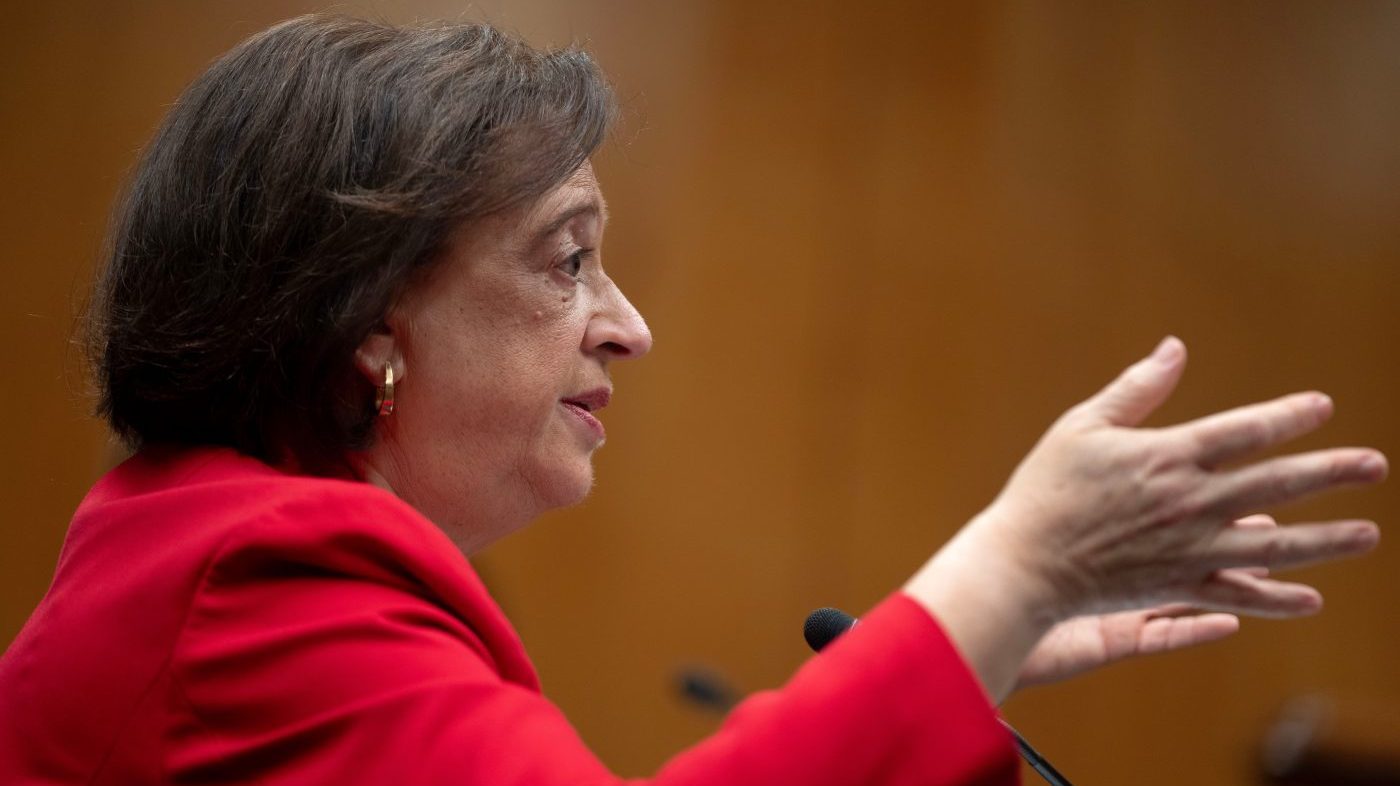
Justice Elena Kagan delivered a sharp rebuke on Tuesday of recent Supreme Court decisions that loosened campaign finance restrictions and weakened voting rights protections, arguing that those rulings by the court's conservative majority have exacerbated the nation's political divisions.
Speaking at Catholic University's Columbus School of Law in Washington, Kagan, one of the three liberal justices, said the court had "blinded itself" to the "very deleterious" consequences of these rulings, which she said have made democracy function worse than it should.
"The people of America look around and think that all this money chasing all these political candidates is a nightmare, and they're right," Kagan said, according to The Associated Press.
Her remarks came after a 6-3 ruling in late June that struck down federal limits on coordinated spending between candidates and political parties. That decision, a victory for Republicans seeking to capitalize on their fundraising advantage ahead of the midterm elections, was one of several that Kagan highlighted as contributing to a "race to the bottom" in American politics.
Kagan also pointed to an earlier ideologically divided ruling that made it harder to challenge congressional districts as racial gerrymanders. That decision triggered a wave of redistricting across the country, particularly in southern states, as Republicans moved to solidify their electoral gains.
In her dissent in that case, Kagan warned that such gerrymanders "enabled politicians to entrench themselves in office as against voters' preferences," promoted "partisanship above respect for the popular will," and encouraged "a politics of polarization and dysfunction." She added that unchecked gerrymandering could "irreparably damage our system of government."
Kagan's critique echoes concerns raised by voting rights advocates and Democrats, who have accused the conservative majority of eroding safeguards against political manipulation. The rulings have also drawn attention to the broader debate over the court's role in shaping election rules.
Despite her criticisms, Kagan pushed back on the notion that the conservative majority simply defers to President Trump. She noted that the court has not sided with the administration on issues such as tariffs, birthright citizenship, and mail ballots, according to the AP.
The justice's comments come as the Supreme Court's approval ratings remain near historic lows, with many Americans viewing the institution as increasingly politicized. Kagan's remarks are likely to fuel further debate over the court's direction and its impact on democratic norms.