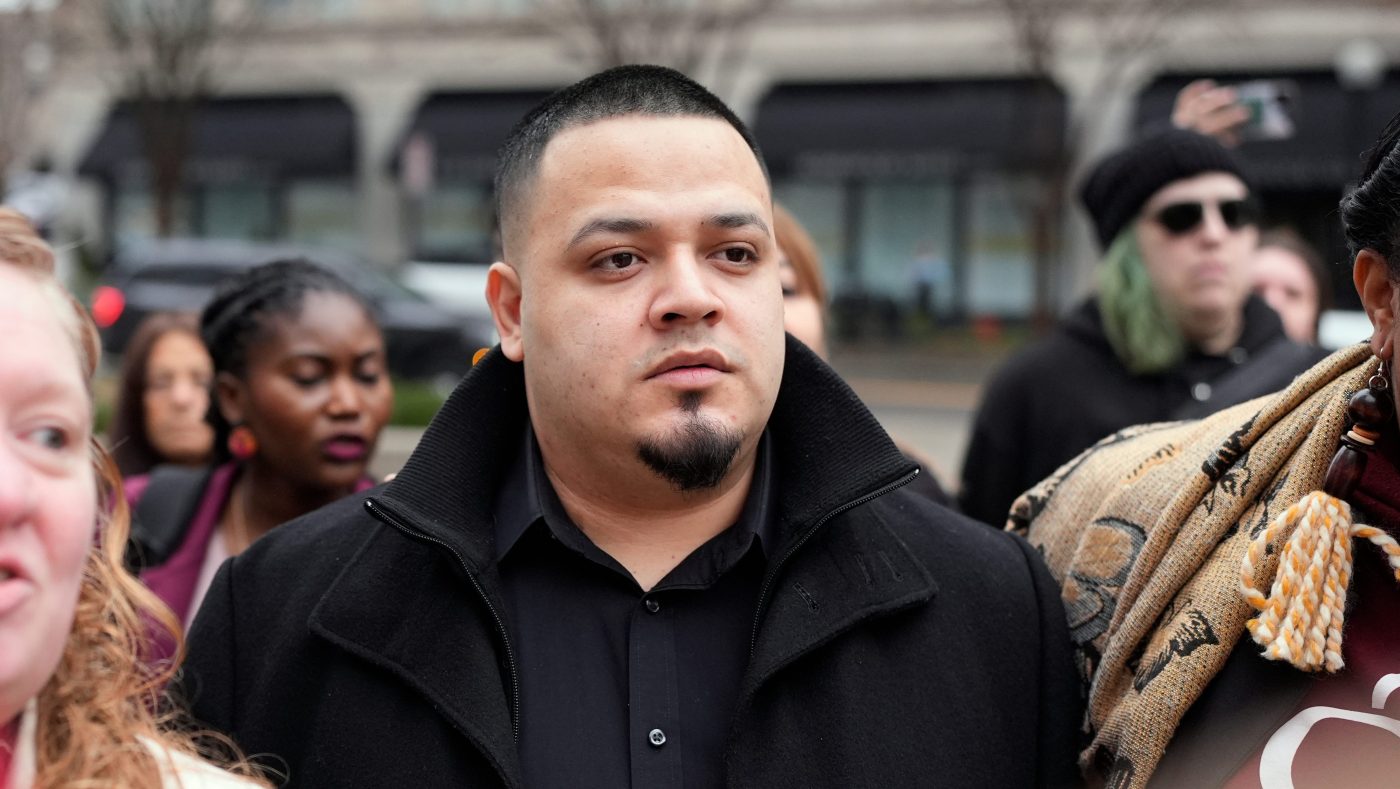
A federal judge in Tennessee on Friday threw out the criminal case against Kilmar Abrego Garcia, ruling that the government's prosecution amounted to retaliation for his successful lawsuit challenging his unlawful deportation. The decision marks a major legal win for the Salvadoran man, whose case became a flashpoint in the administration's aggressive immigration enforcement push.
U.S. District Judge Waverly Crenshaw, an Obama appointee based in Nashville, found that the evidence clearly showed the charges would not have been filed had Abrego Garcia not sued over his removal to a notorious megaprison in El Salvador. “The Court does not reach its conclusion lightly,” Crenshaw wrote. “The objective evidence here shows that, absent Abrego’s successful lawsuit challenging his removal to El Salvador, the Government would not have brought this prosecution.”
Abrego Garcia had been charged in 2025 with two counts of human smuggling after a 2022 traffic stop in Tennessee, when officers pulled him over for speeding and found him transporting men without luggage. He pleaded not guilty. The indictment was unsealed shortly after his return to the U.S. in June 2025, following a Supreme Court order that forced the administration to bring him back from El Salvador.
The case began when Abrego Garcia was mistakenly deported to El Salvador in 2024, despite a court order blocking his removal. A Justice Department attorney later called the deportation an administrative error and was fired. The episode sparked a civil lawsuit in Maryland that quickly reached the Supreme Court, which ultimately cleared the way for his return.
The administration has accused Abrego Garcia, who entered the U.S. illegally nearly 15 years ago, of being a member of the MS-13 gang—a charge he denies. His case became a symbol for critics who say the government has used prosecutorial power to punish those who challenge its immigration actions.
The ruling also adds to a pattern of courts pushing back against what they see as retaliatory prosecutions. In a separate case this year, prosecutors dropped charges against four ICE protesters in Illinois after similar claims of vindictive prosecution. Legal experts say these decisions could constrain the government's ability to bring charges against individuals who successfully sue over immigration enforcement.
Judge Crenshaw's order dismisses the indictment with prejudice, meaning the government cannot refile the human smuggling charges. The Justice Department has not yet indicated whether it will appeal. The Hill has requested comment from the department.
Abrego Garcia’s legal team hailed the ruling as a vindication. “This is what justice looks like when the system holds the government accountable,” said one of his attorneys. The case has drawn intense scrutiny from immigrant rights groups and lawmakers, who have used it to highlight what they call a pattern of “vindictive prosecution” in the administration's immigration crackdown.