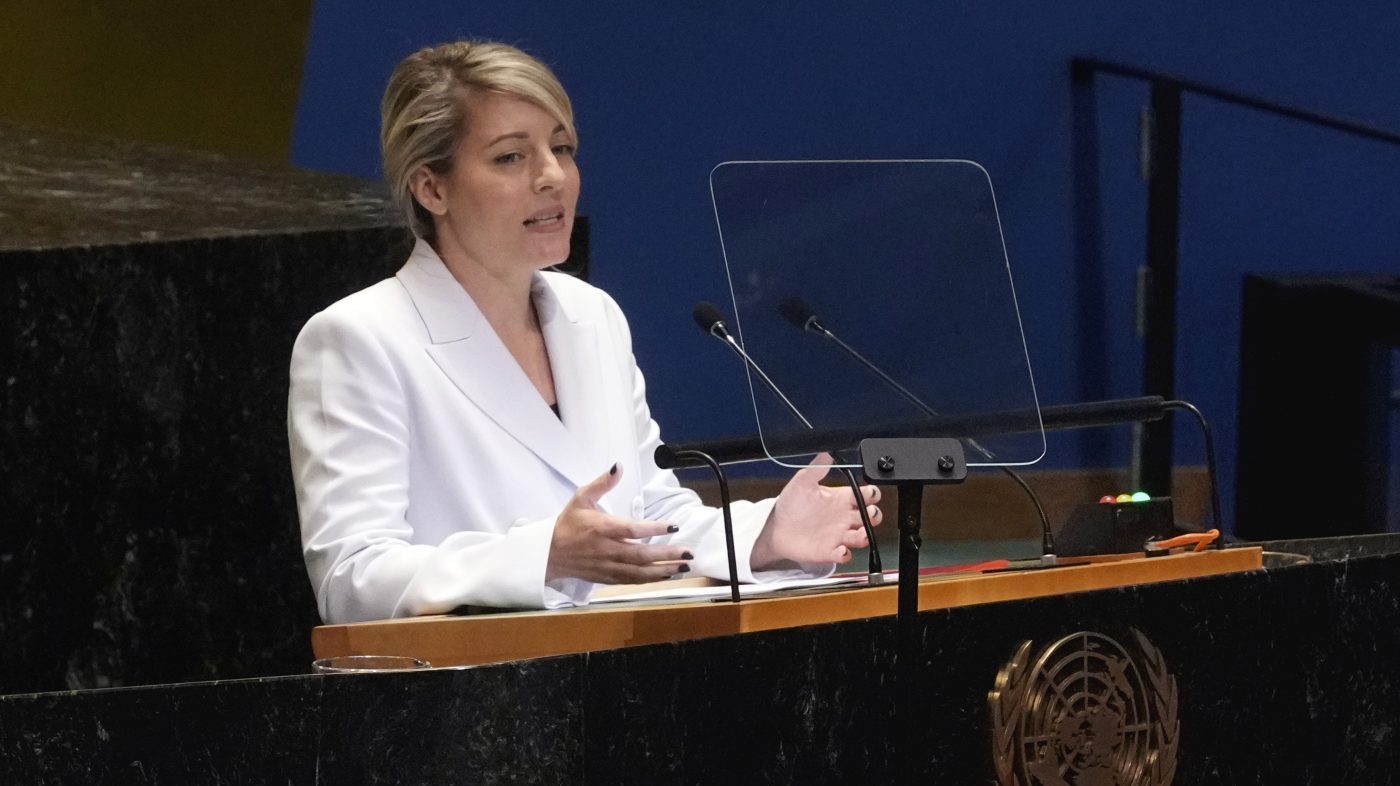
Canadian Industry Minister Mélanie Joly on Tuesday dismissed President Trump's suggestion to rename Lake Ontario as "Lake America," insisting that Canadians will always use the original name. The rebuke came amid a sharp escalation in the U.S.-Canada trade conflict, with new tariffs taking effect on both sides.
"We're proud of our Great Lakes," Joly told reporters during a press conference. "We've navigated the St. Lawrence River, the Great Lakes, for thousands of years and it was part of a foundation of our country. And we'll just stand up for what we have." Her remarks drew applause, as she added that despite "all these shenanigans," Canada would remain "smart and strategic" and would "fight back."
Trump's latest taunt echoes his 2025 executive order that renamed the Gulf of Mexico as the "Gulf of America," a move he justified as retaliation for what he called Mexico's failure to curb migration. On social media, the White House shared an image of a U.S. map, seemingly built from Legos, with a rectangle labeled "Lake America" above the Great Lakes and a similar label for the "Gulf of America" in the south.
The renewed trade hostilities began after Canadian Prime Minister Mark Carney pulled negotiators from trade talks over the weekend, allowing new U.S. tariffs on Canadian goods to take effect. In response, Carney announced retaliatory tariffs starting September 8, vowing to "match Washington's new tariffs dollar for dollar in order to protect Canadian workers, farmers, families and businesses."
Finance Minister François-Philippe Champagne detailed the plan on Tuesday: Canada will impose tariffs of 15%, 25%, and 50% on $27.6 billion worth of U.S. goods, doubling tariffs on American steel and aluminum to 50% to mirror U.S. rates. "For each product, our tariff will match the American tariff on the same type of Canadian good," Champagne said.
Ontario Premier Doug Ford also pushed back, telling CNN that Trump's threats were "a lot of rhetoric." He emphasized Canada's sovereignty, saying, "We're strong believers in being a sovereign country, and when President Trump wants to attack our sovereignty and attack our businesses and people in Ontario, I can't roll over." Ford added that his duty is to protect Ontario and Canada, which he argued also benefits Americans.
Ford called for de-escalation, acknowledging that "things got a little heated" between him and Trump. "Let's negotiate a fair deal because it's hurting the U.S. It's hurting Canada, and we just want to make sure that we have a fair deal," he said.
The dispute has broader political ramifications, with some Senate Republicans breaking ranks over the tariff strategy, and border-state GOP lawmakers feeling pressure ahead of the midterms. Meanwhile, Trump's renaming gambit has drawn mockery from Democrats, including Rep. Debbie Dingell, who suggested "Lake Natalie" as an alternative. The collapse of trade talks has been blamed on last-minute demands by Commerce Secretary Howard Lutnick, complicating efforts to resolve the standoff.
As the trade war escalates, Canada's retaliatory measures are set to hit a wide range of U.S. products, raising concerns about economic fallout on both sides of the border.