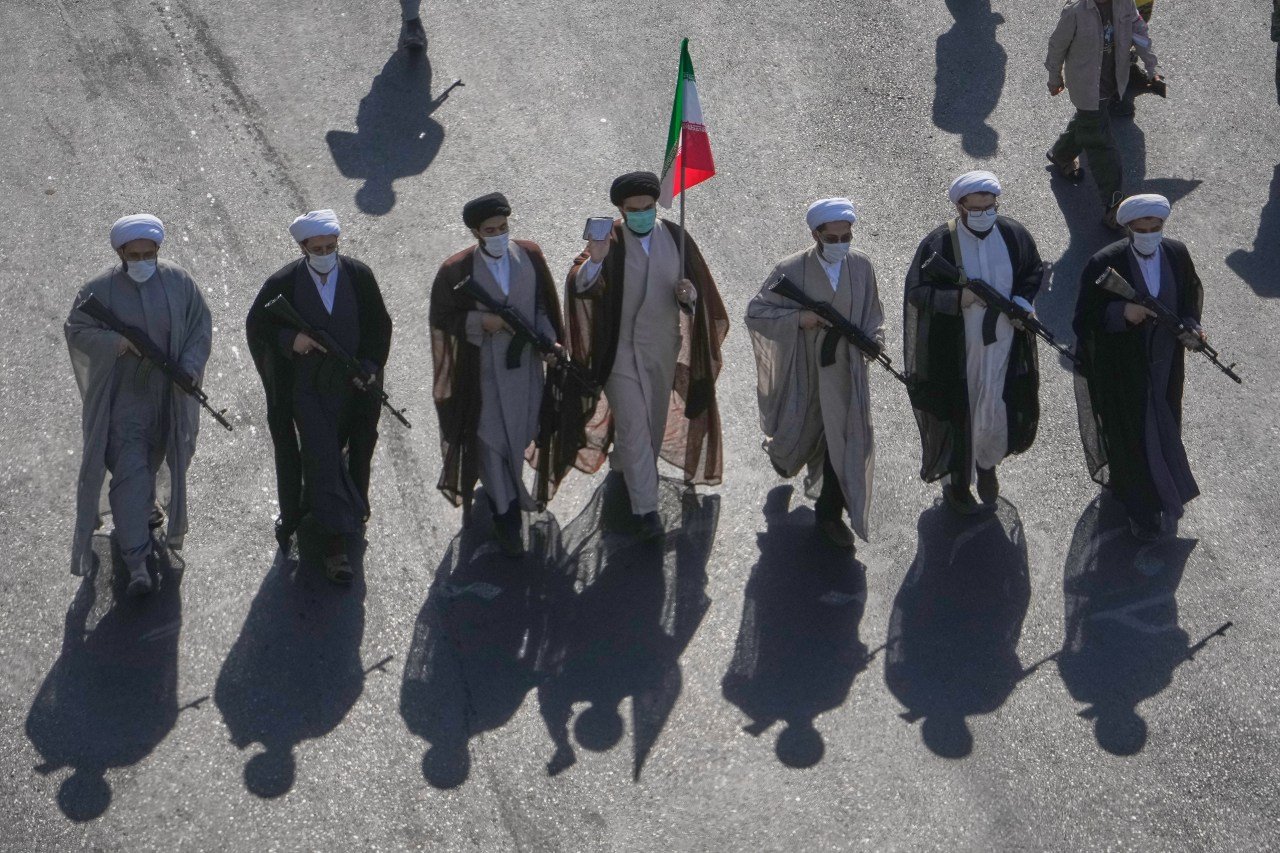
Iran's paramilitary Revolutionary Guard on Monday threatened to fundamentally alter the scope of any conflict with the United States, warning that an American escalation would prompt Tehran to introduce new weaponry and strike previously untouched targets. The blunt message came as regional tensions spiked across multiple fronts, from the Strait of Hormuz to Yemen's renewed civil war.
Hossein Mohebbi, a spokesperson for the Guard, declared that "the war is not over" and said Iran's response to any US escalation would transform the battlefield. "We will certainly change the geography of the war," Mohebbi said in remarks carried by Iranian state media. "We will certainly bring new weapons with new capabilities into the battle." He added that the Guard has prepared for a protracted conflict and that its target set would no longer remain static. "Our targets will no longer necessarily be the same as before," he said, according to Islamic Republic of Iran Broadcasting, noting that Iran possesses targets that have not yet been struck.
The warning follows a series of escalating incidents in the region, including an apparent attack on a commercial vessel. The UK Maritime Trade Operations Center reported Monday that an "unknown projectile" struck a tanker as it entered the Strait of Hormuz, injuring two crew members. The vessel continued to its next port under its own power, and no environmental damage was reported. Tanker traffic through the vital chokepoint has resumed but remains far below normal levels. The IRGC has previously claimed responsibility for strikes in the strait, as detailed in its claim of a tanker strike.
In a separate development, British Prime Minister Andy Burnham said the UK has agreed to provide limited military support to Saudi Arabia to counter attacks by Iran-backed Houthi rebels in Yemen. Speaking to reporters en route to the UN General Assembly in New York, Burnham said the Royal Air Force will conduct air-to-air refueling of Saudi aircraft. The arrangement is set to last for weeks but will be kept under review. The Houthis and Saudi Arabia have exchanged strikes as fighting between the rebels and Yemen's Saudi-backed government has reignited.
Houthi leader Abdul Malik al-Houthi used the anniversary of his group's 2014 seizure of Sanaa to lash out at Riyadh in a pre-recorded televised speech. He demanded an end to what he called Saudi "aggression" and the lifting of the coalition's decade-long blockade. "Stop the aggression and end the blockade. Our demands represent the legitimate rights of our people," he said on the Houthi-run al-Masirah channel. The Houthis overran the capital in September 2014, forcing the government into exile in Saudi Arabia. A Saudi-led coalition intervened the following year and imposed an air and sea blockade on Houthi-held areas.
The renewed fighting has exacted a heavy civilian toll. The World Health Organization reported Monday that 164 people were killed and 516 injured between Sept. 13 and Sept. 18, bringing the total since Aug. 6 to 674 deaths and 2,998 injuries. The International Organization for Migration said the same day that 129,438 people have been displaced across seven provinces, with some forced to flee multiple times.
Meanwhile, Israel's military remained on high alert as the country observed Yom Kippur, the Jewish Day of Atonement. Streets emptied and businesses shuttered, but the Israel Defense Forces said it bolstered frontline units following the killing of an Israeli settler in the occupied West Bank on Sunday. The Palestinian suspect was detained after a search. The foreign ministry noted that "for the next 25 hours, Israel is offline," even as security forces stayed mobilized.
The convergence of these events underscores the volatile security environment. The US has previously signaled it could ramp up military pressure on Iran, a possibility that continues to unsettle global energy markets, as noted in the prospect of US escalation. With the IRGC now explicitly threatening to redraw the contours of any war, the coming days will test whether Washington and Tehran can avoid a broader conflagration.