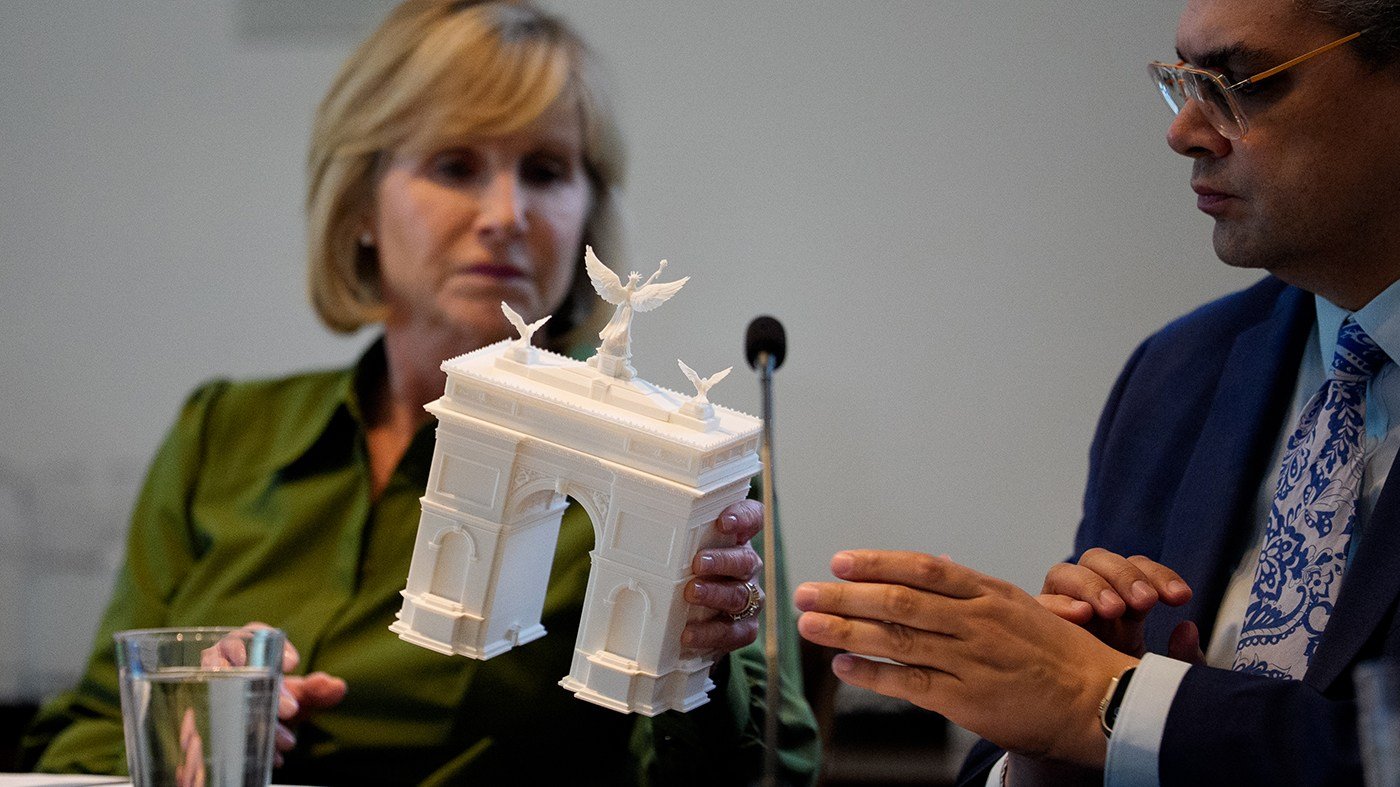
The Trump administration is moving ahead with plans to build a monumental arch in the Washington, D.C. area, with Interior Secretary Doug Burgum saying Thursday that excavation work could start within the next two weeks.
In a post on X, Burgum said the department is “preparing to start, over the next two-week period, the excavation work necessary for the Great Triumphal Arch and Military Observation Deck.” The ambiguous wording left unclear whether digging itself would commence in that timeframe or if the department was merely gearing up for it. The Hill has asked Interior for clarification.
Burgum framed the project as a patriotic centerpiece, writing that the arch will be “one of the Great Pieces of American Architecture, honoring the history and significance of Arlington Cemetery and befitting the most powerful Capital in the World.”
The arch is among several Washington-area initiatives championed by President Trump, who has said he wants it to be the largest of its kind globally. Earlier this year, he floated the idea of building a “triumphal arch” near Arlington National Cemetery, a proposal that quickly drew scrutiny from preservationists and local leaders.
A federal environmental and historic preservation assessment released recently concluded that the arch would adversely affect dozens of historic sites in the capital region, including by blocking iconic sightlines. The review did not kill the project but triggers a formal consultation process under historic preservation law.
Critics have questioned the rush to begin construction while legal and procedural reviews are still underway. Some have pointed to the administration's broader pattern of fast-tracking major infrastructure projects, often overriding local objections. The arch's location near hallowed ground at Arlington has also stirred sensitivities, with veterans' groups and historians urging caution.
Burgum's announcement comes as the White House pushes a slate of high-profile construction projects meant to burnish Trump's legacy, from border wall expansions to federal building renovations. The arch, however, stands out for its scale and symbolism, with Trump personally directing design elements.
The Interior Department has not released detailed cost estimates or a construction timeline beyond Burgum's two-week remark. Federal budgeting documents suggest the project could run into the hundreds of millions, though no final appropriations have been publicly itemized.
Local officials in Virginia and the District have little say over the project, as it sits on federal land. But the National Capital Planning Commission and the Commission of Fine Arts, which review federal projects in the region, have yet to issue final approvals. Their role could become a flashpoint if the administration attempts to bypass standard review.
Legal challenges are also possible. Preservation groups have already signaled they may sue to halt construction if historic sites are threatened, echoing fights over other Trump-era land decisions. The arch's fate may ultimately hinge on whether courts view the administration's expedited approach as violating federal preservation laws.
For now, Burgum's post signals that the administration is confident enough to move forward, even as questions about process, cost, and cultural impact remain unresolved. The next two weeks will show whether that confidence translates into actual shovels in the ground.