American higher education is in the midst of a brutal reckoning. The Trump administration's attacks on research grants and foreign funding, a demographic cliff that's shrinking enrollments, and a cascade of closures and mergers have exposed deep structural rot. But a new report from Vanderbilt University and Washington University in St. Louis argues that the most corrosive problem is one academia inflicted on itself: the wholesale politicization of scholarship.
The report, produced by a panel of eminent scholars, traces the crisis to the rise of "scholar-activism" as the dominant academic paradigm. Instead of pursuing objective truths, the report says, many humanities and social science fields have embraced subjectivity in the service of a political agenda—specifically, a left-wing vision of "social justice." The result, the authors write, has been "a deterioration in scholarly standards, fueled by the substitution of political criteria for properly scholarly criteria in the assessment of research."

The findings are particularly stark in anthropology, where the report documents "a pervasive repudiation of ideals of objectivity" and a "toxic intellectual climate" that suppresses dissent on charged topics. The authors identify relativism—the rejection of clear epistemological and moral benchmarks—as the root cause. They also point to the Mellon Foundation's quiet but massive funding of "social justice" initiatives, including fellow-to-faculty tracks that bypass institutional oversight.
Unsurprisingly, the report has triggered a furious backlash. Anthropologists have denounced it; philosophers have quibbled with its use of "relativism." The American Association of University Professors (AAUP) demanded the two universities "rescind the report," claiming it "undermines our ability to effectively address society's most profound problems." Critics have labeled it "diabolically evil" and compared it to McCarthyism. But as the saying goes, if you're taking flak, you're over the target.
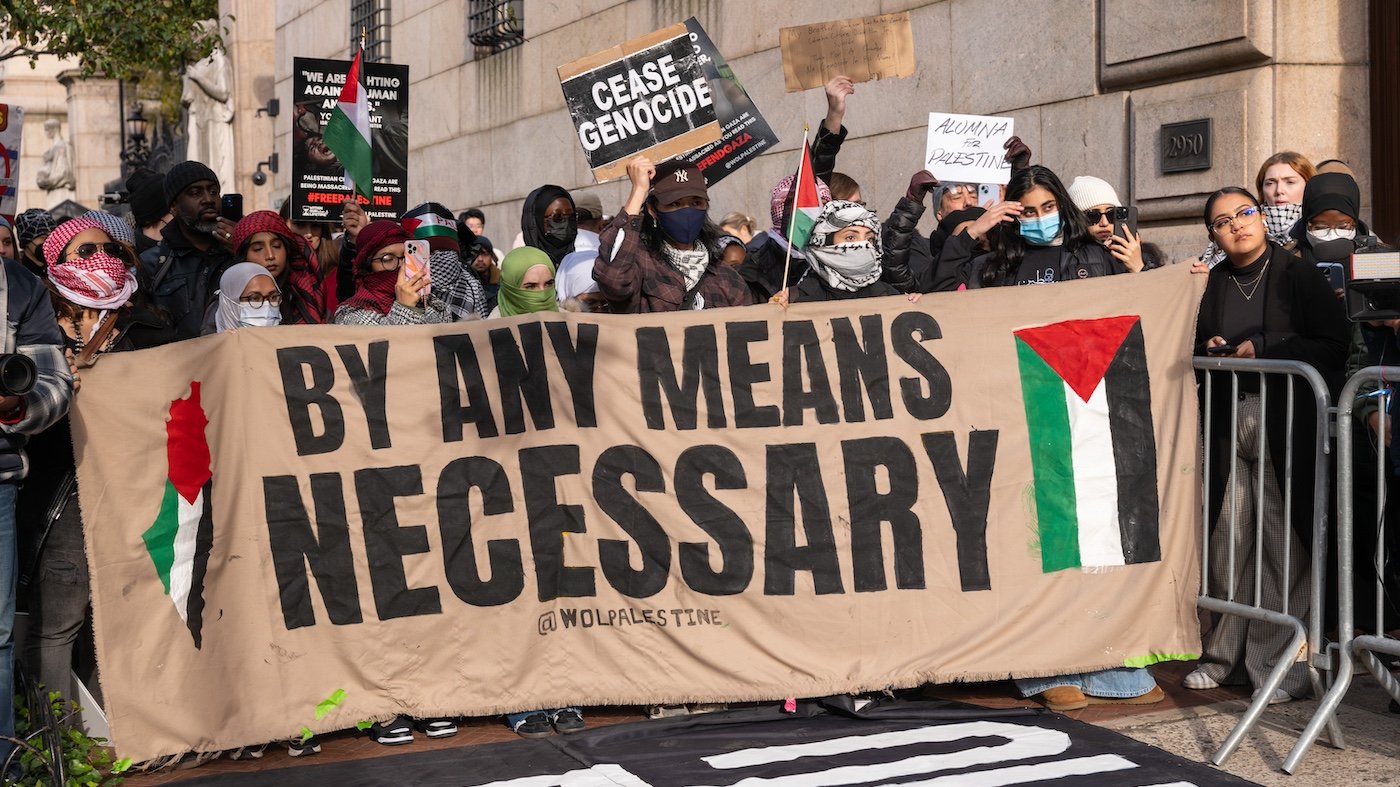
For those who track Middle Eastern studies, the report's conclusions are old news. That field has long been dominated by what the report calls "tendentious biased research" and "ideological scholarship," casting the U.S. as the Great Satan and Israel as the Little Satan. The enduring influence of Edward Said's "Orientalism" and widespread faculty praise for Hamas's October 7 massacre have laid bare the depth of the rot. Academic organizations' repeated condemnations of Israel's mythical "genocide" in Gaza only underscore the point.
The pushback isn't limited to public denunciations. Leaked conversations within the AAUP reveal plans to work with the Mellon Foundation to covertly undermine newly established civics centers at the University of Florida and elsewhere. Meanwhile, reports show that elaborate DEI structures, supposedly dismantled under Trump administration pressure, have simply been renamed and hidden. They are poised to strike back if given the chance.
The Vanderbilt-Washington University report follows a candid self-assessment from Yale University, which acknowledged that public trust in academia is eroding due to high costs, skewed admissions, and "ideological conformity." Yale's proposed fixes included reining in its own excesses—a step that remains elusive for many institutions.
The report's authors insist their goal is intellectual, not political. They offer it as a starting point for debate, not a bludgeon for reform. But given the ferocity of the resistance, it's clear that the academy's self-correction will be a long, ugly fight.