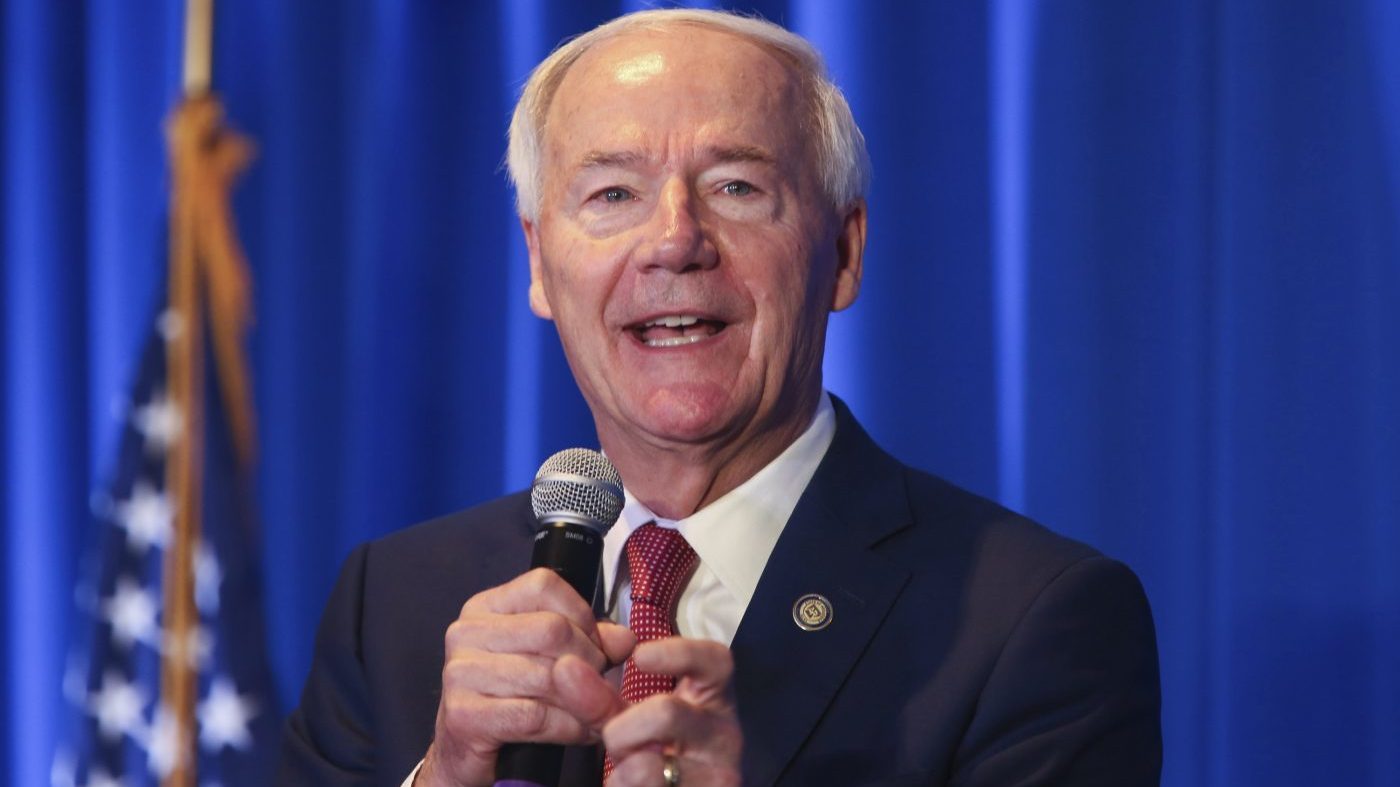
Former Arkansas Governor Asa Hutchinson (R) on Wednesday pushed back against a private memo from the National Republican Senatorial Committee (NRSC) that warned of political fallout over data center expansion, calling the document's tone "alarmist" and a sign of internal unease.
Speaking on News Nation with host Blake Burman, Hutchinson said the memo's framing was problematic: "The NRSC memo was almost alarmist in tone, which is concerning in and of itself." He argued that Republican candidates should take the initiative on the issue rather than let opponents define them.

"Republican candidates need to define themselves on the issue of data centers and their expansions and building them in our communities before they are defined on it and before it becomes a bigger issue," Hutchinson said.
The memo, titled "Ohio Data Center Risk," was distributed to AI companies and warned that if Sen. Jon Husted (R-Ohio) loses his reelection bid to former Sen. Sherrod Brown (D-Ohio), it could signal that Ohio voters are souring on data centers. The NRSC urged companies to make a stronger public case: explain who benefits, who bears the costs, and why communities should welcome them.
Recent polling underscores the challenge. A July survey by Public First found that 41% of Americans would oppose a data center being built near their home, reflecting broader unease about the industry's environmental and utility impacts.
Hutchinson said the backlash is driven by concerns over water and energy consumption. He noted that while governors once saw data centers as a competitive prize, the calculus has shifted. "Now it becomes a controversial issue that you better be able to articulate clearly that you don't want consumers to be paying for it and harmed," he said.
He predicted that Republicans would tread carefully, supporting data centers only under conditions of local control and with assurances that residential ratepayers won't foot the bill for new infrastructure.
The former governor also pointed to President Trump's Ratepayer Protection Pledge, which requires companies building data center infrastructure to cover all energy costs. Over 300 firms have signed on since March, including EdgeCore Digital Infrastructure, which became the latest to commit on August 13.
As the 2026 midterms approach, data centers are emerging as a wedge issue in key states, with implications for both parties. The NRSC memo, while private, signals that the GOP is wary of being caught off guard.