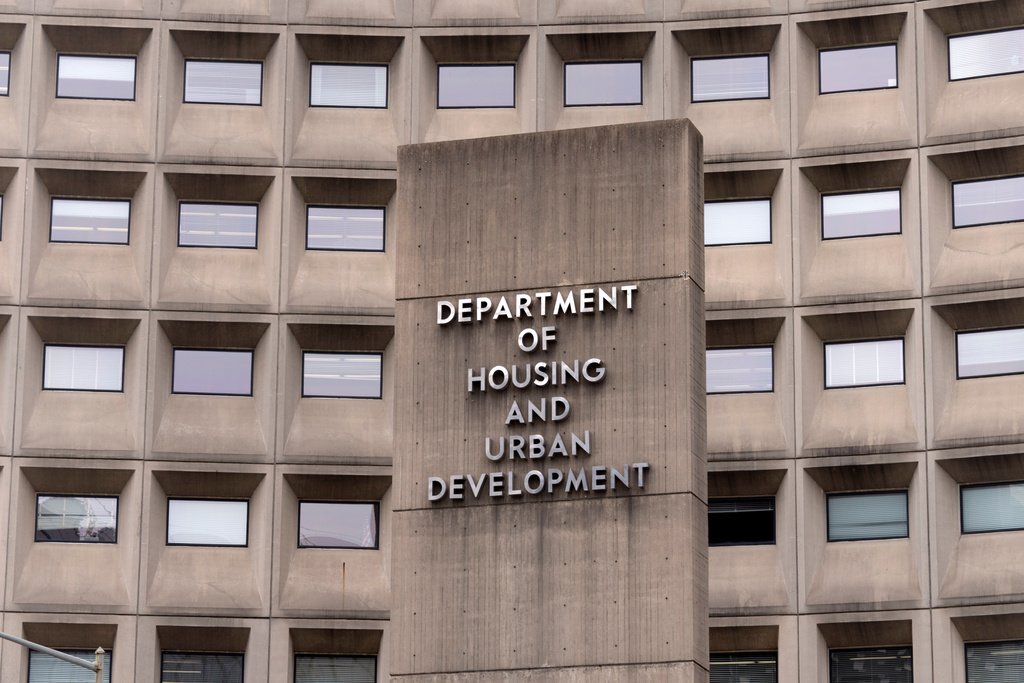
In a sharp departure from the previous administration, the Department of Housing and Urban Development is refocusing its fair housing enforcement on intentional discrimination rather than statistical disparities, Secretary Scott Turner announced this month.
Writing for The World Signal, Turner outlined the agency's new approach, which eliminates the so-called disparate impact standard that allowed HUD to infer discrimination based solely on outcomes. The shift, he argued, restores the Fair Housing Act's original intent: protecting individuals from intentional bias, not advancing group-based equity goals.

“Fair housing protections are simple: they prohibit intentional discrimination in housing,” Turner wrote. “But the Biden administration twisted the plain meaning of the Fair Housing Act from protecting individual rights to promoting an equity-based framework of social engineering.”
Turner specifically cited a case in Chicago, where Biden-era HUD officials blocked a recycling facility on the city’s South Side under disparate impact theory, costing hundreds of jobs. He also pointed to pressure on banks to grant preferential loans based on race, which he described as playing politics with taxpayer money.
In one of the most politically charged moves, HUD ended a civil rights investigation into the Texas General Land Office, which had been accused of discrimination for distributing disaster mitigation funds on a race-neutral basis. Texas Land Commissioner Dawn Buckingham called the claims “false and politically motivated,” and Turner said the closure “set the record straight.”
Under Turner, HUD has opened investigations into entities it says are violating the Fair Housing Act through explicit exclusion. That includes the East Plano Islamic Center in Texas, which allegedly marketed a development exclusively for Muslims, and municipalities like Minneapolis and Boston for housing plans that appear to favor or exclude based on race. The agency also launched its first statewide investigation into Washington state’s Covenant Homeownership Program, which grants benefits based on national ancestry.
“Exclusionary communities have no place in America,” Turner wrote, noting that his home state of Texas was the site of one such probe. “Our record shows we are correcting course.”
The shift aligns with broader conservative critiques of equity-focused policies. Critics of the previous approach argued it punished entities for disparities they did not cause, while supporters say disparate impact was a vital tool for uncovering systemic bias. Turner, however, framed the change as a return to constitutional principles.
“The plain language of the Fair Housing Act must be our guide, not woke ideology,” he wrote.
As the nation approaches its 250th anniversary, Turner said the department’s duty remains making the Declaration of Independence’s promise of equality a reality through law—not social engineering.