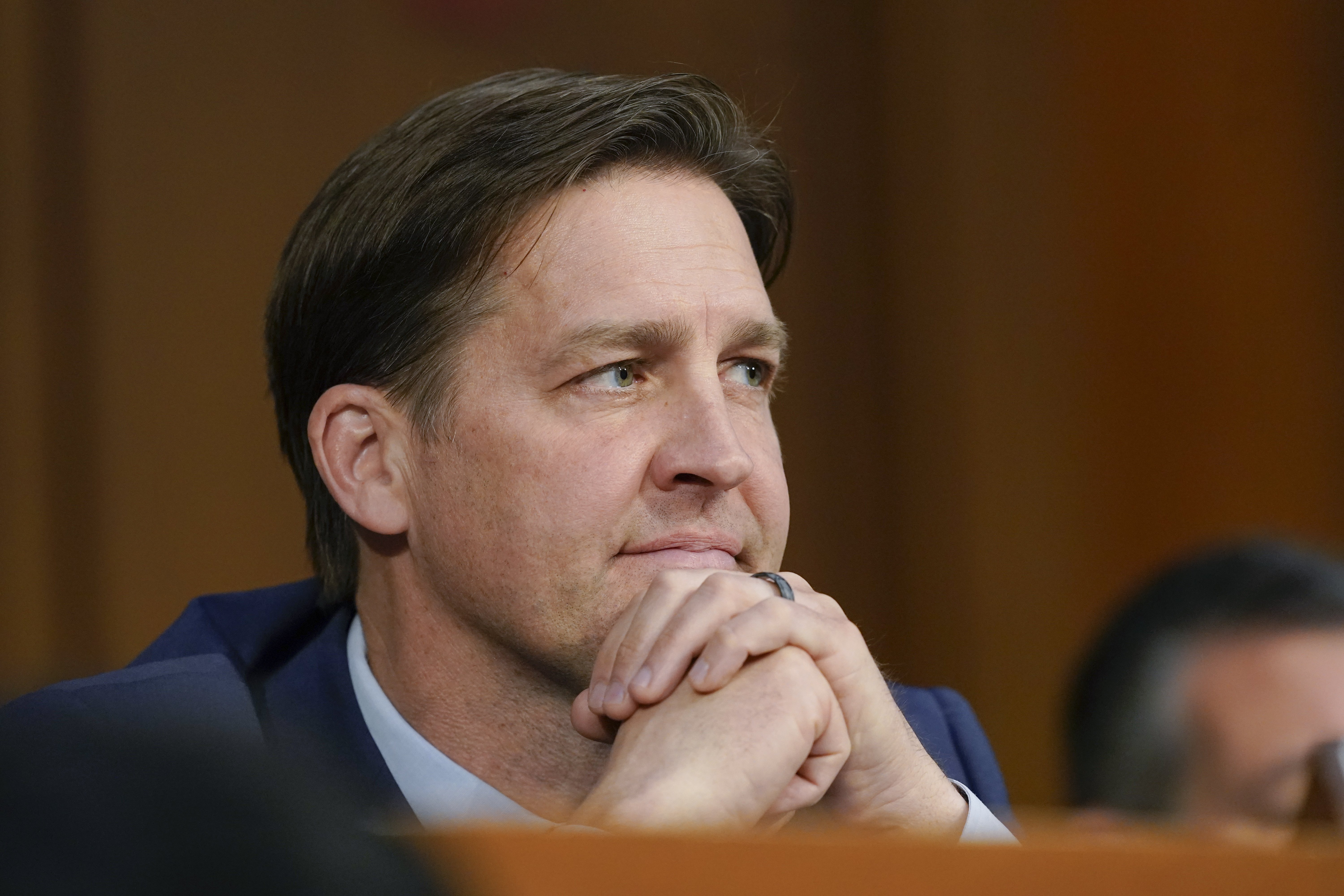
Former Nebraska Senator Ben Sasse, in a candid interview broadcast Monday, excoriated the current state of Congress, asserting that the institution is failing to confront the most pressing challenges facing the nation. Sasse, a Republican who left the Senate in early 2023, took aim at both parties for their lack of forward-looking vision.
“Neither of these parties really have very big or good ideas about 2030 or 2050, at a national security level, at a future of work level, at an institution-building level,” Sasse told CBS News. He added bluntly, “The Congress is not wrestling with big or important questions right now.”
Sasse, who served as president of the University of Florida after his Senate tenure, argued that the current political culture discourages intellectual growth and humility. He noted that lawmakers rarely admit to changing their positions after learning new information, saying, “It doesn’t encourage someone saying, ‘You know what, I used to believe this, but I listened to somebody else, and I realized I was wrong, and I’ve learned this new thing.’ There’s no audience for that.”
The former senator drew a stark contrast between the performative nature of modern politics and the deliberative ideal of a republic. “The Senate needs to be less like Instagram. The Senate needs to be more deliberative. And that means less smack-down nonsense,” he said. “A republic actually requires people who do deliberative, long-form discourse, learning, humility and community building. We’re not doing that right now.”
One area Sasse highlighted as ripe for deeper examination is artificial intelligence and its transformative potential. “What the digital revolution does is it accelerates almost everything about the human experience,” he explained. “Anything that can be reduced to a series of steps, which is most economic activity, is going to be routinized and become really, really cheap, really fast, and really ubiquitous.” His comments echo growing concerns about AI’s implications for jobs and society, a topic that has gained traction in policy circles but remains under-addressed in congressional hearings.
Sasse, who has publicly disclosed his battle with terminal prostate cancer, urged his former colleagues to confront their own mortality. “We’re all mortal. We’re all on the clock. We’re all going to be pushing up daisies eventually, and I think wisdom requires us to grapple with our death and our finitude early,” he said. He stressed that lawmakers should prioritize community and personal relationships over political titles, dismissing the notion that being a senator or congressman is the pinnacle of achievement. “The best thing you can do is be called dad or mom, lover, neighbor, friend,” he told CBS’s “60 Minutes.”
Sasse’s critique comes at a time when Congress is grappling with issues like Social Security solvency, with experts warning of benefit cuts by 2032 if the payroll tax cap isn’t lifted. Meanwhile, debates over AI regulation and national security strategy remain fragmented, with no comprehensive legislative framework in sight.
His parting wish for the country was simple: more genuine conversation and less screen time. “I’d like a lot more dinner tables to turn off the devices, put them out of the room, pour a big glass of wine, break bread together, and wrestle with some really grand questions about what you’re building for your family and your next generation,” Sasse said. The former senator’s remarks serve as a pointed reminder that while political battles rage on, the most consequential questions—about technology, community, and human purpose—often go unasked.