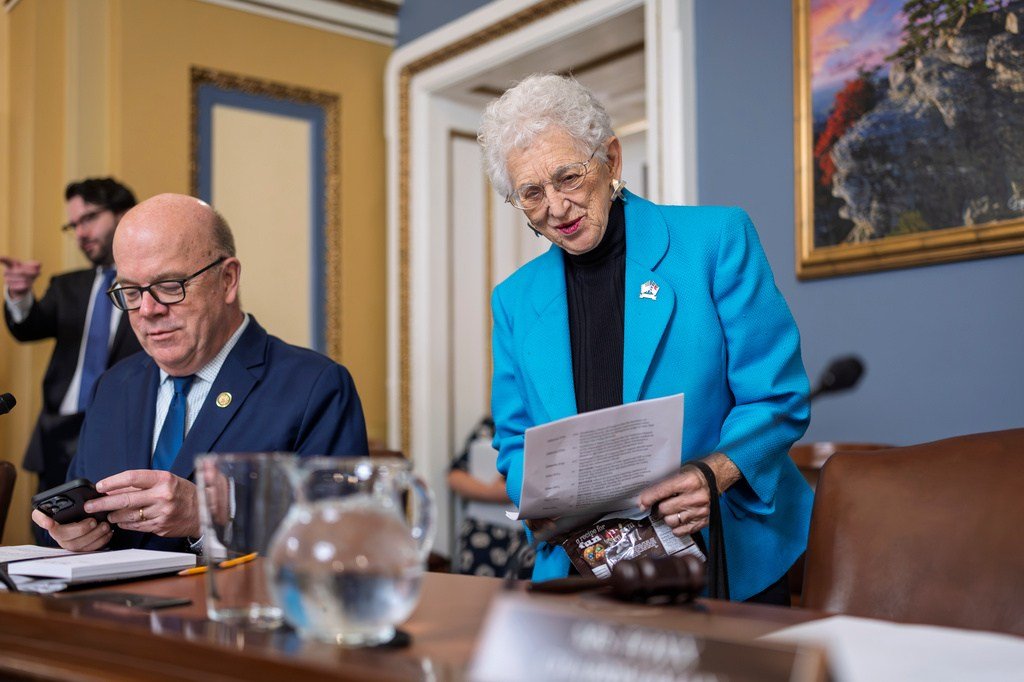
The House Rules Committee convened its biennial "member day" hearing last Wednesday, giving lawmakers a platform to pitch procedural changes for the next Congress. Twelve members testified — ten Democrats, one Republican, and one independent — offering a range of ideas from remote proxy voting for parents of newborns to tighter ethics rules and more efficient use of legislative time.
The tradition of holding these reform hearings every even-numbered year dates back to the 104th Congress (1995-96), when Republicans regained the majority for the first time in four decades. Their "Contract with America" included a pledge to overhaul House rules, leading to term limits for Speakers and committee chairs, abolition of proxy voting in committees, and a one-third cut in committee staff, among other changes.
Rep. Gerald Solomon (R-N.Y.), then Rules Committee chairman, launched the first "Members' Open Day" hearing on July 17, 1996, to gather input from members and outside experts. "We're still committed to changing the way Congress does business," Solomon said at the time. "Many members have good ideas on how to conduct the people's business more efficiently and we're going to give them a good look." That initial session featured 16 lawmakers and included proposals on civility and ethics.
Since then, the hearings have become a fixture. In the 105th Congress, a second open day was held on Sept. 17, 1998, helping pave the way for a recodification of House rules that reduced their number from 52 to 28.
This year's hearing produced a variety of proposals, many focused on how members allocate their time between Washington and their districts. Rep. Chrissy Houlahan (D-Wash.) called for "better and longer" district work periods, while Rep. Randy Fine (R-Fla.) suggested a full five-day work week in D.C., with one day reserved for committee work, alternating with full weeks in the district. Rep. Marie Gluesenkamp Perez (D-Wash.) urged prioritizing daycare access, expanding remote hearings for rural districts, and creating a mechanism to address member incapacity.
The utility of these hearings is debatable. They offer members a chance to air grievances, which may be justification enough. Unsurprisingly, the minority party often has more complaints and ideas for fairer treatment, given the majority's procedural dominance. Still, the Rules Committee, though it doesn't formally exist until the new Congress convenes, does influence the rules package the majority puts forward. Bipartisan sympathy for new parents, for instance, could lead to limited proxy voting on the floor for birth or adoption. Similarly, stricter conflict-of-interest rules barring insider trading could gain traction.
Underlying these proposals is a sense that members are stretched too thin, unable to give adequate attention to committee, floor, and district responsibilities. While some may view this as self-serving, many members genuinely want to serve constituents more responsibly. Given the public's low opinion of Congress, these reform efforts are a positive step toward improving institutional behavior.
This year's hearing comes amid broader debates over congressional operations and ethics, including recent tensions over rules votes and campaign finance rulings. As the next Congress approaches, these proposals will be weighed alongside other procedural and political considerations.