House GOP leaders are scrambling to pass a stopgap funding measure this month, a tactical shift aimed at sidestepping the kind of government shutdown that has repeatedly burned Republicans at the ballot box. The continuing resolution (CR) would keep the government funded from October 1 through December 4, giving lawmakers breathing room to finalize annual spending bills.
Unusually, the House is moving the bill in July, just before its summer recess, rather than waiting until the traditional September crunch. By front-loading the vote, Republicans hope to neutralize the drama and leverage that often builds as a shutdown deadline approaches. House Appropriations Committee Chair Tom Cole (R-Okla.), a veteran of multiple shutdown battles, framed the move as a preemptive strike against partisan gamesmanship. “This bill takes partisan politics and posturing off the table, denying anyone the opportunity to manufacture leverage from the calendar before elections,” Cole said in a statement.
The strategy reflects a party eager to avoid a repeat of earlier shutdowns, including one earlier this year, as the 2026 midterm elections loom. A shutdown could fuel a Democratic wave and jeopardize the GOP’s House majority. The Senate, however, remains a wild card: it will stay in session two weeks longer than the House, but it’s unclear if it will take up the measure before its own August break.
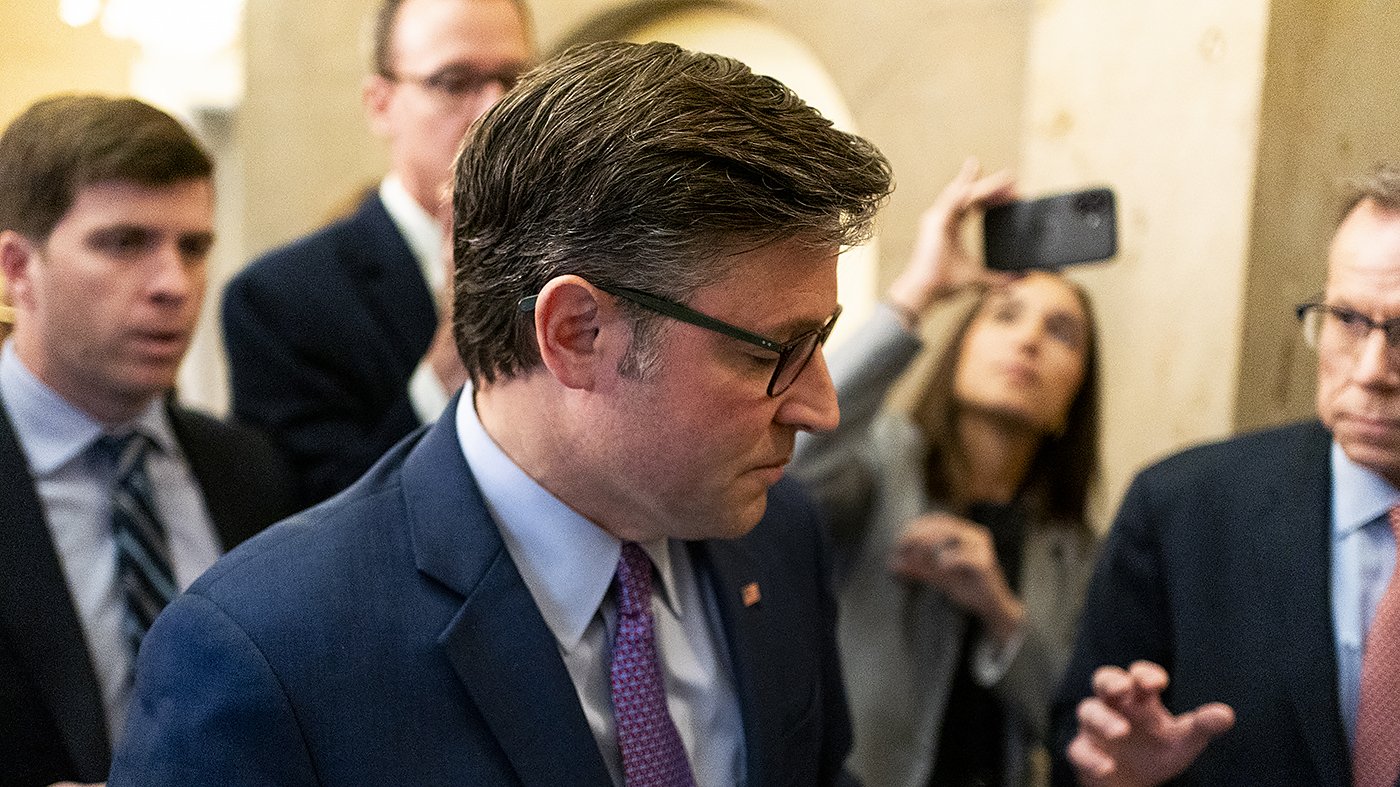
The House has so far passed three relatively uncontroversial appropriations bills covering national security, agriculture, and military construction. But the hard part lies ahead. Speaker Mike Johnson (R-La.) faces stiff resistance from both Democrats and his own conference when the debate shifts to funding agencies like the Pentagon, especially amid the ongoing Iran conflict.
Johnson’s immediate challenge is uniting his fractious caucus behind the procedural rule needed to advance the CR. These votes are typically loyalty tests, and Republicans have defected before. Rep. Thomas Massie (R-Ky.), a frequent thorn in Johnson’s side, argued on X that the stopgap could jeopardize the SAVE America Act, a package of election security measures. Other conservative hard-liners may also revolt, holding up floor action over grievances like the SAVE Act.
Democratic support is uncertain. House Appropriations Committee ranking member Rosa DeLauro (D-Conn.) announced she would oppose the CR, citing recent killings by ICE officers in Maine and Texas where the victims were not enforcement targets. She called for “dramatic reforms” to immigration enforcement. DeLauro also criticized the bill for lacking bipartisan input and failing to reverse a rule that lets Trump appointees block grant funding deemed misaligned with presidential priorities.
Despite the opposition, GOP leaders are pressing ahead. Cole warned during a Rules Committee hearing that “the threat of a shutdown is not only real, it happened twice over the last 12 months. Both of these shutdowns were unnecessary, reckless, and irresponsible. It would be equally reckless and irresponsible to repeat the same mistake.”
The push comes as Republicans seek to fend off a potential blue wave in the midterms. A shutdown could carry significant political risks for the majority party, making the early CR a key element of their electoral strategy. For a deeper look at how shutdown politics have divided the GOP, see our analysis of the SAVE Act dispute. And for more on the broader legislative push, check out this report on the House GOP’s final pre-recess agenda.