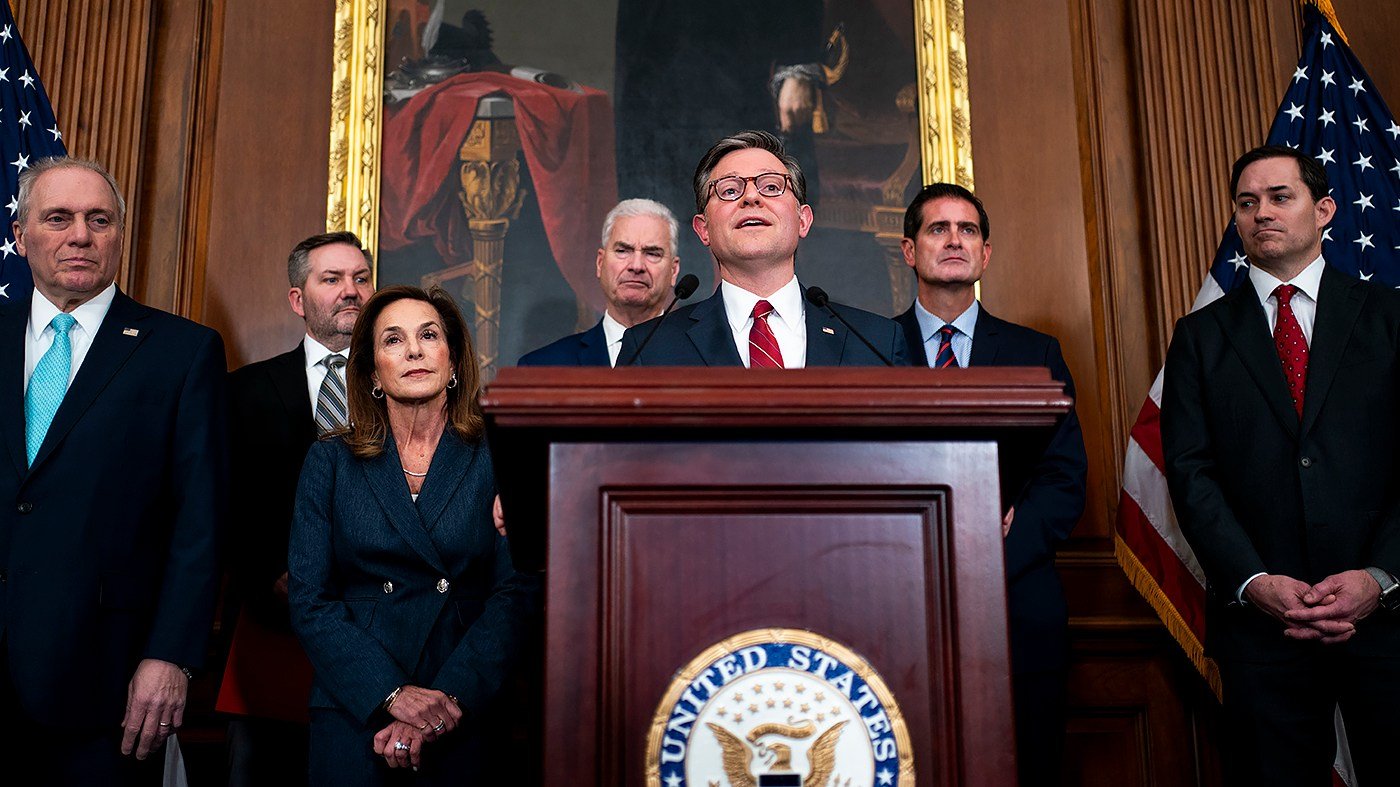
The House is poised to take up a sweeping Russia sanctions package next week, setting up a high-stakes procedural vote that could test Speaker Mike Johnson's grip on his conference and expose divisions over how to counter Moscow while managing President Trump's trade powers.
The bill, which cleared the Senate last month by an overwhelming 86-11 margin, would impose some of the toughest economic penalties ever leveled against Russia, including sanctions on buyers of Russian oil and gas, and extend existing measures against Iran. But House GOP leaders are moving the legislation through regular order, meaning Johnson must secure near-unanimous Republican support on the rule vote to advance the bill to the floor — a threshold that remains uncertain.
Johnson told The Washington Examiner this week at the GOP midterm convention in Dallas that he expects "bipartisan consensus" on the measure, but privately, aides and lawmakers acknowledge the path is fraught. The Rules Committee will meet Monday to set the terms of debate, and if the rule fails, the bill could stall indefinitely, a scenario that would hand Trump and Senate Republicans a major legislative setback.
Democrats, while broadly supportive of additional Ukraine aid and sanctions, have balked at provisions that would grant Trump new tariff authority. They argue the president already possesses sufficient legal tools to target companies, individuals, and oil tankers financing Russia's war effort. House Minority Leader Hakeem Jeffries has warned that the bill could hand Trump a dangerous economic lever, and Democratic votes are far from assured.
The legislation is named for the late Sen. Lindsey Graham (R-S.C.), who championed it alongside Sen. Richard Blumenthal (D-Conn.). Blumenthal, recalling Graham's final words on the bill, said, "As he said to me in some of his last words, this is a big f'ing deal. We all did good." He added, "A bipartisan team achieved this overwhelming 86-11 vote. President Zelensky is watching in Ukraine. President Putin is watching in Moscow."
International pressure is mounting as well. Estonia's foreign minister, Margus Tsahkna, wrote on X that "Estonia strongly supports imposing additional sanctions on Russia. We commend the U.S. Congress for their efforts and hope to see the Russian sanctions bill pass into law." The push comes as Russian missiles continue to pound Ukrainian cities, including strikes on Kyiv shortly after U.S. envoys departed.
If enacted, the measure would go beyond previous U.S. sanctions by targeting not only Russian entities but also foreign buyers of Russian energy, a move designed to choke off revenue streams that fund the Kremlin's military. The bill also extends existing sanctions on Iran, linking two of the United States' primary adversaries in a single economic package.
The House vote is expected to be a bellwether for GOP unity on Russia policy. Some conservative Republicans have questioned the need for new sanctions, arguing that Trump's negotiating leverage with Putin would be undermined by legislative constraints. Others worry about the tariff provisions, which could roil global markets and raise domestic prices.
Should the rule pass, the underlying bill would likely enjoy broad support. But if it fails, it would mark a rare public defeat for Johnson and a victory for the hard-line wing of the party that has grown skeptical of U.S. involvement in Ukraine. The outcome could also signal how willing Congress is to confront Russia versus deferring to the White House's diplomatic approach.
For now, all eyes are on Monday's Rules Committee meeting and the subsequent floor vote. As one senior GOP aide put it, "This is a test of whether we can govern. If we can't get a rule through on a sanctions bill, what can we get through?"