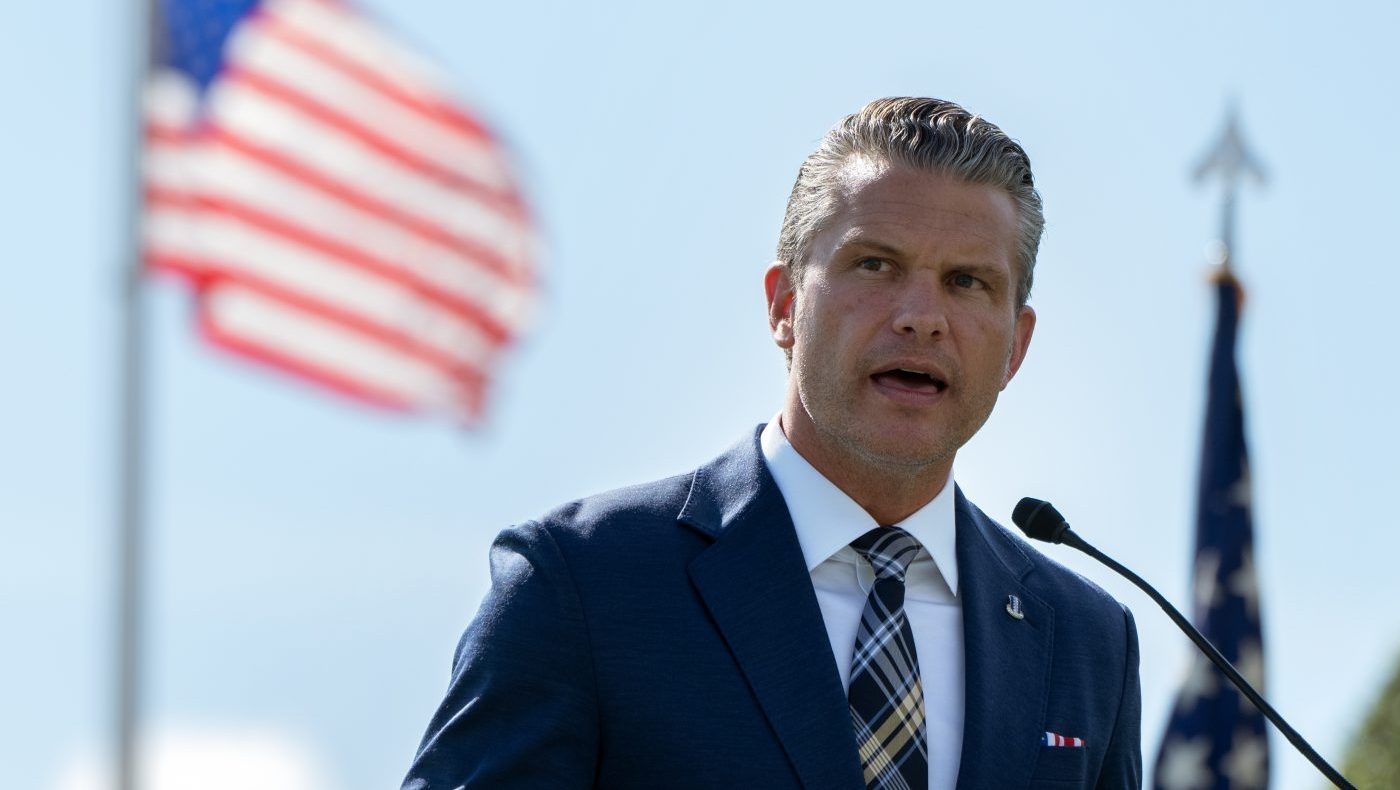
Defense Secretary Pete Hegseth flew to San Diego on Wednesday to greet sailors returning aboard the USS Abraham Lincoln, capping an unusually long Middle East deployment that drew sharp criticism from lawmakers over crew welfare.
The aircraft carrier pulled into its home port after more than 280 days at sea without a port call, a stretch that included combat operations against Iranian-backed forces. Hegseth, speaking to the crew shortly after the ship docked, praised their endurance and called the mission a success, echoing earlier statements from the Pentagon about the deployment's strategic value.

The extended tour, however, became a flashpoint in Washington. Lawmakers, including Sen. Kirsten Gillibrand (D-N.Y.), pressed the Navy on reports of food and supply shortages, cramped living quarters, and declining mental health among the roughly 5,000 sailors assigned to the strike group. During a recent Senate hearing, Acting Navy Secretary Hung Cao acknowledged that eight sailors from the carrier strike group attempted suicide during the deployment, a disclosure that intensified scrutiny.
Hegseth and President Trump have pushed back against those accounts, insisting that conditions aboard the ship were mischaracterized. In a statement before the carrier's return, Hegseth said the reports "completely misrepresented" the reality on board, a position the White House has also taken in defending the administration's handling of the deployment.
The carrier's return comes as the Pentagon faces broader questions about troop morale and operational tempo. Critics argue that such extended deployments, while necessary for deterrence, strain personnel and families. Supporters counter that the Lincoln's mission was vital to countering Iranian aggression and stabilizing the region.
Hegseth's remarks, scheduled for 2:10 p.m. EDT, were part of a series of public engagements this week. He has also been promoting initiatives to boost military voting participation, a push that has sparked debate over the appropriate political role of the armed forces.
The deployment's toll has also intersected with political controversies. Trump's recent comments about targeting Iranian cultural sites in California—remarks that drew rebukes from state Democrats—have added to the charged atmosphere around defense policy. California Democrats have demanded an apology, while the White House has defended the president's words.
For the sailors of the Lincoln, Wednesday marked the end of a grueling chapter. As the ship docked, family members lined the pier, and Hegseth's address sought to acknowledge their sacrifice. But the questions raised during the deployment—about supply chains, mental health support, and the limits of naval endurance—are unlikely to fade quickly.
The Navy has said it will review the deployment's lessons, including how to better support crews during extended operations. Hegseth, for his part, framed the homecoming as a moment of pride, telling the crew that their service had made the nation safer.