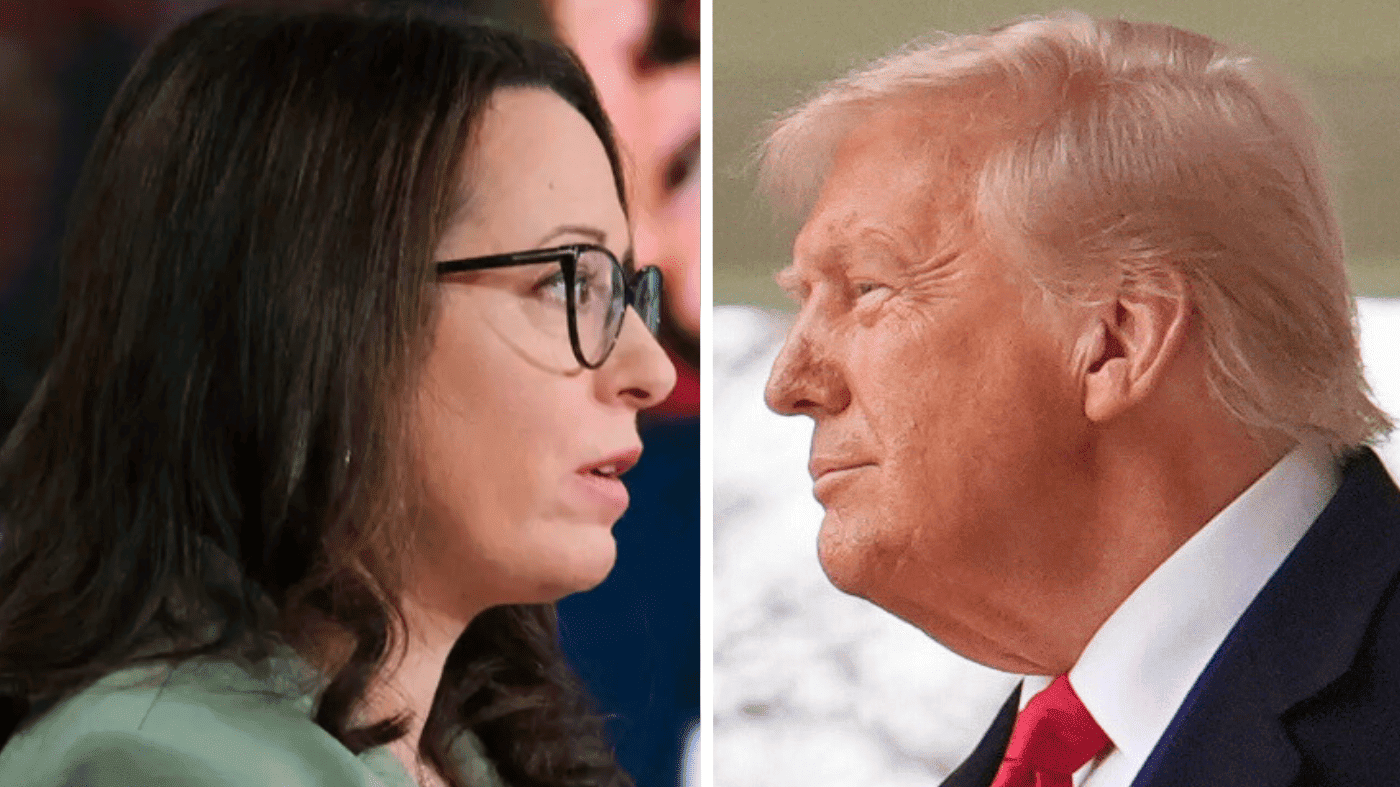
White House correspondent Maggie Haberman said Tuesday that President Trump's verbal assaults on female members of the press corps have escalated sharply in his current term, becoming more personal and more aggressive than during his first four years in office.
Haberman, who has herself been a frequent target of the president's derision—he has dubbed her “Maggot”—told CNN's Christiane Amanpour on the podcast The Ex-Files that the change is unmistakable. “The attacks on female reporters have gotten much nastier and much more aggressive and much less just about being a keyboard warrior where he would do it on Twitter [now social platform X] in term one,” she said.
The comments come as Trump has recently clashed with several prominent female journalists. At last month's White House Correspondents' Association dinner, he took the stage to mock CNN's Kaitlan Collins, who had just received an award for excellence in presidential coverage under deadline pressure. Trump told the audience he wanted to “personally congratulate” Collins, then added, “It was all about me. It's a fake—She shouldn't get the award, it was a fake. But I didn't mind, I said, 'Kaitlan, congratulations.' But it was fake, there's no question about it.” He went on to compare her to transgender influencer Dylan Mulvaney and suggested she “smile” more.
Earlier this week, CNN correspondent Kristen Holmes was berated by Trump when she asked about conditions aboard the USS Abraham Lincoln. The president's response, which drew widespread criticism, was the latest in a pattern that Haberman says is designed to deflect from substantive questions.
“A fight is actually the distraction that he is sometimes looking for,” Haberman told Amanpour. She added that she is “much more interested in having him answer questions,” but that doing so has “gotten very, very hard.”
Trump's history of inflammatory remarks about women is well documented. During his 2016 campaign, a leaked 2005 Access Hollywood tape captured him bragging about grabbing women by the genitals. That recording, which the FBI had sought during its probe of former Trump lawyer Michael Cohen, was later barred from being shown to the jury in the E. Jean Carroll civil case, in which the author accused Trump of sexually assaulting her in the 1990s. Trump was found liable for sexual battery, and a judge ordered him to pay Carroll more than $5 million in a related defamation case. Trump has denied wrongdoing and appealed to the Supreme Court, which on Monday declined to rehear the challenge.
Since returning to office in 2025, Trump has also faced renewed scrutiny over his past associations with the late sex offender Jeffrey Epstein, who allegedly ran a sex trafficking ring involving minors. Trump has denied any wrongdoing and has not been charged. In an interview last November, he responded to a reporter's question about the Epstein files aboard Air Force One by saying, “Quiet piggy,” a remark that drew sharp rebuke.
Haberman's assessment reflects growing concern among journalists about the president's treatment of women in the press. She noted that while Trump has always been combative with the media, the current attacks feel more intense and more personal, leaving many female reporters wondering what will come next.
As the White House press corps continues to navigate an adversarial relationship with the president, Haberman's comments serve as a reminder of the challenges facing those who cover him. For now, she says, the focus remains on getting answers to the questions that matter—even as the president seems intent on changing the subject.