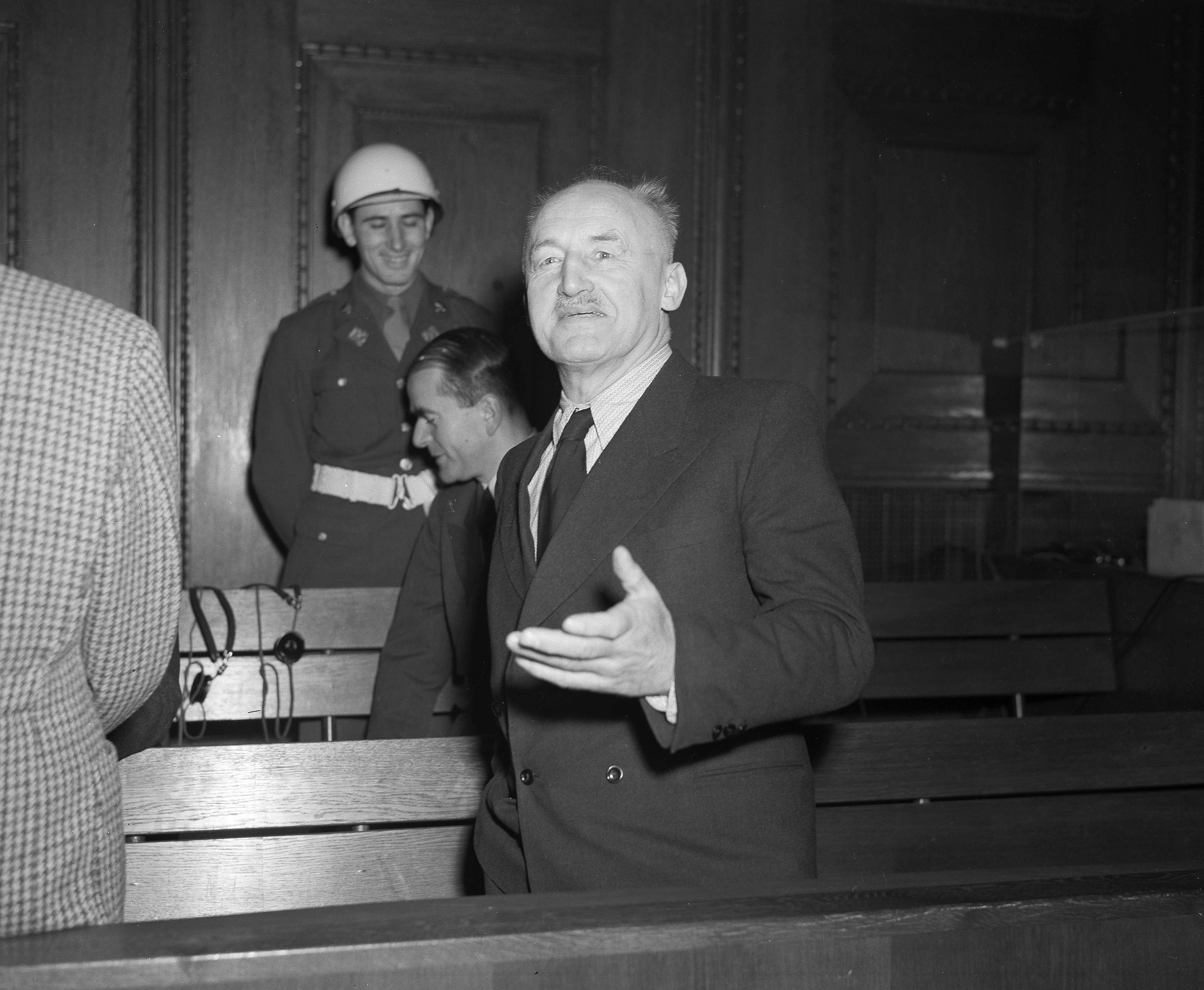
In December 2024, Amos Guiora, a law professor living near Jerusalem, received an email that stunned him. The subject line bore the name of his grandfather, who was murdered at Auschwitz in May 1944. Initially dismissing it as spam, Guiora found three identifying questions—all answered affirmatively. The email revealed that four volumes of the Talmud, which his grandfather had taken to Auschwitz, were discovered in the private library of Julius Streicher, the editor of the Nazi newspaper Der Stürmer. Streicher, convicted at Nuremberg, was hanged for his crimes.
The volumes were among 10,000 books found in Streicher's Nuremberg library. A Nuremberg-based institute and a team of volunteers identified them as belonging to Guiora's grandfather, prompting the email. Guiora, a scholar focusing on bystanders and enablers, now faces a personal and professional journey: tracing the books' path from Hungary to Auschwitz to Nuremberg, and back to him.

From Personal History to Political Analysis
Guiora's academic work examines enablers in the Holocaust, sexual assaults, and child abuse. His forthcoming book, Enablers: Normalizing the Unimaginable, targets Israeli Prime Minister Benjamin Netanyahu’s enablers, whom he blames for undermining the rule of law and refusing to negotiate hostage releases with Hamas. The book, due in August, calls for accountability in the upcoming Israeli election, expected in September or October.
Another work, Victory, Redemption, and Legal Responsibility: By Bystanding We Enabled (expected 2028), argues that enablers, not just perpetrators, must face legal consequences. Guiora insists that the ecosystem of enabling was essential for the murder of six million Jews. His research draws a direct line to modern crises, such as the spike in antisemitism and Holocaust denial.
The Journey of the Books
The four Talmud volumes trace a detective story: from Guiora's grandfather’s deportation from Nyiregyhaza, Hungary, to Auschwitz, then to Streicher's library, and finally to Guiora. This narrative raises three critical questions about bystanders and enablers: Did they understand what was happening to Jewish neighbors in real time? What role did they play in European Jewry's destruction? How culpable are they?
Guiora focuses on rabbis who urged their congregants not to leave Hungary for Israel until the Messiah arrived, viewing their actions through an enabling lens. His own great-grandfather, a member of the Satmar Hassidic sect, forbade his daughter and son-in-law from leaving Hungary in 1939, leading to their deportation and murder.
Confronting the Past
For the first time, Guiora will travel to Auschwitz to understand how his grandparents were killed and how the books reached Streicher. He will also visit eastern Hungary and Germany. The larger themes—Holocaust denial, minimization, and rising antisemitism—demand attention, he says. Overlooking them is a dangerous mistake.
Guiora hopes the book brings redemption and victory, as its title suggests, by highlighting the role of enablers. He argues that without an enabling ecosystem, perpetrators cannot act with impunity. Accountability, he insists, must come through legislation targeting the criminal act of enabling, whether in sexual assault, hostage-taking, or genocide. “Bystanding,” he writes, “the sin of omission, only guarantees that history will repeat itself.”