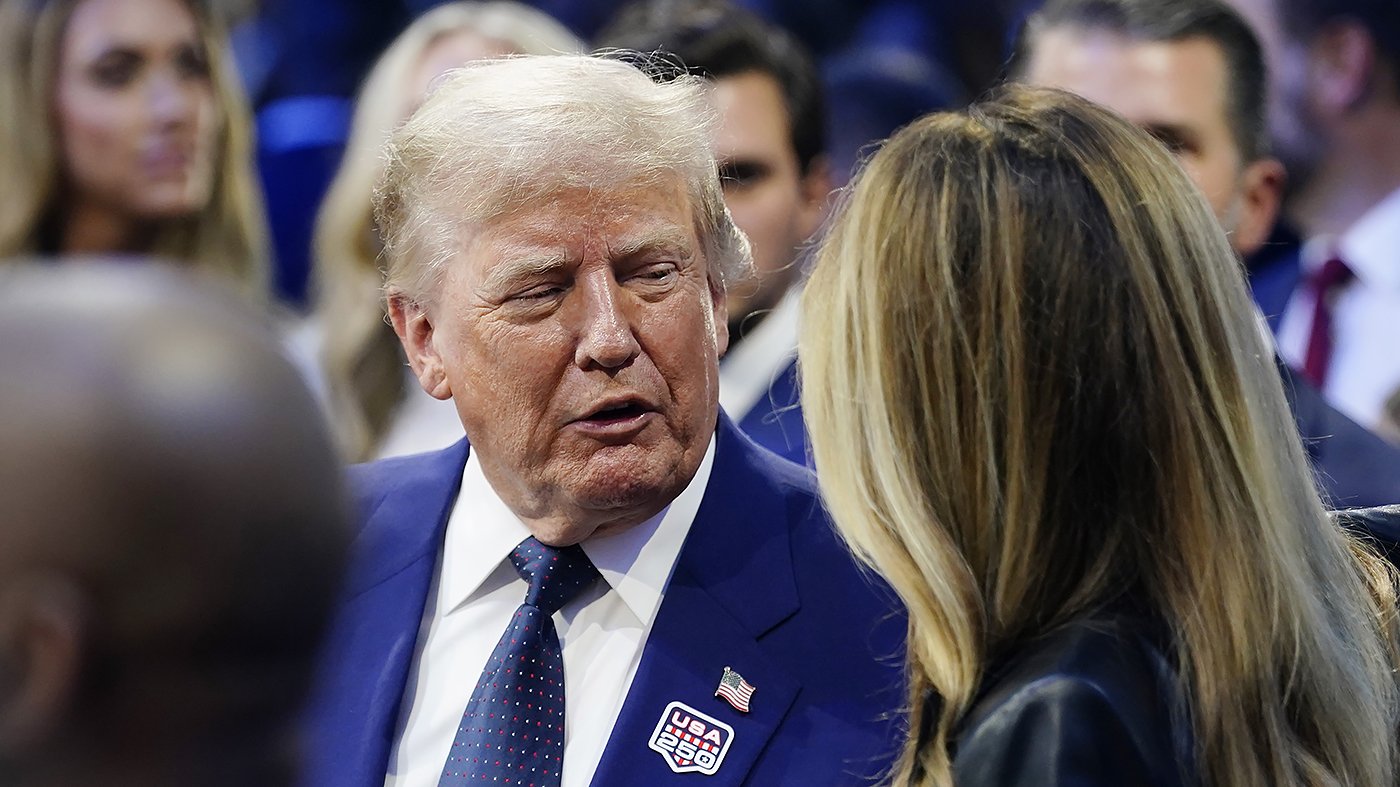
Republican senators are withholding judgment on President Trump's newly announced peace deal with Iran, insisting they need to see the full text before assessing whether it effectively blocks Tehran's nuclear ambitions. The skepticism comes even as Trump and Vice President JD Vance signed a memorandum of understanding (MOU) with Iran on Sunday, though the document remains secret.
Sen. Lindsey Graham (R-S.C.), a key Trump ally who previously urged military strikes to 'finish the job' against Iran, said he wants to review the MOU himself. 'The way Iran describes it is awful. The way we describe it makes sense to me. Let's look at it and see what it actually is,' Graham told reporters Monday. He added that it may take 'a couple of months' to determine whether Iran will agree to enforcement provisions preventing covert production of highly enriched uranium.

Senate Majority Leader John Thune (R-S.D.) said he hasn't been briefed and expressed hope senators will learn more before a formal signing in Geneva. 'I don't know enough about it to say' whether it's a good deal, Thune said, warning that GOP support hinges on whether the deal is seen as enforceable. 'The issues are going to be compliance and how you're going to enforce that.'
The MOU, described by Vance as a 'very general document' about a page and a half long, reportedly includes a ceasefire and reopening of the Strait of Hormuz. But key questions about Iran's nuclear program and sanctions relief are left for 60 days of further negotiation. Critics note that Iran still holds 970 pounds of near-weapons-grade enriched uranium.
Sen. Roger Wicker (R-Miss.), chair of the Senate Armed Services Committee, declined to comment Monday, but last month slammed the emerging framework as 'a disaster.' Sen. John Cornyn (R-Texas) echoed the call to 'see the MOU,' while Sen. John Kennedy (R-Ky.) said he's 'hopeful' but cautioned, 'It's just very difficult if not impossible to trust the Iranian government. They lie.'
Democrats are also demanding transparency. Senate Democratic Leader Chuck Schumer (D-N.Y.) said on the floor that 'the devil is in the details' and called for an immediate briefing. The standoff echoes the 2015 Iran nuclear deal, which Republicans sharply criticized under President Obama.
Some GOP senators, including Graham, insist Congress must vote on any final agreement. 'Any nuclear deal with Iran has to be voted on,' Graham said. Others, like Sen. Eric Schmitt (R-Mo.), argue a vote isn't necessary. The debate reflects broader concerns about executive power, as critics argue Trump has gathered more authority than the founders intended.
The administration has not released the MOU's text, fueling uncertainty. As the 60-day negotiation window opens, lawmakers on both sides are pressing for details that could determine whether the deal gains bipartisan support or collapses under scrutiny.