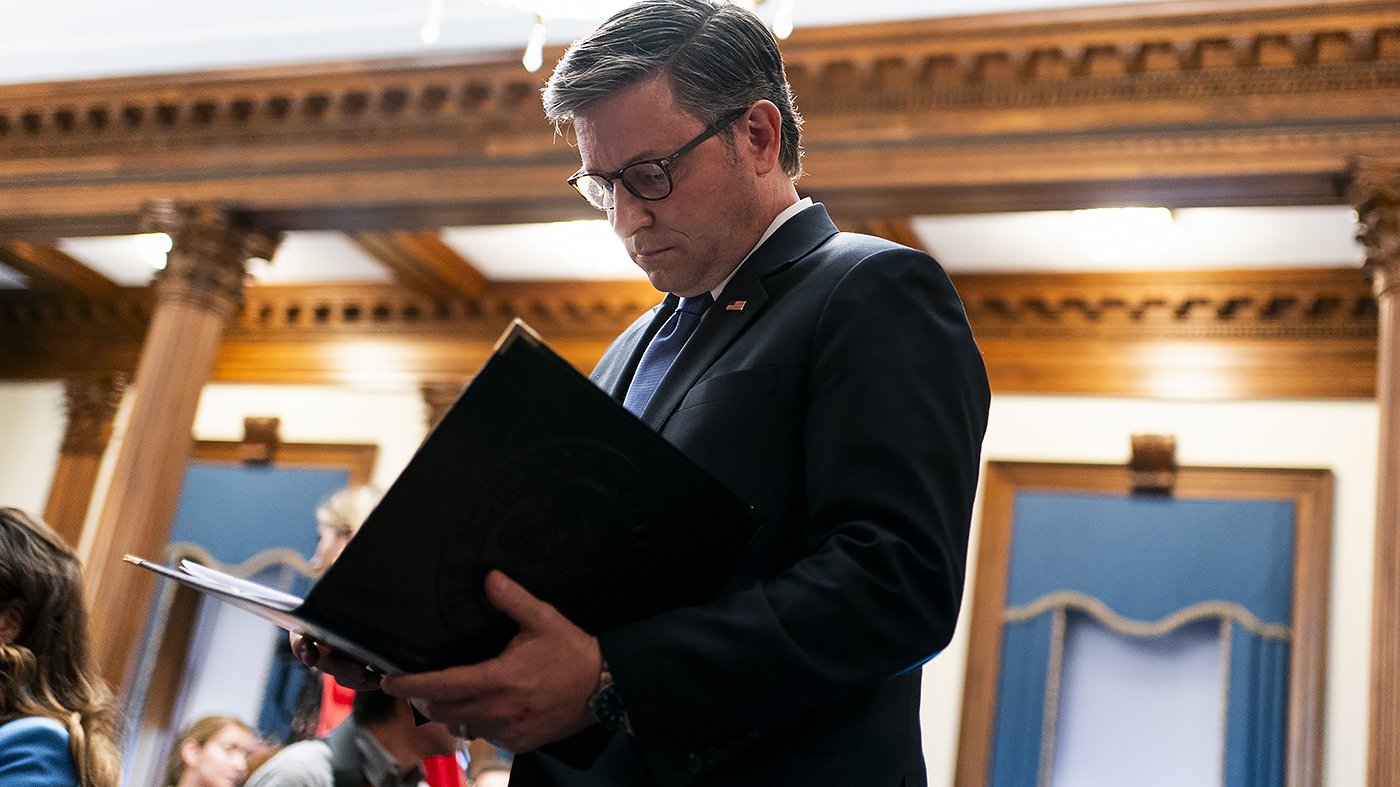
Speaker Mike Johnson (R-La.) announced Wednesday that the House will vote Thursday morning on a short-term extension of the nation's foreign surveillance powers, pushing the deadline to July 2. The move comes as a partisan standoff over President Trump's decision to install Bill Pulte as acting director of national intelligence threatens to derail the reauthorization of Section 702 of the Foreign Intelligence Surveillance Act.
Section 702, which permits U.S. intelligence agencies to monitor foreign nationals abroad, is set to expire Friday. Without a new law, the program would lapse, disrupting counterterrorism and cybersecurity operations. Johnson's decision to bring the extension to the floor under suspension of the rules—requiring a two-thirds majority—means he must rely on Democratic votes, which are now in doubt.
Senate Democrats earlier Wednesday rejected a bid to fast-track a short-term extension through unanimous consent, with Minority Leader Chuck Schumer (D-N.Y.) and others insisting the White House first withdraw Pulte's appointment. Johnson accused Democrats of playing politics with national security. “Democrats in the Senate are playing political games right now with the lives of Americans. It’s a very dangerous situation,” he told reporters.
The crisis escalated after Trump named Pulte, a conservative activist and heir to a homebuilding fortune, to lead the intelligence community on an acting basis. Democrats view Pulte as unqualified and have demanded his removal before supporting any FISA extension. House Minority Leader Hakeem Jeffries (D-N.Y.) said he will not vote to extend the spy powers as long as Pulte remains in the role. House Intelligence Committee ranking member Jim Himes (D-Conn.) echoed that sentiment, calling Pulte “a disaster” and warning that “one day under Bill Pulte is one day too many.”
Johnson acknowledged that the Senate is still deliberating over a unanimous consent request to expedite the extension, but expressed little confidence it would succeed. “We’re not having a great amount of confidence that they’re going to be able to get that done,” he said. “So, the House will once again do our job, and I’m going to put on the floor tomorrow a short-term extension to July 2, pursuant to the request of the President of the United States.”
The standoff has paralyzed efforts to renew the surveillance authority, which was last reauthorized in 2018. The House passed a longer-term reform bill in April, but the Senate has yet to act. Himes indicated that Senate Intelligence Committee Chairman Mark Warner (D-Va.) is on the “same page” and that a July 2 extension would not pass either chamber until Trump nominates a permanent, confirmable DNI. “There’s one easy way out, which is the president nominates somebody who can be confirmed, and then we’re all back in business, having a good conversation rather than stupid conversation,” Himes said.
Johnson countered that the House has already done its part by sending over a reform package, and that the Senate must act. But with time running out, the path forward remains unclear. If the House fails to pass the short-term extension Thursday, the program could lapse Friday, forcing intelligence agencies to halt surveillance activities under Section 702.
The political standoff underscores the deep mistrust between the parties over the surveillance program, which has been criticized by civil liberties advocates on both sides. Democrats argue that Pulte’s appointment is a reckless move by Trump to politicize intelligence, while Republicans insist the program’s renewal is too critical to be held hostage by partisan grievances. For now, all eyes are on Thursday’s House vote and whether Johnson can muster the two-thirds majority needed to keep the program alive.