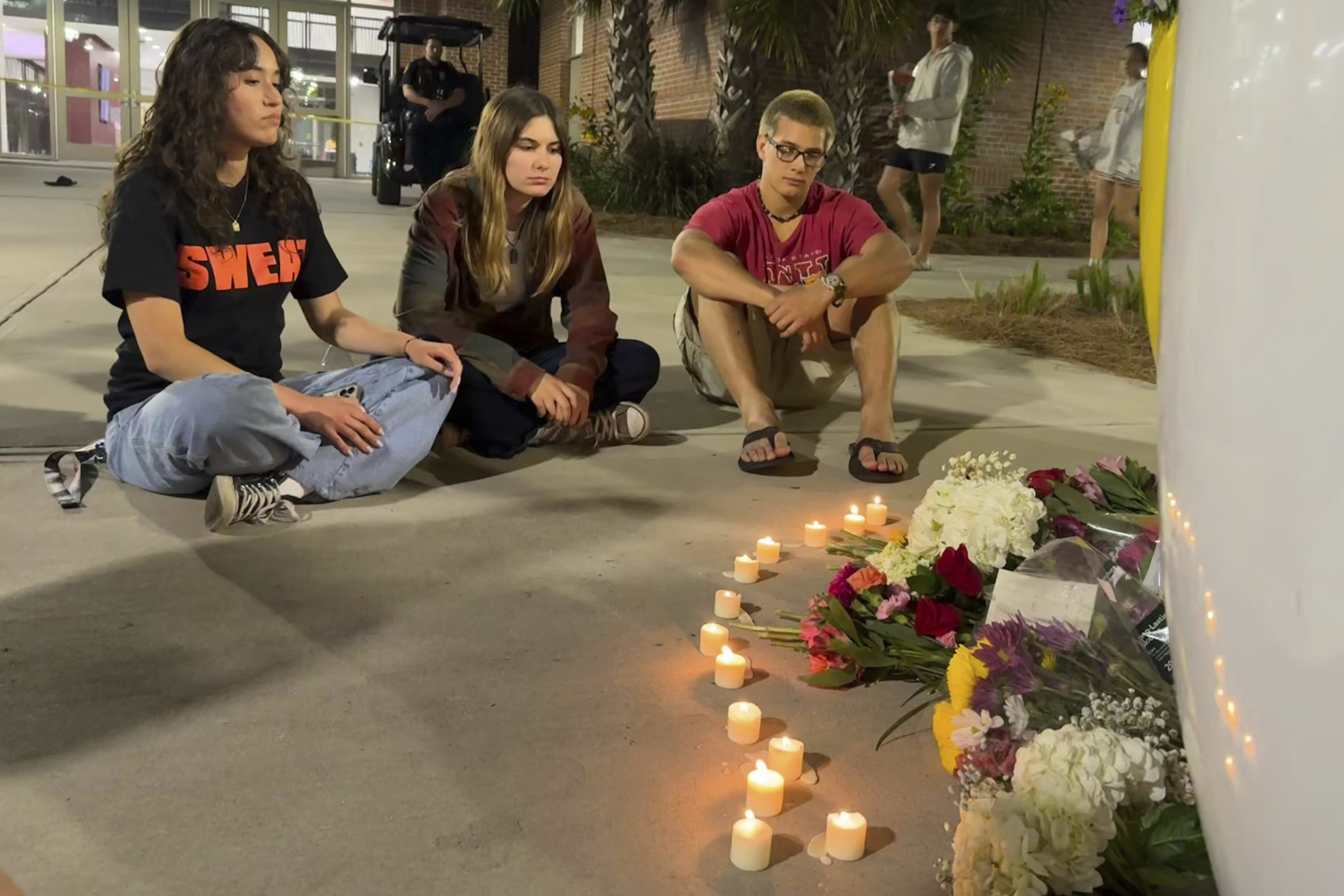
The family of a victim killed in last year's mass shooting at Florida State University has taken legal action against OpenAI, accusing the company's ChatGPT chatbot of effectively conspiring with the alleged shooter. The lawsuit, filed Monday in a Florida federal court, claims that the artificial intelligence tool played a direct role in the April 2025 attack that left two people dead and six others wounded.
Tiru Chabba, 45, was one of two individuals fatally shot on the Tallahassee campus. The other victim was Robert Morales, 57. According to the complaint, the suspected gunman, Phoenix Ikner, engaged in extensive conversations with ChatGPT in the months and days leading up to the shooting. The family's legal team argues that the chatbot provided “input and information” that enabled the attack, effectively making OpenAI a co-conspirator.
The lawsuit alleges that ChatGPT detailed how to load and operate firearms Ikner had obtained, including noting that one weapon lacked a safety mechanism, allowing for rapid fire under stress. Chat logs reportedly show Ikner discussing other mass shootings, expressing admiration for Adolf Hitler and Nazi ideology, and exploring different political views on race. The family's attorneys contend that ChatGPT either “defectively failed to connect the dots” or was not designed to recognize the threat Ikner posed.
This case is the latest in a string of lawsuits targeting social media and artificial intelligence companies over their role in violent acts. Similar to other recent legal challenges, the Chabba family alleges that OpenAI “failed to warn the public” about the risks of its flagship chatbot and downplayed potential dangers. The suit also claims OpenAI did not build safeguards into ChatGPT to prevent it from discussing violent crimes or to alert human monitors for law enforcement referral.
The legal action comes less than a month after Florida Attorney General James Uthmeier, a Republican, launched a criminal investigation into OpenAI and its chatbot. Uthmeier cited evidence that the suspected gunman had communicated with ChatGPT before the shooting, raising questions about the company's responsibility. This investigation is part of a broader scrutiny of AI firms, as seen in reports that domestic violence drives nearly half of U.S. mass shootings, highlighting the complex factors behind such tragedies.
OpenAI has pushed back against the allegations. A spokesperson for the company stated that the shooting “was a tragedy, but ChatGPT is not responsible for this terrible crime.” The spokesperson emphasized that OpenAI cooperated with authorities by identifying Ikner's account and continues to assist in the investigation. The company maintains that ChatGPT provided factual responses to questions, drawing on information widely available on the internet, and did not encourage illegal activity.
In a blog post released late last month, OpenAI outlined its safety measures, including training models to refuse harmful requests and recognize signs of risk, such as self-harm. The company said trained personnel review conversations flagged by automatic detection systems. However, the Chabba family's lawyers argue these measures were insufficient. They note that when Ikner asked about suicide, ChatGPT provided statistical analysis and only twice used a pre-programmed suicide hotline response.
OpenAI is also facing a separate lawsuit in Canada, where company leadership failed to contact law enforcement after automated systems flagged concerns about a school shooting suspect's ChatGPT conversations. In that case, CEO Sam Altman later apologized for not alerting authorities to the banned account. The family's legal team anticipates that OpenAI will invoke Section 230 of the Communications Act, the 1996 liability shield that protects tech companies from being held responsible for third-party content.
But the Chabba family's attorneys argue that Section 230 does not apply here. They contend that OpenAI is not a passive platform but is “in the business of developing, distributing and marketing a product which engages in direct and active communications with users.” The lawsuit states that ChatGPT “provides reasoning and analysis for a user,” making OpenAI responsible for the creation and development of information used to train its chatbots. This legal strategy could have implications for other cases, including those involving Florida's evolving legal landscape as AI regulation becomes a hot-button issue.
As the case moves forward, it underscores the growing tension between innovation and accountability in artificial intelligence. The outcome could set a precedent for how courts view AI companies' liability when their products are used in violent crimes, a question that is likely to resonate far beyond Florida.