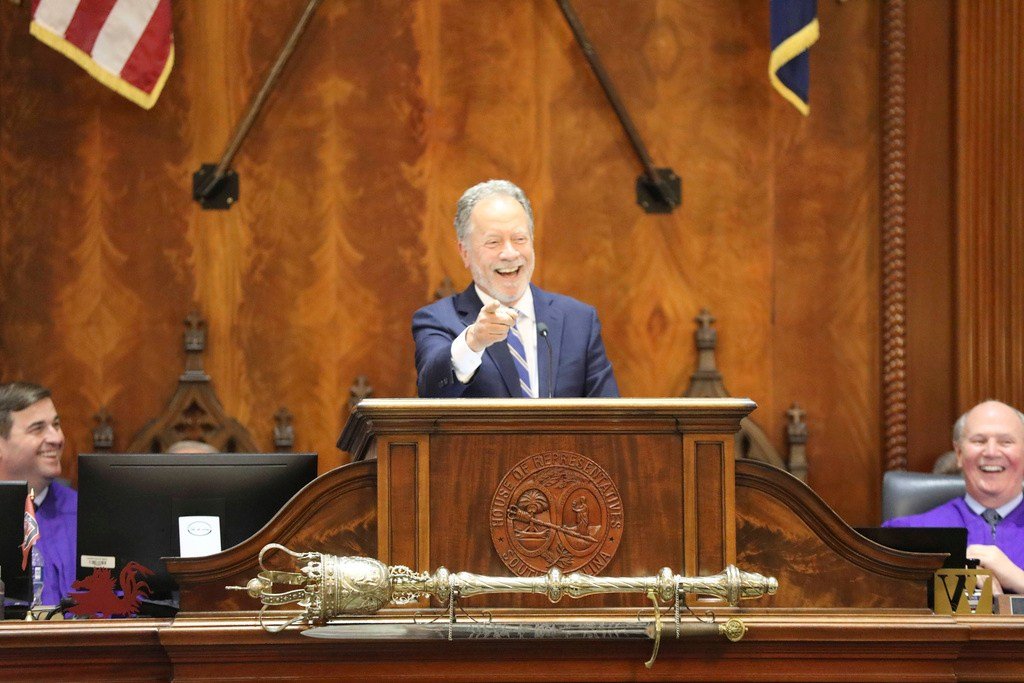
Few political figures can claim to have found peace in a defeat rooted in principle. Even fewer have gone on to accept a Nobel Peace Prize. Former South Carolina Governor David Beasley has done both, and now he is turning his attention to mending the fractures in American civic life.
Beasley's political ascent was meteoric. Elected to the South Carolina House in 1978 at age 20 as a Democrat, he quickly rose through leadership ranks, becoming the youngest speaker pro tempore in the nation. In 1991, he joined the wave of Southern Democrats switching to the GOP, and by 1994 he was governor. His conservative governance—focused on economic development, welfare reform, prison reform, and education—made him a rising star on the national stage, with pundits predicting a presidential bid.
Reelection seemed assured. Then a wave of racially motivated church arsons by Ku Klux Klan members swept the state. Beasley, who had previously resisted calls to remove the Confederate flag from the State House dome, underwent a profound change of heart. He prayed, deliberated, and listened to Black church leaders describe the terror of seeing the flag embraced by white supremacists flying above their Capitol. The political calculus was stark: his base was energized against him, his opposition mobilized.
In November 1996, he announced his reversal in a statewide address, proposing to move the flag to a Confederate monument. The backlash was fierce—from both left and right. His decision likely cost him the 1998 election. On election night, he gathered his staff and asked three questions: Did we do what was right? Did we do it at the right time? Did we do it the right way? They answered yes on all counts, and Beasley deemed the campaign a success.
His principled stand earned him the John F. Kennedy Profile in Courage Award. In 2017, then-UN Ambassador Nikki Haley tapped him to lead the World Food Programme. During his tenure, he navigated famines, conflicts, and the COVID-19 pandemic, accepting the Nobel Peace Prize in 2020 on behalf of the organization. His term was extended amid global food crises, and he served until April 2023.
Now, Beasley has launched Breaking Bread Together, a national movement to bridge political, cultural, and religious divides through shared meals. His approach uses faith as an invitation to conversation, not a weapon. He believes real change begins at kitchen tables and community gatherings, not in Washington.
His natural political skills remain sharp. When I met him at a D.C. café, he engaged our server, a Black woman from Sierra Leone, in fluent French, instantly forging a connection. That ability to listen and relate is what he hopes to instill in the next generation of leaders.
Beasley's journey—from losing an election on principle to winning a Nobel and now seeking to heal a polarized nation—offers a rare lesson: standing on conviction can cost you politically, but it can also make the world a better place, perhaps one meal at a time.
As the country grapples with the limits of political threats and the unseriousness of populism, Beasley's model of principled engagement offers a stark alternative. His story reminds us that political courage can have a second act.