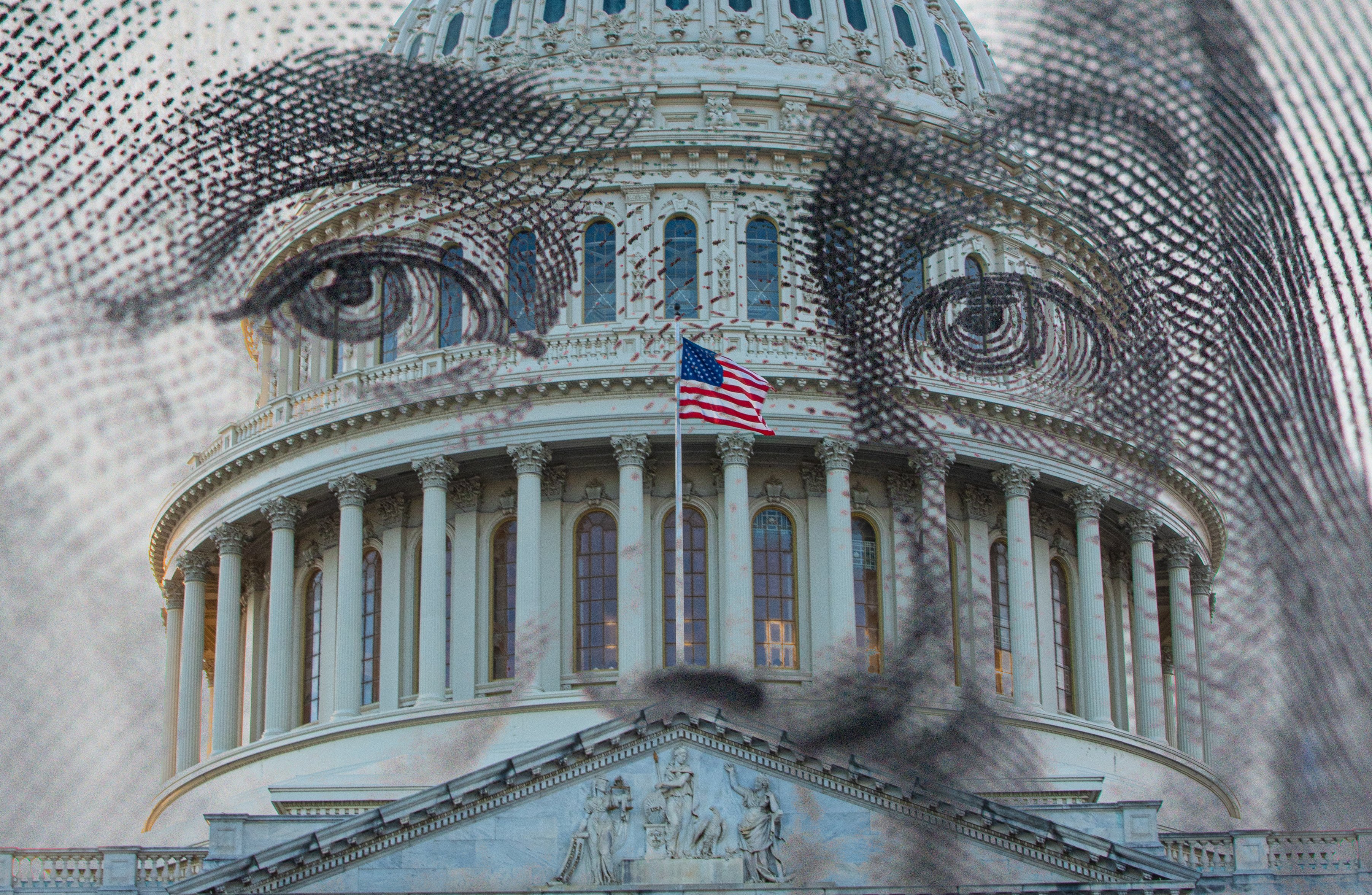
As the United States approaches its 250th birthday, the question of what the Founding Fathers would make of today's political landscape grows urgent. Far from being shocked by President Trump's brand of politics, the framers would likely recognize it as a familiar threat—one they explicitly warned against.
It's a comforting myth that the Founders could never have imagined a figure as venal and anti-democratic as Trump. But history shows otherwise. The 18th century was rife with demagogues and aspiring strongmen, and the Founders were acutely aware of the dangers. New York Governor George Clinton, in a 1787 warning, cautioned against politicians who seek to inflame passions for personal gain. 'Beware those who wish to influence your passions and to make you dupes to their resentments and little interests,' he wrote. 'Personal invectives can never persuade, but they always fix prejudices which candor might have removed.' Clinton's words could easily describe the grievance-fueled rhetoric of the MAGA movement.
Alexander Hamilton, Clinton's fellow New Yorker, echoed this concern. In 1787, he noted that 'the passions of men observe no bounds of moderation' and warned that 'wounded pride [and] irritated resentment would be apt to carry the states' if a demagogue mounted a presidential campaign. Hamilton's fears, far from being outdated, would fit seamlessly into today's cable news cycle.
But the Founders also understood that a leader willing to stoke resentment would have little compunction about bending the Constitution to reward allies and punish enemies. Maryland Attorney General Luther Martin, writing in 1787, highlighted the danger of the presidential pardon power. 'The president … has the power of pardoning those who are guilty of treason,' Martin wrote. 'No treason was so likely to take place as that in which the president himself might be engaged — the attempt to assume to himself powers not given by the constitution … [and] to secure from punishment the creatures of his ambition, the associates and abettors of his treasonable practices.'
Martin's words resonate today. Trump's flurry of pre-emptive pardons for nearly 80 close allies—including Rudy Giuliani, Mark Meadows, Sidney Powell, Paul Manafort, Roger Stone, Michael Flynn, and Steve Bannon—has shielded them from accountability. The list also includes friends convicted of financial fraud, such as reality TV stars Todd and Julie Chrisley and nursing home executive Paul Walczak. These pardons, along with the Supreme Court's recent expansion of presidential power, have effectively neutered the independent agencies Congress originally designed.
The Founders would be horrified by a Congress that has ceded its constitutional prerogatives to an imperial presidency. The legislature's surrender to the White House, a trend that predates Trump but has accelerated under his watch, represents the greatest betrayal of the framers' vision. They prided themselves on creating a system where Congress stood independently of the chief executive, but today's lawmakers show little appetite for reclaiming their role.
A warning from the great Scottish philosopher David Hume, quoted by a Founding Father in 1788, captures the moment: 'It is seldom that liberty of any kind is lost at once. Slavery has so frightful an aspect to men accustomed to freedom, that it must steal upon them by degrees, and disguise itself in a thousand shapes in order to be received.' As America celebrates its 250th birthday, that warning hangs over the republic like a gathering storm. Authoritarianism has crept in incrementally, and the tipping point may be near. If the promise of the American experiment is to be fulfilled, citizens must recognize the threat and act before the light of democracy flickers out.
For more on how political movements are reshaping governance, see our analysis of how USAID cuts reshaped Latin America’s politics while NYC’s socialists surge. Additionally, the House panel probing CIA's mind-control experiments shows how Congress is reasserting oversight in other areas. On the historical front, Franklin's overlooked civic legacy: prevention over panic offers a timely lesson for today's politics.