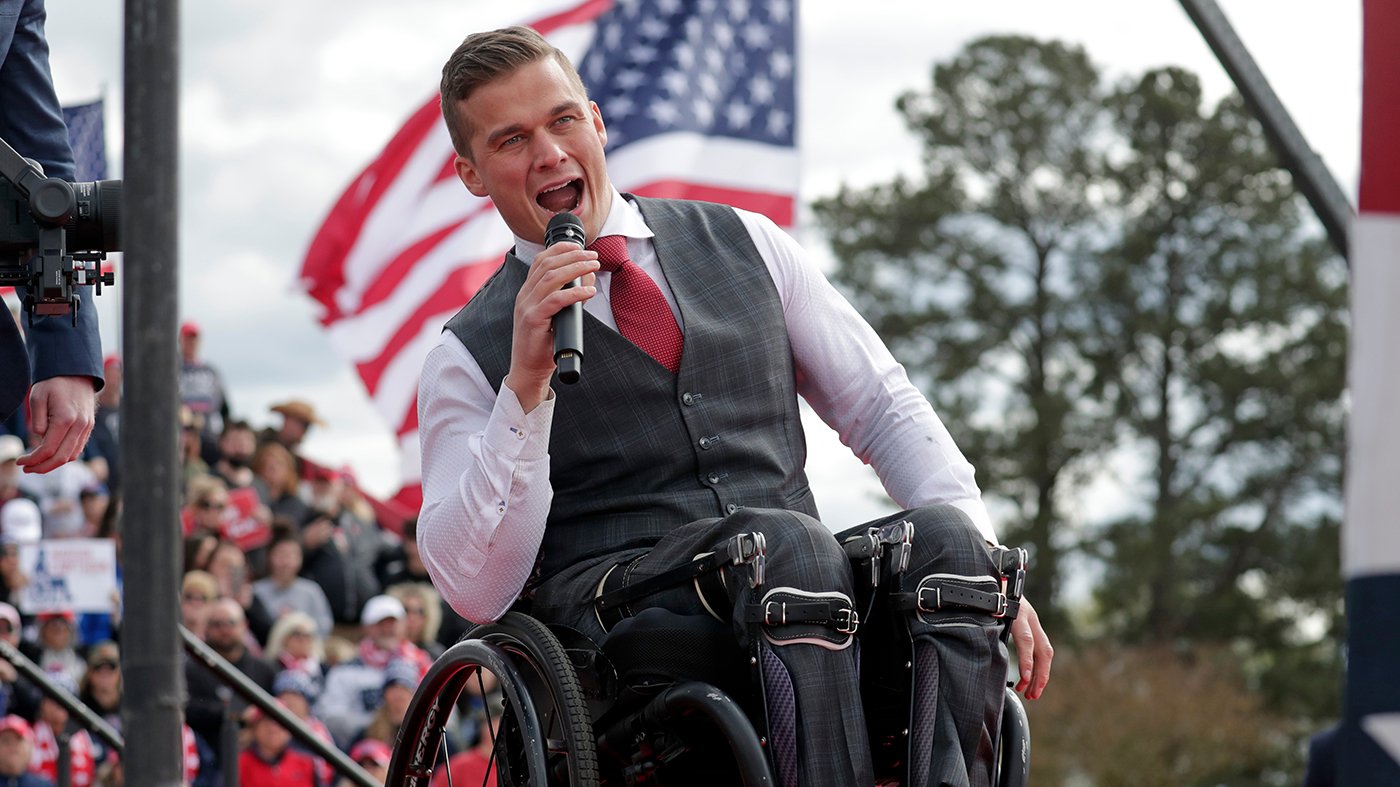
A contestant selected for the now-shelved season of ABC's "The Bachelorette" was the driver in the 2014 automobile accident that left former Republican Congressman Madison Cawthorn of North Carolina paralyzed, The World Signal has confirmed. The connection between the reality television casting and the consequential political figure's personal history emerges as the network cancels the season amid controversy surrounding its lead.
Brad Ledford, 29, was among the men cast to date reality personality Taylor Frankie Paul. ABC pulled the season last week after video surfaced showing Paul involved in a 2023 domestic violence incident. The network's biography for Ledford had previously described him as a "handsome California cowboy" and a "fearless romantic."
The 2014 Crash and Conflicting Accounts
In April 2014, Ledford and Cawthorn, both teenagers at the time, were returning to North Carolina from a Florida spring break trip. According to contemporary reports, Ledford fell asleep while driving his SUV, causing the vehicle to veer off the road, strike a concrete barrier, and catch fire. Cawthorn, who reportedly had his legs on the dashboard, sustained severe spinal injuries that resulted in permanent paralysis.
The aftermath of the crash created a public rift between the former friends. In a 2017 speech, Cawthorn claimed Ledford left him "in a fiery tomb." Ledford forcefully disputed this narrative in a 2021 interview, stating, "That statement he made was false. It hurt very badly that he would say something as false as that... I pulled him out of the car the second that I was able to get out of the car." Cawthorn later acknowledged in a legal deposition that he had no memory of the accident itself. The two eventually reconciled after years of estrangement.
Legal and Political Repercussions
Cawthorn filed a lawsuit against Ledford seeking $30 million in damages, but voluntarily dropped the case in July 2022. Months later, he lost his Republican primary for the U.S. House to state Senator Chuck Edwards, ending his congressional career. The accident and its long shadow became a defining element of Cawthorn's political identity, even as the legal dispute was resolved privately.
The cancellation of the Bachelorette season, where Ledford's role was to be a central storyline, adds another layer to this long-running saga. It remains unknown whether Ledford discussed the crash or his history with Cawthorn during filming. The season's cancellation, as one network executive noted, mirrors other instances where controversy has led networks to shelve major programming.
In a statement, Disney Entertainment Television said the decision was made "in light of the newly released video" and that the focus was "on supporting the family." The move highlights how personal histories of contestants can collide with the highly produced world of reality television, especially when those histories involve significant political figures.
Ledford's Response and Unresolved Questions
Ledford addressed the cancellation in a TikTok video this week, saying ABC made the "right decision for right now." He expressed more concern for the family involved in the domestic violence incident than for the show's fate, stating, "I could care less about a TV show not airing right now. There's real kids involved, real family involved and I want the best for them." He added a message of forgiveness for Paul.
The intertwining of this personal tragedy with political and entertainment narratives underscores how past events continue to resonate. The incident serves as a stark reminder of how a single moment can alter lives and careers, from the halls of Congress to the casting rooms of reality TV. As political figures increasingly navigate media landscapes beyond traditional politics, their personal histories become subject to renewed scrutiny in unexpected contexts. This scrutiny often occurs alongside other high-stakes policy debates, such as when lawmakers demand clarity on military deployments or when agency leaders warn of operational tipping points.