Florida's top education official is pushing back hard against a Democratic senator's characterization of the state's school choice programs as a costly failure, arguing that a quarter-century of data shows the opposite.
In a pointed rebuttal, Education Commissioner Henry Mack directly challenged Sen. Carlos Guillermo Smith's recent column describing Florida's school choice initiatives as a "$4 billion entitlement with almost no strings attached" and a "wreckage." Mack, who oversees the programs, insists the senator's portrayal is inaccurate and does not reflect the reality on the ground.
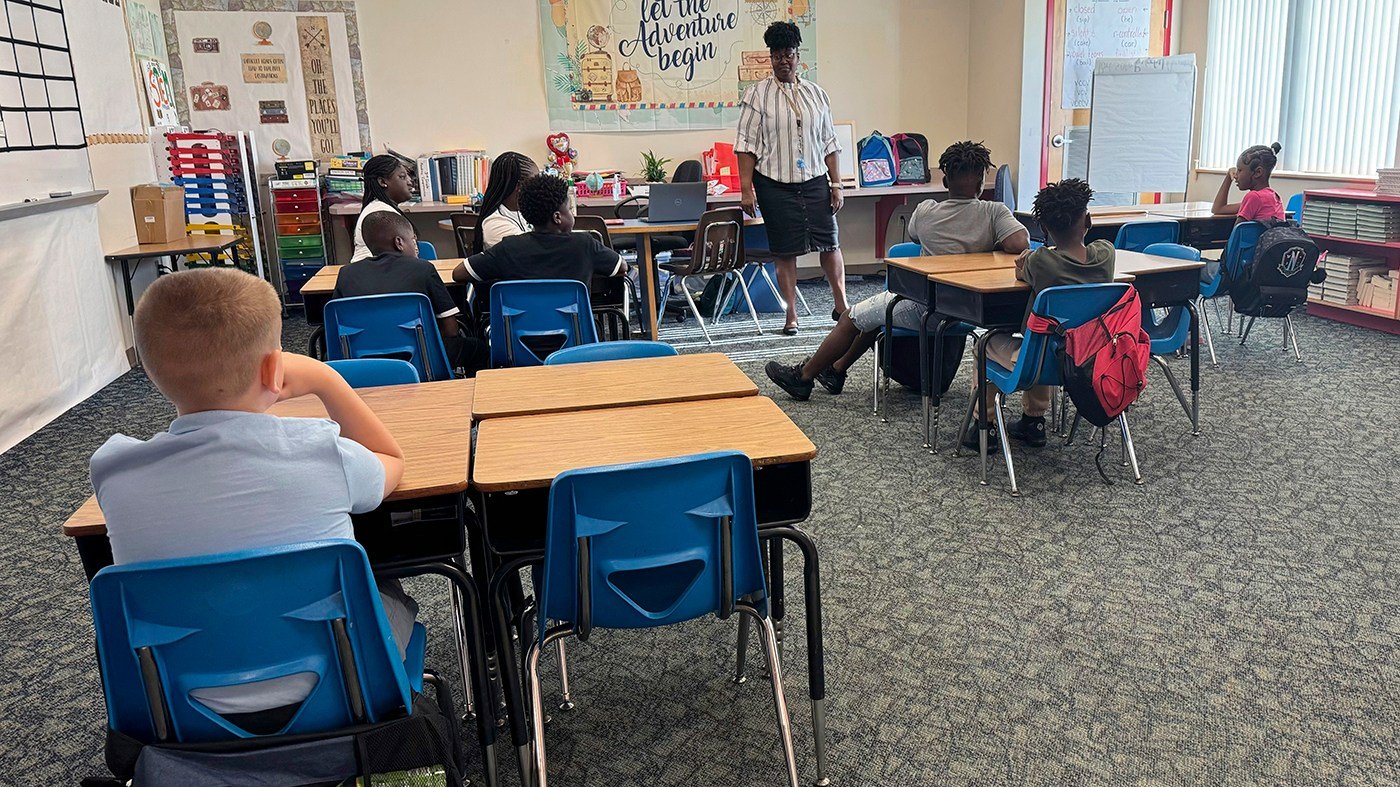
Mack highlighted that during the 2024-2025 school year, nearly 1.9 million students—53 percent of all K-12 students in Florida—used a school choice option, including magnet schools, charter schools, private schools, scholarships, homeschooling, and virtual schooling. He expects that number to grow in the current academic year. He also noted that over 150,000 scholarship students last year were not enrolled full-time in a traditional public or private school, underscoring the flexibility of Florida's approach where funding follows the student.
Addressing Smith's claim that there is no accountability, Mack detailed the state's oversight mechanisms: scholarship students in grades 3-10 are tested, results are reported by an independent research organization, schools file annual financial reports, and all staff undergo background checks. Fraud is investigated and prosecuted. "That is what accountability looks like, not the absence of it," Mack wrote, adding that parental choice itself is a powerful check—parents can take their funds elsewhere if they are dissatisfied.
On the senator's assertion that the state "could not account for" 30,000 students and $270 million, Mack explained that this stems from a quarterly cross-check between scholarship recipients and public school enrollment rolls. Florida prohibits students enrolled full-time in public schools from receiving scholarships, and the cross-check is an accountability measure to catch discrepancies. He emphasized that no money went missing and that improvements have reduced misidentifications, leading to timelier payments.
Mack also cited research from the Urban Institute showing that Florida Tax Credit Scholarship recipients were up to 43 percent more likely to attend a four-year college and up to 20 percent more likely to earn a bachelor's degree, despite being "triply disadvantaged." He dismissed comparisons to voucher programs in other states, arguing that Florida's program is unique in its design and funding.
Beyond student outcomes, Mack noted that competition from school choice has spurred improvements in public schools, including lower suspension rates and higher test scores, particularly among lower-income students. He pointed to Florida's rise in national rankings in math, reading, and graduation rates over the past 25 years.
The political stakes are high, as school choice has become a flashpoint in Florida's congressional races. Mack noted that more than 10,000 students in Smith's own district receive scholarships, including over 3,000 with special needs, and nearly 60 percent are non-white.
Mack concluded by advocating for the federal Education Freedom Tax Credit, which would expand choice options nationwide, and criticized governors who have not opted in for turning down funds that could support tutoring and special-needs services.