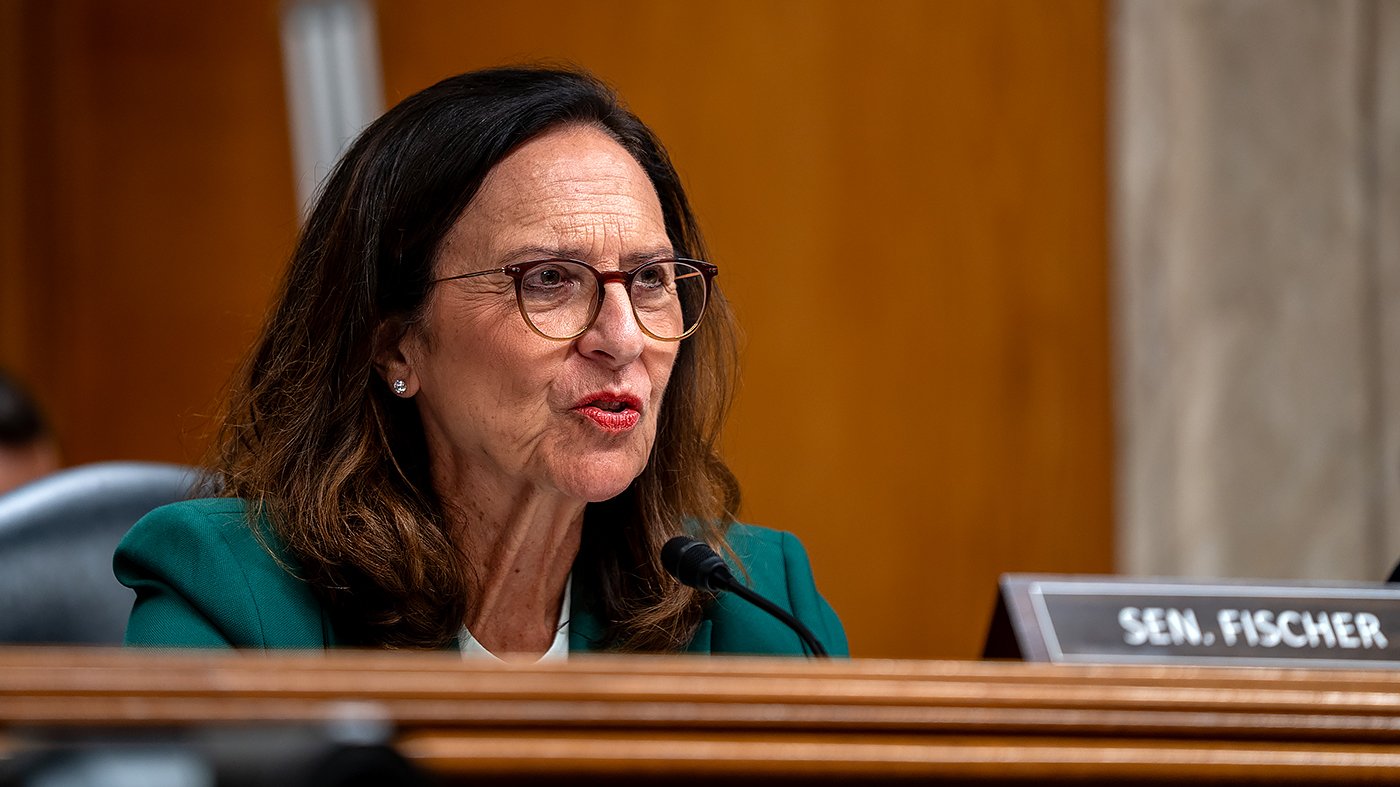
Sen. Deb Fischer (R-Neb.) on Wednesday blocked a unanimous consent request from Senate Democratic Leader Chuck Schumer (D-N.Y.) that would have barred President Trump from using taxpayer funds to further modify a luxury Boeing 747 gifted by Qatar.
Schumer’s Presidential Airlift Security Act aimed to stop the Pentagon from spending additional public money to retrofit the jet, which Trump has accepted as the new Air Force One. The Senate had previously rejected the measure earlier this year, Fischer noted during her objection.
Speaking on the Senate floor, Schumer lambasted the arrangement as “corruption,” arguing that Trump’s acceptance of what he called a “$400 million foreign jet” amounted to the largest gift ever received from a foreign government. “Now he wants the taxpayers to fund his palace in the sky as well,” Schumer said. “Taxpayers will have to pay hundreds of millions of dollars to outfit Trump’s luxury jet with the security upgrades it needs to serve as Air Force One.”
Fischer countered that Schumer’s legislation would inadvertently undermine the Survivable Airborne Operations Center (SAOC) program, a critical initiative designed to provide the president with a hardened airborne command post during a nuclear conflict. “Unfortunately, this legislation would also apply to a different aircraft, the Survivable Air Operations Center aircraft,” she said. “Those aircraft were actually purchased from Korean Air, so this legislation would hamper a crucial program that ensures presidential safety in the event of nuclear war.”
The controversy escalated after Trump returned from a NATO summit in Turkey earlier this month aboard the older Air Force One, amid reports that the Qatari-donated jet lacks essential defensive countermeasures to protect against missile threats. The New York Times reported that the aircraft does not have the security upgrades necessary to safeguard the president, raising questions about the wisdom of accepting the gift.
Trump stated on Sunday that the jet would be “maxed out” with new security equipment, a remark that Schumer seized upon as further evidence of the deal’s flaws. “You thought this illegal gift was bad before, it’s even worse now,” Schumer said. “We just learned that this new jet wasn’t safe enough for Trump to make the return flight from the NATO summit in Turkey.”
The standoff comes amid broader tensions over Trump’s foreign policy and defense spending. Meanwhile, the administration has been dealing with fallout from renewed conflict with Iran, and Fischer’s objection highlights the partisan divide over how to manage presidential security and taxpayer obligations.
Schumer’s move is the latest in a series of Democratic efforts to scrutinize Trump’s acceptance of foreign gifts. The Qatari jet, originally a commercial 747, requires extensive modifications to meet military standards—costs that critics argue should not fall on U.S. taxpayers. The debate also touches on the SAOC program, which has long been a priority for defense planners seeking to ensure continuity of government in a crisis.